
Introduction
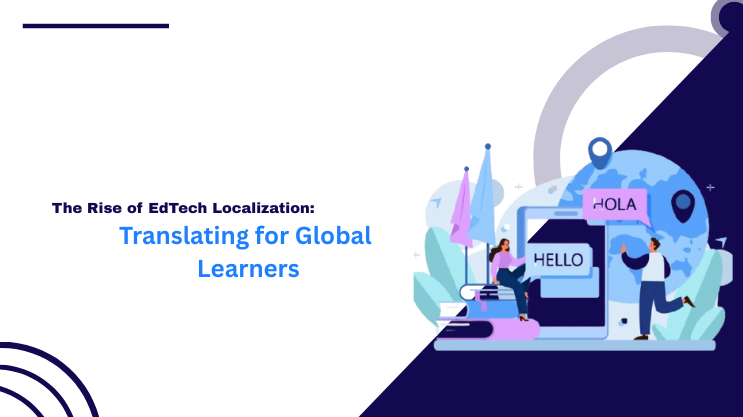
In today’s digital-first world, education is no longer confined to classrooms or countries. EdTech platforms are reaching learners globally, but language remains a barrier. This is where EdTech localization comes into play. By translating and culturally adapting educational content, platforms can ensure that students across the world access, understand, and engage with learning materials effectively.
What is EdTech Localization?
EdTech localization goes beyond simple translation. It involves:
- Translating content into multiple languages.
- Adapting cultural references to resonate with local learners.
- Adjusting visuals, examples, and idioms to reflect regional norms.
- Ensuring accessibility for learners with different needs.
This process ensures that educational content is not only linguistically accurate but also culturally relevant.
Why EdTech Localization Matters
- Global Reach: Localized content opens doors to international markets and diverse learners.
- Improved Learning Outcomes: Students learn better when content is in their native language and culturally relatable.
- User Engagement: Learners feel more connected and motivated with content tailored to their context.
- Compliance & Accessibility: Some regions have strict regulations for educational content, making localization crucial.
Trends Driving EdTech Localization in 2025–2026
- AI-Powered Translation Tools: AI assists translators in speeding up the localization process while maintaining quality.
- Interactive & Multimedia Learning: Video lectures, quizzes, and interactive content require careful localization to retain meaning and engagement.
- Mobile Learning: As mobile-first learning rises, localized apps and interfaces become essential.
- Gamification in EdTech: Games and challenges need cultural adaptation to ensure relevance and fun for learners worldwide.
Best Practices for Localizing EdTech Content
- Collaborate with Native Experts: Human translators understand cultural nuances better than machines.
- Test Content Locally: Conduct pilot tests with local learners to ensure comprehension and engagement.
- Prioritize User Experience: Layout, fonts, and visuals should suit the target culture.
- Keep Terminology Consistent: Use glossaries and style guides to maintain consistency across modules.
Conclusion
The rise of EdTech has democratized education, but language and cultural barriers can limit its impact. Effective localization ensures that learners worldwide not only access educational resources but also fully engage with and benefit from them. For EdTech companies aiming to scale globally, investing in professional translation and localization is no longer optional-it’s essential.