Tag: #TranslationServices

  • The Future of Machine Translation in International Business

    The Future of Machine Translation in International Business

    As international business continues to expand across borders, the demand for fast, accurate, and scalable communication is growing rapidly. Machine translation (MT), powered by artificial intelligence and neural networks, is becoming an essential tool for organizations operating in multilingual environments. The future of machine translation in international business lies in its ability to enhance efficiency, reduce costs, and support global collaboration while evolving alongside human expertise.

    1. Advancements in Neural Machine Translation

    Neural machine translation systems are becoming more sophisticated by understanding context, tone, and intent rather than translating word by word. These advancements result in more natural, fluent translations that better support professional business communication.

    2. Faster Global Communication and Decision-Making

    Machine translation enables real-time communication across languages, allowing businesses to collaborate quickly with international teams, partners, and customers. Faster information exchange supports agile decision-making and improves operational efficiency.

    3. Integration with Business Platforms

    Future machine translation tools will be deeply integrated into email systems, customer relationship management platforms, e-commerce websites, and collaboration tools. This seamless integration allows multilingual communication to happen naturally within daily business workflows.

    4. Cost-Effective Scaling for Global Operations

    Machine translation reduces the cost of translating large volumes of content such as product catalogs, support documentation, and internal communication. This scalability allows businesses to expand into new markets more efficiently.

    5. Hybrid Translation Models with Human Expertise

    While machine translation continues to improve, human translators remain essential for accuracy, cultural nuance, and sensitive content. Hybrid models that combine AI speed with human review will define the future of high-quality business translation.

    6. Improved Customization and Industry-Specific Training

    Future machine translation systems will be trained on industry-specific terminology and company language assets. This customization ensures consistent branding, accurate technical language, and better alignment with business needs.

    7. Enhanced Multilingual Customer Experience

    Machine translation supports multilingual customer interactions through chatbots, help desks, and self-service portals. This improves accessibility, response times, and overall customer satisfaction across global markets.

    8. Data Security and Compliance Considerations

    As businesses rely more on machine translation, data security and confidentiality will become critical. Future solutions will focus on secure, compliant translation environments to protect sensitive corporate information.

    In conclusion, machine translation is set to play a transformative role in international business. By embracing advanced AI technologies while maintaining human oversight, organizations can achieve efficient, accurate, and culturally appropriate communication, strengthening their global operations and competitive advantage.
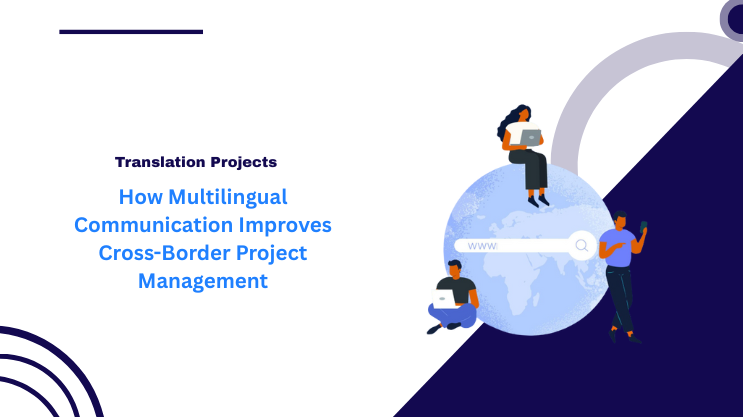
  • How Multilingual Communication Improves Cross-Border Project Management

    How Multilingual Communication Improves Cross-Border Project Management

    In cross-border projects, teams often collaborate across different countries, cultures, and time zones. Language differences can create misunderstandings, delays, and misalignment if not managed properly. Multilingual communication plays a vital role in ensuring clarity, collaboration, and efficiency, enabling project teams to work together smoothly and achieve shared goals.

    1. Improving Clarity in Project Requirements

    Clear communication of project goals, timelines, and deliverables is essential for success. Multilingual communication ensures that all stakeholders fully understand requirements in their preferred language, reducing misinterpretation and rework.

    2. Enhancing Collaboration Across Global Teams

    When team members can communicate in their native language, they feel more confident contributing ideas and feedback. Multilingual communication fosters inclusivity, encouraging active participation and stronger collaboration among international teams.

    3. Reducing Errors and Project Delays

    Language barriers often lead to mistakes in documentation, instructions, or reporting. Providing translated materials and multilingual support minimizes errors, speeds up decision-making, and keeps projects on schedule.

    4. Supporting Effective Stakeholder Communication

    Cross-border projects involve multiple stakeholders, including clients, vendors, and partners. Multilingual communication ensures consistent and transparent information sharing, strengthening trust and alignment across all parties.

    5. Improving Risk Management and Compliance

    Accurate multilingual communication helps teams understand legal, regulatory, and safety requirements in different regions. This reduces compliance risks and ensures that projects meet local standards and expectations.

    6. Strengthening Team Engagement and Morale

    Employees who receive updates and instructions in their native language feel valued and respected. This improves morale, motivation, and commitment, contributing to better overall project performance.

    7. Streamlining Documentation and Reporting

    Project plans, progress reports, and technical documentation must be clearly understood by all teams. Multilingual documentation ensures consistency and transparency, supporting smoother coordination and accountability.

    8. Leveraging Technology for Real-Time Collaboration

    Translation tools, multilingual project management platforms, and real-time interpretation enable faster communication across borders. These technologies help teams collaborate effectively despite language differences.

    In conclusion, multilingual communication is a key enabler of successful cross-border project management. By ensuring clarity, inclusivity, and efficiency, organizations can reduce risks, improve collaboration, and deliver projects successfully in a global business environment.

  • The Impact of Localization on Global Marketing Analytics

    The Impact of Localization on Global Marketing Analytics

    As businesses expand into international markets, marketing analytics becomes more complex. Localization not only influences how content is perceived but also how data is collected, interpreted, and acted upon. Understanding the impact of localization on global marketing analytics helps organizations make more accurate decisions, measure performance effectively, and optimize campaigns across regions.

    1. Improving Data Accuracy Across Markets

    Localized content ensures that users clearly understand marketing messages, calls to action, and forms. This clarity leads to more accurate user interactions, reducing misleading data caused by language confusion or misunderstanding.

    2. Enabling Region-Specific Performance Measurement

    Localization allows marketers to track campaign performance by region, language, and culture. Analyzing localized data helps identify which markets are performing well and which require strategy adjustments.

    3. Enhancing User Engagement Metrics

    When content is localized, users are more likely to engage with it. Higher click-through rates, longer session durations, and lower bounce rates provide more reliable analytics and reflect genuine user interest.

    4. Refining Conversion Tracking

    Localized landing pages and checkout processes result in clearer conversion paths. Analytics derived from these experiences offer better insights into customer behavior and purchase intent across different markets.

    5. Supporting Multilingual A/B Testing

    Localization enables effective A/B testing in multiple languages. Testing region-specific headlines, visuals, and messaging provides deeper insights into what resonates with different audiences, improving campaign optimization.

    6. Identifying Cultural Influences on User Behavior

    Localized analytics reveal how cultural preferences affect engagement and decision-making. Understanding these patterns helps marketers tailor strategies that align with local expectations and behaviors.

    7. Improving Attribution Models

    Accurate localization ensures that user journeys across languages and regions are properly tracked. This leads to better attribution modeling and a clearer understanding of which channels drive results in each market.

    8. Driving Data-Driven Global Strategy Decisions

    Localized marketing analytics provide actionable insights that guide global strategy. Businesses can allocate budgets more effectively, refine messaging, and scale successful campaigns based on reliable regional data.

    In conclusion, localization plays a crucial role in shaping global marketing analytics. By delivering culturally relevant content and collecting accurate data, businesses gain clearer insights, improve performance measurement, and make informed decisions that drive global marketing success.

  • The Role of Multilingual AI in Improving Customer Service

    The Role of Multilingual AI in Improving Customer Service

    In an increasingly global marketplace, customers expect fast, accurate, and personalized support in their preferred language. Multilingual AI is transforming customer service by enabling businesses to communicate seamlessly with diverse audiences, reduce response times, and deliver consistent experiences across regions. By combining artificial intelligence with language capabilities, organizations can enhance customer satisfaction and loyalty worldwide.

    1. Providing Instant Multilingual Support

    Multilingual AI-powered chatbots and virtual assistants can handle customer queries in multiple languages simultaneously. This ensures immediate responses, reduces waiting times, and improves overall customer experience regardless of location or time zone.

    2. Enhancing Accuracy and Consistency in Communication

    AI systems use language models and translation memory to maintain consistent terminology and tone. This consistency minimizes misunderstandings and ensures customers receive accurate information across all interactions.

    3. Scaling Customer Service Operations Globally

    Multilingual AI allows businesses to scale support services without significantly increasing costs. Automated systems can manage high volumes of inquiries across languages, making global expansion more efficient and sustainable.

    4. Improving Customer Satisfaction and Trust

    When customers are supported in their native language, they feel understood and valued. This personalized experience builds trust, strengthens relationships, and increases the likelihood of repeat engagement.

    5. Supporting Human Agents with AI Assistance

    AI tools assist human customer service agents by providing real-time translations, suggested responses, and context-aware insights. This support improves agent efficiency and ensures smoother multilingual interactions.

    6. Enabling 24/7 Global Customer Support

    Multilingual AI systems operate continuously, allowing businesses to offer round-the-clock support to international customers. This availability enhances service reliability and meets the expectations of a global audience.

    7. Analyzing Multilingual Customer Data

    AI can analyze customer interactions across languages to identify trends, common issues, and sentiment. These insights help businesses improve service strategies and tailor solutions to regional needs.

    8. Ensuring Cultural Sensitivity in Customer Interactions

    Advanced multilingual AI systems are increasingly designed to recognize cultural nuances and communication styles. This sensitivity ensures responses are appropriate, respectful, and aligned with local expectations.

    In conclusion, multilingual AI plays a crucial role in improving customer service by enabling faster, more accurate, and personalized communication across languages. By integrating AI-driven language solutions with human expertise, businesses can deliver exceptional customer experiences and build lasting global relationships.

  • How Localization Enhances International Employee Training Programs

    How Localization Enhances International Employee Training Programs

    As organizations expand globally, employee training programs must effectively reach teams across different countries and cultures. Localization plays a vital role in ensuring training content is clear, relevant, and engaging for international employees. By adapting language, examples, and delivery methods, companies can improve learning outcomes, boost performance, and create a more inclusive workforce.

    1. Improving Understanding and Knowledge Retention

    Training content delivered in an employee’s native language improves comprehension and retention. Localization removes language barriers, allowing employees to fully understand concepts, instructions, and expectations.

    2. Adapting Content to Cultural Contexts

    Cultural references, examples, and scenarios should reflect local realities. Localized training materials feel more relatable and practical, helping employees apply what they learn in real-world situations.

    3. Increasing Employee Engagement and Participation

    When training content is culturally and linguistically relevant, employees are more engaged. Localization encourages active participation, leading to better interaction and stronger learning experiences.

    4. Ensuring Consistency Across Global Teams

    Localization maintains consistent training objectives and standards while adapting delivery for different regions. This ensures all employees receive the same core knowledge, regardless of location.

    5. Enhancing Compliance and Safety Training

    Localized compliance and safety training ensures employees clearly understand regulations, procedures, and risks. This reduces errors, improves adherence to policies, and supports regulatory compliance across regions.

    6. Supporting Digital and E-Learning Platforms

    Online training modules, videos, and assessments benefit greatly from localization. Adapting subtitles, voiceovers, and interfaces improves accessibility and learning effectiveness for international teams.

    7. Reducing Training Costs and Time

    Well-localized training minimizes misunderstandings and the need for repeated sessions. Clear communication helps employees learn faster, saving time and reducing training-related costs.

    8. Building an Inclusive Global Learning Culture

    Localization demonstrates respect for linguistic and cultural diversity. Inclusive training programs help employees feel valued and supported, strengthening morale and fostering a positive global workplace culture.

    In conclusion, localization enhances international employee training programs by making learning accessible, engaging, and effective. By investing in localized training content, organizations can empower global teams, improve performance, and achieve long-term success across international operations.

  • Why Translating Customer Feedback Boosts Global Business Insights

    Why Translating Customer Feedback Boosts Global Business Insights

    In a global marketplace, customer feedback comes from diverse regions, languages, and cultures. Limiting analysis to a single language can cause businesses to miss valuable insights. Translating customer feedback allows organizations to understand international customers better, uncover patterns, and make informed decisions that drive growth and innovation.

    1. Gaining a Complete View of Customer Sentiment

    Translating feedback from all markets ensures that opinions, concerns, and preferences are fully understood. This comprehensive view helps businesses capture genuine customer sentiment rather than relying on partial or biased data.

    2. Identifying Regional Trends and Preferences

    Localized feedback reveals unique trends, expectations, and behaviors in different regions. By analyzing translated feedback, companies can tailor products, services, and marketing strategies to meet specific market needs.

    3. Improving Product and Service Quality

    Customer comments often highlight usability issues, feature requests, or service gaps. Translating this feedback allows teams to identify improvement opportunities across markets and deliver better, more competitive offerings.

    4. Enhancing Customer Experience Globally

    Understanding feedback in every language helps businesses address pain points quickly and effectively. This leads to more responsive support, smoother interactions, and a consistent customer experience worldwide.

    5. Supporting Data-Driven Decision Making

    Accurate translation of feedback ensures that insights are reliable and actionable. Decision-makers can base strategies on real customer input rather than assumptions, improving outcomes across global operations.

    6. Strengthening Cross-Department Collaboration

    Translated feedback can be shared across marketing, product development, sales, and support teams. This alignment helps organizations respond cohesively to customer needs and market changes.

    7. Building Trust and Customer Loyalty

    When customers see their feedback acknowledged and acted upon, they feel valued. Translating and analyzing feedback demonstrates commitment to listening to global customers, strengthening trust and long-term loyalty.

    8. Uncovering Innovation Opportunities

    Feedback from diverse markets often inspires new ideas and innovations. Translation helps businesses spot unmet needs and emerging demands that may not be visible in a single-language analysis.

    In conclusion, translating customer feedback is a powerful way to unlock global business insights. By understanding customer voices across languages, organizations can enhance experiences, drive innovation, and make smarter decisions that support sustainable international growth.

  • The Importance of Multilingual Content in Global Product Launches

    The Importance of Multilingual Content in Global Product Launches

    Launching a product in international markets requires more than translating marketing materials. Multilingual content ensures that product information, promotional campaigns, and customer communications resonate with diverse audiences. By delivering clear, culturally relevant, and localized messaging, businesses can maximize reach, engagement, and adoption during global product launches.

    1. Expanding Market Reach

    Providing content in multiple languages allows companies to connect with customers in different regions. Multilingual messaging ensures that potential buyers understand the product’s features, benefits, and value proposition, increasing adoption rates.

    2. Enhancing Customer Understanding

    Accurate and localized product descriptions, user manuals, and tutorials reduce confusion and help customers make informed decisions. Clear communication builds confidence and minimizes support queries after the launch.

    3. Boosting Brand Credibility

    A product launch that includes professional multilingual content demonstrates that a brand values its international customers. This attention to detail enhances credibility and positions the brand as reliable and globally aware.

    4. Adapting Marketing Campaigns for Local Cultures

    Promotional materials, advertisements, and social media campaigns must be culturally relevant. Localization ensures that visuals, tone, and messaging align with regional preferences, improving engagement and campaign effectiveness.

    5. Optimizing for Multilingual SEO

    Localized content with region-specific keywords helps the product gain visibility in local search engines. Multilingual SEO attracts targeted traffic, driving awareness and conversions in each market.

    6. Supporting Sales and Distribution Channels

    Sales teams and distributors rely on accurate multilingual content to promote the product effectively. Providing localized resources ensures consistent messaging across all channels and improves global coordination.

    7. Enhancing Customer Experience and Loyalty

    When customers receive content in their native language, they feel valued and understood. This positive experience fosters trust, encourages repeat purchases, and builds long-term brand loyalty.

    8. Reducing Risk of Miscommunication

    Poorly translated content can lead to misunderstandings, negative reviews, or compliance issues. Professional multilingual content ensures accuracy and protects the brand’s reputation during high-stakes product launches.

    In conclusion, multilingual content is a critical component of successful global product launches. By combining accurate translation, cultural adaptation, and localized marketing strategies, businesses can expand reach, improve customer experience, and achieve strong adoption in international markets.

  • When Every Second Counts: The Real Value of Live Interpretation

    When Every Second Counts: The Real Value of Live Interpretation

    In a world where communication happens in real time, language barriers can no longer afford delays. Whether it’s a high-stakes business negotiation, a medical emergency, or a global virtual conference, every second matters. This is where live interpretation proves its true value-not as a luxury, but as a necessity.

    What Is Live Interpretation?

    Live interpretation is the immediate oral translation of spoken language from one language to another. Unlike written translation, it requires speed, accuracy, cultural awareness, and sharp decision-making-all in real time.

    Common forms of live interpretation include:

    • Simultaneous interpretation (real-time delivery)
    • Consecutive interpretation (speaker pauses for interpretation)
    • Remote interpretation (via phone or video platforms)

    Why Live Interpretation Is Critical in Time-Sensitive Situations

    1. No Room for Delay

    In live environments, waiting is not an option. A few seconds of misunderstanding can lead to:

    • Lost business opportunities
    • Medical miscommunication
    • Legal complications
    • Safety risks

    Live interpreters ensure that communication flows instantly and seamlessly, keeping conversations on track.

    2. Accuracy Under Pressure

    Professional interpreters are trained to think, listen, translate, and speak simultaneously. This skill ensures:

    • Precise delivery of meaning, not just words
    • Correct terminology in technical or legal contexts
    • Clarity even during fast-paced discussions

    Accuracy under pressure is what separates professional interpretation from automated tools.

    3. Cultural Sensitivity in Real Time

    Live interpretation goes beyond language. Interpreters adjust tone, context, and expressions to suit cultural norms. This helps:

    • Avoid misunderstandings
    • Build trust instantly
    • Maintain professionalism across cultures

    In critical moments, cultural awareness can be just as important as linguistic accuracy.

    Where Live Interpretation Makes the Biggest Impact

    Business & Corporate Meetings

    From boardroom negotiations to international partnerships, live interpretation helps decision-makers act confidently and swiftly.

    Healthcare & Emergency Services

    In medical situations, clear communication can be life-saving. Live interpreters help patients and professionals understand each other without delay.

    Legal & Government Proceedings

    Courtrooms, immigration interviews, and official hearings demand precision and neutrality-live interpretation ensures fairness and compliance.

    Conferences & Global Events

    Real-time interpretation keeps international audiences engaged, informed, and included, regardless of language.

    Human Expertise vs. Automated Solutions

    While technology plays a role in language services, live interpretation remains a human-driven skill. Machines may translate words, but they often miss:

    • Emotion
    • Intent
    • Context
    • Cultural nuance

    When the stakes are high, human expertise delivers reliability that technology alone cannot match.

    The True Value: Confidence, Clarity, and Connection

    Live interpretation enables people to speak naturally, respond instantly, and connect meaningfully-without language holding them back. It empowers organizations to:

    • Make faster decisions
    • Avoid costly misunderstandings
    • Build stronger global relationships

    Final Thoughts

    When every second counts, live interpretation is more than a service-it’s a strategic advantage. It ensures that language never becomes a barrier when clarity, speed, and understanding are essential.

    In moments that matter most, real-time communication makes all the difference.

  • What Happens When You Ignore Localization

    What Happens When You Ignore Localization

    In today’s global-first digital economy, reaching international audiences is easier than ever. But while many businesses translate their content, far fewer invest in localization-the process of adapting content to cultural, linguistic, and regional nuances. Ignoring localization can quietly damage brand credibility, customer trust, and revenue.

    Let’s explore what really happens when localization is overlooked.

    1. Your Message Loses Its Meaning

    Direct translation focuses on words, not intent. Idioms, humor, tone, and context often don’t carry the same meaning across cultures. Without localization, your message may sound confusing, awkward, or even offensive.

    Result:
    Customers misunderstand your brand’s value or ignore your message entirely.

    2. Customer Trust Declines

    People trust brands that speak their language -not just linguistically, but culturally. When content feels foreign or poorly adapted, users may question the quality and reliability of your product or service.

    Result:
    Lower engagement, higher bounce rates, and reduced conversions.

    3. Your Brand Feels Distant and Generic

    Global audiences don’t want one-size-fits-all messaging. Localization allows your brand to feel local, familiar, and relevant in each market.

    Without localization:
    Your brand sounds generic, impersonal, and disconnected from local audiences.

    4. Marketing Campaigns Underperform

    Marketing strategies that work in one country may fail in another. Colors, symbols, slogans, and calls-to-action can have different meanings across regions.

    Result:
    Ad campaigns miss emotional triggers, leading to poor ROI despite high spending.

    5. User Experience Suffers

    Websites, apps, and software that aren’t localized often have issues like incorrect date formats, currencies, measurements, or reading direction.

    Result:
    Users struggle to navigate your product and may abandon it altogether.

    6. SEO Visibility Drops in Global Markets

    Localization goes beyond translation-it includes localized keywords and search behavior. Ignoring this means your content may never appear in regional search results.

    Result:
    Lost organic traffic and reduced global discoverability.

    7. Legal and Compliance Risks Increase

    Certain regions have strict regulations regarding language usage, disclaimers, and consumer information. Poorly localized content can lead to misunderstandings or legal consequences.

    Result:
    Compliance issues, penalties, or damaged reputation.

    8. Competitors Gain the Advantage

    While you rely on generic global content, competitors who invest in localization build stronger emotional connections with local audiences.

    Result:
    They win trust, loyalty, and market share-while you struggle to catch up.

    Why Localization Is No Longer Optional

    Localization is not an extra cost-it’s a strategic investment. It bridges cultural gaps, enhances user experience, and ensures your message resonates exactly as intended across borders.

    In a world where customers expect personalized experiences, ignoring localization means choosing invisibility in global markets.

    Final Thought

    If translation helps your content be understood, localization helps it be remembered. Businesses that localize don’t just enter new markets-they belong there.

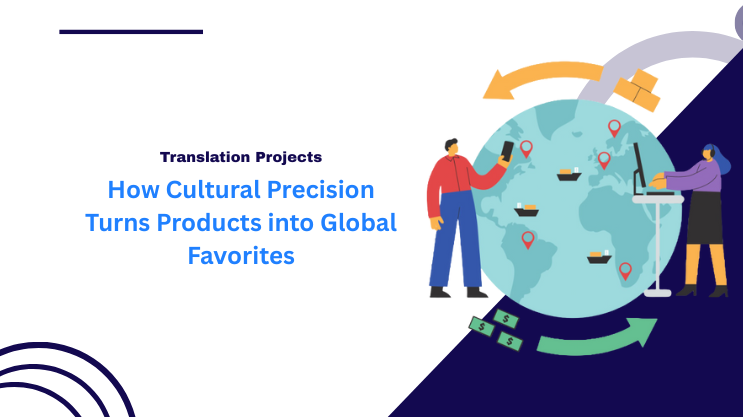
  • How Cultural Precision Turns Products into Global Favorites

    How Cultural Precision Turns Products into Global Favorites

    In today’s borderless marketplace, a great product alone is no longer enough. What separates globally loved brands from those that struggle abroad is cultural precision-the ability to understand, respect, and adapt to local cultures without losing brand identity.

    When businesses invest in cultural precision, they don’t just sell products; they create connections, trust, and loyalty across regions.

    What Is Cultural Precision?

    Cultural precision goes beyond literal translation. It involves adapting:

    • Language and tone
    • Visual design and color symbolism
    • User behavior and expectations
    • Local values, customs, and sensitivities

    The goal is to make a product feel native, not foreign.

    A culturally precise product feels as though it was created for the local audience-even if it originated thousands of miles away.

    Why Cultural Precision Matters in Global Markets

    1. Consumers Buy What Feels Familiar

    People trust what resonates with their cultural norms. A message that feels natural increases comfort, confidence, and purchase intent.

    2. Avoids Costly Cultural Missteps

    A single poorly adapted phrase, image, or color can damage brand reputation. Cultural precision prevents misunderstandings and protects brand credibility.

    3. Builds Emotional Connections

    Global favorites don’t just communicate-they connect emotionally. Cultural relevance helps brands speak to values, humor, and aspirations unique to each region.

    Key Elements of Cultural Precision

    1. Language That Reflects Local Thinking

    Effective localization adapts:

    • Idioms and expressions
    • Formal vs. casual tone
    • Regional dialects and variations

    Literal translations may convey words, but cultural precision conveys meaning.

    2. Design That Matches Cultural Preferences

    Colors, layouts, and imagery carry different meanings worldwide.

    • Colors symbolize different emotions across cultures
    • Reading patterns vary by region
    • Visual density preferences differ

    Design localization ensures visuals support, not contradict, your message.

    3. Content That Aligns with Cultural Values

    Cultural precision means understanding:

    • What motivates local audiences
    • How authority and trust are perceived
    • What storytelling styles resonate

    This alignment transforms marketing from promotion into conversation.

    4. Voice, Audio, and Human Touch

    Voice-over, dubbing, and subtitling require cultural nuance.

    • Accent and pronunciation matter
    • Voice tone influences credibility
    • Timing and emotional delivery vary

    The right voice can make global content feel deeply personal.

    Real Impact: From Products to Global Favorites

    Brands that succeed globally:

    • Adapt packaging and instructions for local use
    • Localize apps and websites for regional habits
    • Customize campaigns to reflect local festivals and values

    These brands aren’t just recognized-they are embraced.

    Cultural precision turns users into advocates and products into trusted companions.

    Cultural Precision Is a Long-Term Investment

    While speed matters, accuracy and cultural relevance matter more. Businesses that prioritize cultural precision:

    • Build long-lasting global trust
    • Reduce rework and brand risk
    • Increase customer retention and loyalty

    Global success is not about being everywhere-it’s about belonging everywhere.

    Final Thoughts

    In a world full of choices, customers choose brands that understand them. Cultural precision transforms products from international offerings into local favorites with global reach.

    When brands respect culture, culture rewards them with loyalty.