Tag: #certifiedtranslation

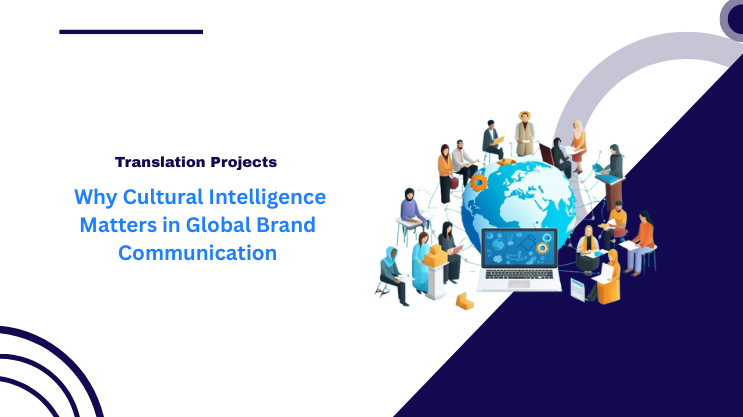
  • Why Cultural Intelligence Matters in Global Brand Communication

    Why Cultural Intelligence Matters in Global Brand Communication

    In a global marketplace, effective brand communication goes beyond language translation. Cultural intelligence-the ability to understand and adapt to cultural differences-is critical for businesses aiming to connect meaningfully with international audiences. Brands that prioritize cultural awareness can avoid misunderstandings, strengthen trust, and build lasting relationships worldwide.

    1. Understanding Cultural Norms and Values

    Cultural intelligence allows brands to recognize local customs, traditions, and social norms. By aligning messaging with these values, businesses ensure that communication resonates with audiences and avoids unintended offense.

    2. Enhancing Global Marketing Strategies

    Culturally aware campaigns are more effective because they reflect local preferences, humor, and emotional triggers. Cultural intelligence enables marketers to tailor advertising, promotions, and storytelling to each target market.

    3. Avoiding Miscommunication and Brand Missteps

    Ignoring cultural differences can lead to messaging errors, negative publicity, or loss of consumer trust. Understanding cultural sensitivities helps brands craft messages that are accurate, respectful, and relevant.

    4. Building Trust and Credibility

    When brands demonstrate cultural awareness, consumers feel understood and valued. This builds trust, strengthens brand reputation, and encourages loyalty in international markets.

    5. Improving Customer Engagement

    Culturally adapted content, visuals, and campaigns resonate more deeply with audiences. Engagement increases when consumers see messaging that reflects their language, values, and social context.

    6. Supporting Multilingual Communication Efforts

    Cultural intelligence complements language localization. Beyond translation, it ensures tone, idioms, and references are appropriate for each market, enhancing clarity and emotional connection.

    7. Facilitating International Collaboration

    Internally, cultural intelligence helps multinational teams communicate effectively, collaborate efficiently, and make informed decisions that reflect regional perspectives.

    8. Driving Sustainable Global Growth

    Brands that integrate cultural awareness into their communication strategies can expand responsibly and sustainably. Understanding cultural nuances fosters stronger relationships, higher engagement, and long-term success across global markets.

    In conclusion, cultural intelligence is essential for global brand communication. By understanding and respecting cultural differences, businesses can create relevant, engaging, and trustworthy messaging that strengthens their international presence and drives sustainable growth.

  • Accurate Document Translation Is Your Secret Weapon for Immigration & Academia

    Accurate Document Translation Is Your Secret Weapon for Immigration & Academia

    When it comes to immigration and academic applications, accuracy isn’t optional-it’s everything. A single mistranslated word, missing detail, or formatting error can delay approvals, trigger rejections, or raise credibility concerns. In these high-stakes scenarios, accurate document translation becomes your secret weapon.

    Whether you’re applying for a visa, permanent residency, university admission, or credential evaluation, the quality of your translated documents can determine the outcome.

    Why Accuracy Matters More Than Speed

    Immigration authorities and academic institutions operate on strict standards. They don’t interpret intent-they assess documentation. Any inconsistency between the original document and its translation can be viewed as misinformation.

    Accurate translation ensures:

    • Complete alignment with the original document
    • Correct legal and academic terminology
    • Consistent names, dates, and numerical data
    • Proper formatting that mirrors official records

    Speed may feel urgent, but precision protects your future.

    Immigration Documents Demand Zero Error

    Immigration-related documents are legally sensitive and closely scrutinized. Even minor mistakes can lead to application delays or outright rejection.

    Commonly translated immigration documents include:

    • Birth, marriage, and divorce certificates
    • Passports and identity documents
    • Police clearance certificates
    • Affidavits and legal declarations
    • Employment and financial records

    Accurate translation ensures your personal history is presented clearly, truthfully, and in compliance with official requirements.

    Academic Translation: Protecting Your Educational Journey

    Academic institutions rely on translated documents to evaluate eligibility, qualifications, and merit. Errors in grades, course titles, or institutional names can misrepresent your achievements.

    Academic document translation often includes:

    • Transcripts and mark sheets
    • Degree certificates and diplomas
    • Letters of recommendation
    • Research papers and theses
    • Admission and credential evaluation documents

    Precision in academic translation safeguards your credibility and academic future.

    Certified Translation: A Non-Negotiable Requirement

    Most immigration authorities and universities require certified translations-documents accompanied by a statement confirming accuracy and completeness.

    Certified translations:

    • Meet official submission standards
    • Are legally valid for government and academic use
    • Reduce the risk of document rejection
    • Add credibility and authenticity

    Without certification, even a perfectly translated document may not be accepted.

    Formatting, Consistency, and Compliance

    Accuracy isn’t limited to words alone. Layout, structure, and consistency matter just as much.

    Professional document translation ensures:

    • Original formatting is preserved
    • Seals, stamps, and signatures are clearly identified
    • Terminology is consistent across multiple documents
    • Language aligns with legal and academic conventions

    These details help authorities review documents efficiently and confidently.

    Human Expertise Over Automated Translation

    While machine translation can assist with general understanding, it cannot replace human expertise in high-risk scenarios. Immigration and academic documents require contextual understanding, domain knowledge, and quality control.

    Professional translators:

    • Understand legal and academic terminology
    • Follow strict quality assurance processes
    • Detect and resolve ambiguities
    • Ensure cultural and contextual accuracy

    For life-changing applications, automation alone is not enough.

    Your Advantage in High-Stakes Submissions

    Accurate document translation doesn’t just meet requirements-it gives you an edge. It presents your profile clearly, professionally, and credibly, helping decision-makers focus on your qualifications rather than questioning your paperwork.

    In immigration and academia, clarity builds confidence.

    Final Thoughts

    Your documents tell your story-your identity, your education, your future plans. In immigration and academic processes, that story must be told with absolute accuracy.

    Accurate document translation isn’t just a service.
    It’s your silent advocate and your secret weapon.

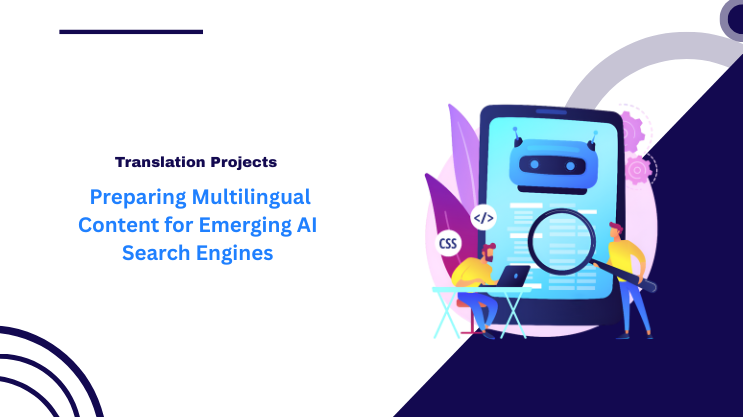
  • Preparing Multilingual Content for Emerging AI Search Engines

    Preparing Multilingual Content for Emerging AI Search Engines

    As AI-powered search engines become increasingly prevalent, businesses must rethink content strategies to maintain visibility and reach global audiences. Multilingual content plays a critical role in ensuring that AI search algorithms accurately understand, rank, and present content in diverse languages. Preparing content with AI search in mind helps brands remain discoverable, relevant, and competitive in international markets.

    1. Understanding AI Search Engine Behavior

    Emerging AI search engines prioritize context, intent, and semantic meaning over exact keywords. Understanding how AI interprets queries in different languages is crucial for creating content that aligns with search intent globally.

    2. Identifying Regional Keywords and Phrases

    Effective multilingual content requires research into local search behavior. Identifying region-specific keywords, slang, and search patterns ensures that content is optimized for AI search algorithms in each target market.

    3. Creating Contextually Relevant Content

    AI search engines value content that provides comprehensive and meaningful answers. Localized content should address regional user queries, reflect cultural nuances, and provide actionable insights for maximum relevance.

    4. Structuring Content for AI Comprehension

    Organizing content with clear headings, metadata, and semantic markup helps AI search engines understand and categorize information. Structured multilingual content improves indexing and increases visibility in search results.

    5. Leveraging AI-Powered Translation Tools

    Advanced AI translation tools can generate high-quality multilingual content quickly. Combining automated translation with human review ensures accuracy, fluency, and cultural appropriateness.

    6. Optimizing for Voice and Conversational Search

    With the rise of voice-enabled AI search, content must be optimized for natural language queries. Preparing multilingual content with conversational phrasing increases the chances of appearing in voice search results.

    7. Maintaining Consistency Across Languages

    Consistent terminology, tone, and messaging across multilingual content enhance user experience and support brand identity. AI search engines also favor coherent content that maintains clarity across multiple languages.

    8. Monitoring Performance and Iterating

    Analyzing engagement, rankings, and user interactions across regions allows businesses to refine multilingual content for AI search engines continually. Iterative optimization ensures long-term visibility and relevance.

    In conclusion, preparing multilingual content for emerging AI search engines requires a combination of strategic localization, semantic optimization, and continuous analysis. By understanding AI behavior, prioritizing regional relevance, and maintaining high-quality translations, businesses can ensure discoverability and connect effectively with global audiences.

  • The Impact of Local Language Messaging on Customer Lifetime Value

    The Impact of Local Language Messaging on Customer Lifetime Value

    In today’s global market, customers expect brands to communicate in ways that feel personal, relevant, and culturally appropriate. Local language messaging plays a critical role in creating meaningful interactions, fostering loyalty, and ultimately increasing customer lifetime value (CLV). By speaking the customer’s language, businesses can strengthen relationships, improve retention, and maximize long-term revenue.

    1. Building Trust Through Native Language Communication

    Communicating in a customer’s native language establishes trust and credibility. When users understand messaging clearly, they feel valued, which increases their likelihood of engaging repeatedly with the brand.

    2. Enhancing Customer Engagement

    Local language content—across emails, websites, social media, and support channels—boosts engagement. Customers are more likely to read, respond, and interact when messages are culturally and linguistically relevant.

    3. Reducing Miscommunication and Friction

    Using local language reduces misunderstandings in product information, policies, and support interactions. Clear communication prevents frustration, minimizes returns, and enhances the overall customer experience.

    4. Strengthening Emotional Connection

    Language carries emotion. Messaging in the customer’s preferred language helps build an emotional bond with the brand, increasing loyalty and the likelihood of repeat purchases.

    5. Improving Retention Rates

    Customers are more likely to stay with brands that communicate effectively and consistently in their language. Higher retention directly contributes to increased CLV, as repeat customers generate more long-term revenue.

    6. Supporting Personalized Marketing Efforts

    Local language messaging allows for tailored campaigns that reflect regional interests and behaviors. Personalization in the native language enhances relevance and encourages customers to continue interacting with the brand.

    7. Encouraging Word-of-Mouth and Advocacy

    Customers who feel understood and valued are more likely to recommend the brand to others. Positive referrals expand the customer base and amplify lifetime value indirectly.

    8. Aligning Global Strategy with Local Needs

    Integrating local language messaging into global marketing strategies ensures that expansion efforts resonate with diverse audiences. Consistent, localized communication strengthens brand presence and long-term growth in multiple markets.

    In conclusion, local language messaging is a powerful driver of customer lifetime value. By fostering trust, engagement, and emotional connection, businesses can enhance retention, encourage advocacy, and maximize revenue from global audiences.

  • Challenges of Scaling Multilingual Content in High-Growth Companies

    Challenges of Scaling Multilingual Content in High-Growth Companies

    High-growth companies face unique challenges when expanding into international markets. Scaling multilingual content is essential to reach global audiences, maintain brand consistency, and drive engagement. However, rapid growth often brings complexity, making it difficult to manage large volumes of content while ensuring quality, cultural relevance, and operational efficiency.

    1. Managing Large Volumes of Content

    High-growth companies produce significant amounts of marketing materials, product information, and support documentation. Scaling this content into multiple languages requires robust workflows and technology to prevent bottlenecks and delays.

    2. Maintaining Consistency Across Languages

    Ensuring uniform brand voice, tone, and messaging across diverse languages is a major challenge. Inconsistent terminology or style can confuse audiences and weaken brand identity internationally.

    3. Balancing Speed and Quality

    Rapid expansion often demands quick localization of content. Striking a balance between speed and accuracy is difficult, as rushing translations can result in errors, cultural missteps, or reduced audience trust.

    4. Adapting to Regional Cultural Nuances

    Localization goes beyond translation. Content must be culturally relevant and sensitive to local customs, preferences, and communication styles. Failing to adapt appropriately can harm brand perception and engagement.

    5. Integrating Technology and Human Oversight

    AI and automation tools accelerate content scaling, but human review is essential for nuance, creativity, and cultural accuracy. Coordinating technology and human resources effectively remains a complex task.

    6. Coordinating Global Teams and Resources

    High-growth companies often have teams across multiple regions. Aligning translators, marketers, and product teams to ensure timely and accurate content delivery can be challenging, especially across different time zones and languages.

    7. Optimizing Multilingual SEO

    Targeting local search engines requires region-specific keyword research, metadata, and content structure. Ensuring SEO effectiveness across multiple languages adds complexity to scaling efforts.

    8. Measuring Impact and ROI

    Tracking performance of multilingual content across regions is essential for optimization. High-growth companies must implement analytics and reporting systems to evaluate engagement, conversions, and overall return on investment.

    In conclusion, scaling multilingual content in high-growth companies requires careful planning, robust workflows, and a combination of technology and human expertise. Addressing challenges such as consistency, cultural adaptation, and operational efficiency ensures that businesses can expand globally without compromising quality or brand reputation.

  • Localization as a Growth Driver for International Startups

    Localization as a Growth Driver for International Startups

    For startups aiming to expand internationally, entering new markets presents both exciting opportunities and unique challenges. Localization-the process of adapting products, services, and content to fit local languages, cultures, and preferences-has emerged as a critical growth driver. By investing in localization early, startups can connect with global audiences, build trust, and accelerate international success.

    1. Making Products Accessible to Global Audiences

    Localization ensures that products, websites, and apps are understandable and usable in different languages. By removing language barriers, startups make it easier for international customers to engage, explore, and adopt their offerings.

    2. Enhancing User Experience and Satisfaction

    Tailoring content, user interfaces, and support materials to local preferences improves usability and satisfaction. A seamless experience fosters loyalty and encourages repeat use, which is especially important for early-stage startups seeking traction.

    3. Building Brand Credibility and Trust

    Accurate and culturally relevant localization signals professionalism and commitment to global customers. Startups that communicate effectively in local languages establish credibility, making users more likely to trust and engage with the brand.

    4. Accelerating Market Entry and Adoption

    Localized marketing campaigns, onboarding processes, and product tutorials help startups quickly gain acceptance in new markets. Tailored messaging reduces friction and accelerates user adoption across diverse regions.

    5. Supporting Multilingual Marketing and SEO

    Localizing website content, social media posts, and advertisements enhances visibility in local search engines and platforms. Multilingual SEO and marketing increase reach, attract organic traffic, and generate qualified leads.

    6. Encouraging Customer Engagement and Feedback

    Providing support channels and surveys in local languages enables startups to engage users effectively and gather valuable feedback. Understanding local needs helps refine products and strategies for sustainable growth.

    7. Facilitating Investor and Partner Confidence

    Investors and business partners are more likely to support startups that demonstrate readiness for international markets. Strong localization practices reflect strategic planning, scalability, and a global mindset.

    8. Enabling Scalable and Sustainable Expansion

    A structured localization strategy allows startups to expand efficiently into multiple markets without compromising quality. Scalable localization ensures consistent brand messaging while accommodating the unique needs of each region.

    In conclusion, localization is a powerful growth driver for international startups. By prioritizing language, cultural adaptation, and user experience, startups can accelerate market entry, build trust, and create sustainable global growth opportunities.

  • Beyond Words: The Rising Need for Certified Translations in a Borderless World

    Beyond Words: The Rising Need for Certified Translations in a Borderless World

    The world is more connected than ever. People study abroad, expand businesses globally, migrate for work, and access international services daily. In this borderless environment, documents don’t just need to be translated-they need to be trusted. This is where certified translations play a critical role.

    Certified translation goes beyond language. It ensures accuracy, legality, and acceptance across borders.

    What Is a Certified Translation?

    A certified translation is a formally verified translation accompanied by a signed statement attesting that the translation is complete, accurate, and faithful to the original document.

    It is commonly required by:

    • Government authorities
    • Courts and legal institutions
    • Immigration departments
    • Universities and academic bodies
    • Financial and corporate entities

    Certification provides assurance that the translated document can be relied upon for official use.

    Why Certified Translations Matter More Than Ever

    As global mobility increases, so does the demand for official documentation in multiple languages. Errors or inconsistencies in critical documents can lead to delays, rejections, or legal complications.

    Certified translations ensure:

    • Legal validity and compliance
    • Acceptance by international authorities
    • Protection against misinterpretation
    • Confidence in high-stakes situations

    In many cases, a non-certified translation is simply not an option.

    Key Documents That Require Certification

    Certified translations are commonly needed for:

    • Birth, marriage, and death certificates
    • Passports and identification documents
    • Academic transcripts and diplomas
    • Immigration and visa documents
    • Legal contracts and court papers
    • Medical and insurance records
    • Financial statements and business registrations

    Each document carries legal or personal significance, making precision essential.

    Accuracy Is Not Optional-It’s Mandatory

    Unlike creative or marketing translation, certified translation demands absolute accuracy. Every name, date, number, and formatting detail must match the original document exactly.

    Professional certified translators:

    • Follow strict quality control processes
    • Understand legal and official terminology
    • Maintain formatting integrity
    • Adhere to jurisdiction-specific requirements

    Even a minor error can invalidate a document.

    The Role of Certified Translation in Global Trust

    In a borderless world, trust must be verifiable. Certified translations act as a bridge of trust between individuals, institutions, and countries.

    They enable:

    • Smooth immigration and relocation processes
    • Faster academic admissions
    • Secure international business operations
    • Clear legal communication

    Certification transforms translation from a language service into a legal safeguard.

    Human Expertise in an Automated World

    While machine translation tools have become faster and more accessible, they lack the accountability required for official documentation. Certified translation relies on human expertise, professional responsibility, and formal verification.

    Technology may assist the process, but certification demands:

    • Professional oversight
    • Legal awareness
    • Ethical responsibility

    For official documents, there is no substitute for certified professionals.

    Final Thoughts

    In a world without borders, documents travel farther than ever before. Their acceptance depends not just on language, but on credibility. Certified translations ensure that your documents speak clearly, accurately, and officially-wherever they go.

    Beyond words lies trust. And trust is what makes global movement possible.

  • How AI Is Reshaping Multilingual Content Strategy

    How AI Is Reshaping Multilingual Content Strategy

    As businesses expand globally, creating and managing multilingual content has become increasingly complex. Artificial Intelligence (AI) is transforming content strategy by enabling faster creation, smarter localization, and data-driven optimization. By leveraging AI, companies can streamline workflows, maintain consistency across languages, and deliver culturally relevant content to diverse audiences worldwide.

    1. Accelerating Multilingual Content Creation

    AI-powered tools can generate content in multiple languages quickly and accurately. From blog posts and product descriptions to social media updates, AI reduces production time while supporting consistent messaging across markets.

    2. Enhancing Localization and Cultural Relevance

    Beyond translation, AI analyzes regional nuances, idioms, and cultural preferences to adapt content appropriately. This ensures messaging resonates with local audiences while maintaining brand voice and identity.

    3. Optimizing Multilingual SEO

    AI helps identify region-specific keywords, search trends, and content gaps in multiple languages. Optimized multilingual content improves visibility in local search engines, drives targeted traffic, and supports global marketing objectives.

    4. Streamlining Content Management Workflows

    AI integrates with content management systems to automate content distribution, version control, and updates across languages. This reduces manual effort, minimizes errors, and ensures timely delivery of campaigns worldwide.

    5. Personalizing Content for Diverse Audiences

    AI analyzes user behavior, preferences, and engagement patterns to deliver personalized multilingual content. Tailored messaging increases audience engagement, loyalty, and conversion rates in international markets.

    6. Automating Quality Assurance and Consistency Checks

    AI tools can detect errors, inconsistencies, or tone deviations across languages. Automated quality assurance ensures high-quality content while maintaining brand consistency across all regions.

    7. Supporting Real-Time Content Adaptation

    AI enables dynamic content updates based on market trends, events, or customer feedback. Real-time adaptation ensures relevance and responsiveness in rapidly changing global markets.

    8. Combining AI Insights with Human Expertise

    While AI enhances efficiency and scalability, human oversight is essential for creativity, emotional nuance, and cultural sensitivity. A hybrid approach ensures multilingual content is both accurate and engaging.

    In conclusion, AI is reshaping multilingual content strategy by driving speed, accuracy, and cultural relevance. Businesses that integrate AI tools with human expertise can create scalable, high-quality content that resonates with global audiences and supports sustainable international growth.

  • Why Global Brands Need Localization Governance Models

    Why Global Brands Need Localization Governance Models

    As global brands expand into multiple markets, managing localization efforts becomes increasingly complex. Without a structured approach, inconsistencies, inefficiencies, and cultural misalignments can occur, affecting brand reputation and operational effectiveness. Localization governance models provide a framework for standardizing processes, maintaining quality, and ensuring consistency across languages, regions, and departments.

    1. Establishing Standardized Localization Processes

    A governance model defines clear workflows for translation, content adaptation, and review. Standardized processes reduce errors, streamline collaboration, and ensure all localized materials meet organizational standards.

    2. Maintaining Brand Consistency Across Markets

    Consistency in tone, terminology, and messaging is crucial for global recognition. Governance models enforce brand guidelines across all localized content, preserving the brand voice while allowing for regional adaptations.

    3. Optimizing Resource Allocation

    Localization governance helps organizations manage internal teams, external vendors, and technology resources efficiently. Proper planning ensures that localization efforts are cost-effective and scalable across multiple markets.

    4. Ensuring Quality and Accuracy

    Structured review cycles, translation memory management, and style guides embedded in governance models maintain high-quality localized content. This reduces risks of miscommunication and protects brand credibility.

    5. Managing Compliance and Regulatory Requirements

    Different regions have varying legal and regulatory standards. Governance models ensure that all localized content adheres to local laws, data protection policies, and industry regulations, reducing operational and reputational risks.

    6. Facilitating Collaboration Across Departments

    Global campaigns require input from marketing, product, legal, and customer support teams. Governance models provide a framework for cross-departmental collaboration, ensuring localization aligns with broader organizational objectives.

    7. Leveraging Technology Effectively

    Governance models define how AI tools, translation management systems, and content platforms are used. This ensures technology supports efficiency, quality, and consistency without introducing errors or redundancies.

    8. Measuring Performance and Continuous Improvement

    A structured governance approach allows organizations to track KPIs, analyze localization effectiveness, and refine strategies. Continuous monitoring and feedback loops help optimize processes and achieve better results over time.

    In conclusion, localization governance models are essential for global brands aiming to scale efficiently while maintaining consistency, quality, and compliance. By establishing clear frameworks, brands can manage multilingual content effectively, strengthen their global presence, and deliver culturally relevant experiences to international audiences.

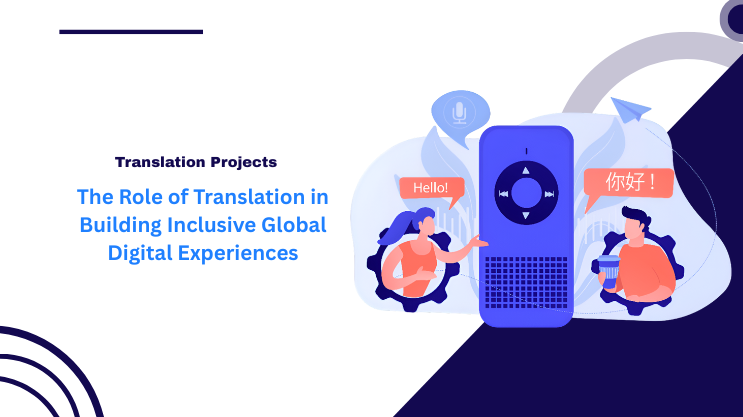
  • The Role of Translation in Building Inclusive Global Digital Experiences

    The Role of Translation in Building Inclusive Global Digital Experiences

    In today’s interconnected world, digital experiences must cater to diverse audiences across languages and cultures. Translation is a critical component of creating inclusive digital platforms, ensuring that content, interfaces, and communication are accessible and meaningful to users worldwide. By integrating accurate and culturally sensitive translation, businesses can enhance engagement, foster inclusivity, and strengthen their global presence.

    1. Expanding Access to Diverse Audiences

    Translation makes digital platforms accessible to users who speak different languages. By removing language barriers, businesses can reach wider audiences, ensuring that content, services, and products are available to everyone.

    2. Enhancing User Understanding and Engagement

    Clear and accurate translation improves comprehension of product information, navigation instructions, and digital content. Users are more likely to engage with platforms they understand, resulting in higher satisfaction and loyalty.

    3. Promoting Cultural Relevance and Sensitivity

    Effective translation goes beyond words—it adapts content to local cultural norms, idioms, and preferences. Culturally sensitive translation ensures that digital experiences resonate with diverse users and avoid misunderstandings or offense.

    4. Supporting Multilingual Interfaces and Navigation

    Localized user interfaces, menus, and interactive elements make digital platforms intuitive for global users. Translation of all interface elements enhances usability, making platforms more inclusive and user-friendly.

    5. Enabling Inclusive Customer Support

    Providing translated FAQs, help guides, and support channels ensures that users can access assistance in their preferred language. Multilingual support strengthens trust and fosters positive customer experiences.

    6. Improving Global SEO and Discoverability

    Translating content for multiple languages also enhances search engine visibility in international markets. Multilingual SEO drives traffic from diverse regions, ensuring inclusive access to digital platforms.

    7. Fostering Brand Loyalty and Trust

    By delivering consistent and accessible experiences across languages, businesses demonstrate respect and inclusivity. Users are more likely to trust brands that prioritize communication in their native language, building long-term loyalty.

    8. Supporting Regulatory Compliance and Accessibility Standards

    Translation helps meet regional accessibility regulations and inclusivity standards, ensuring digital platforms are legally compliant and socially responsible across markets.

    In conclusion, translation plays a pivotal role in building inclusive global digital experiences. By prioritizing linguistic accuracy, cultural sensitivity, and accessibility, businesses can engage diverse audiences effectively, foster trust, and create digital environments where all users feel valued and understood.