Tag: #BusinessLocalization

  • Why Document Layout Matters More Than You Think

    Why Document Layout Matters More Than You Think

    In the world of translation and localization, accuracy is often the primary focus – but what about document layout? At Honey Translation Services, we understand that a well-structured document is just as important as precise translation. A poor layout can lead to misinterpretation, confusion, or a negative impression, even if the content itself is flawless.

    1. First Impressions Count

    When clients or international partners receive documents, the layout is the first thing they notice. A clean, professional design communicates credibility and attention to detail. At Honey Translation Services, we ensure that every document not only reads well in the target language but also looks visually appealing, maintaining professionalism across all formats.

    2. Preserving Meaning Across Languages

    Different languages have varying text lengths, reading directions, and formatting rules. For example, German translations tend to expand by 15–30% compared to English, while Arabic and Hebrew require right-to-left formatting. Without adjusting the layout, translations can look cramped or misaligned, affecting readability. Our DTP (Desktop Publishing) experts adapt layouts to accommodate these differences without compromising the original design.

    3. Enhancing Readability

    A well-laid-out document guides the reader naturally through the content. Proper headings, bullet points, spacing, and font choices make documents easier to navigate. At Honey Translation Services, we pay careful attention to typography, spacing, and alignment, ensuring your translated documents remain clear and reader-friendly.

    4. Maintaining Branding Consistency

    For companies expanding globally, maintaining consistent branding is crucial. Colors, fonts, logos, and formatting all contribute to brand recognition. Our team ensures that every translated document mirrors your brand guidelines while adapting to cultural and linguistic nuances, helping your brand maintain a professional image worldwide.

    5. Avoiding Costly Errors

    Poorly formatted documents can cause misunderstandings, especially in legal, technical, or financial translations. Misaligned tables, missing headers, or incorrect text flow can lead to costly errors. Honey Translation Services combines expert translation with meticulous layout adjustments, ensuring your documents are error-free and reliable.

    6. Optimizing for Different Formats

    In today’s digital age, documents are not only printed but also shared online. PDFs, Word files, PowerPoint presentations, and even e-books require layout optimization for different devices. Our team ensures your content looks perfect whether it’s on a desktop, tablet, or mobile device, maintaining both aesthetics and functionality.

    7. Supporting Accessibility

    Accessibility is a growing concern in global communication. A good layout supports screen readers, clear navigation, and legible fonts, making content accessible to all audiences. At Honey Translation Services, we implement layout practices that make your documents inclusive, reaching a wider international audience.

    8. Seamless Integration of Translation and Design

    Many companies underestimate the synergy between translation and design. Translating content without considering layout often leads to a document that looks awkward or confusing. Honey Translation Services bridges this gap through integrated translation and DTP services, ensuring your message is not only understood but also beautifully presented.

    Conclusion

    A document’s layout is more than just aesthetics – it affects readability, comprehension, branding, and overall impact. At Honey Translation Services, we combine expert translations with meticulous document layout adjustments, helping your content resonate globally. When every detail matters, trust us to make your documents both accurate and visually compelling.
  • Global Reach, Local Feel: The Secret Behind Successful International Brands

    Global Reach, Local Feel: The Secret Behind Successful International Brands

    In today’s interconnected world, businesses no longer compete only within borders. Brands that succeed internationally understand one powerful truth: speaking the customer’s language is not enough-understanding their culture is essential. This is where global reach meets a local feel.

    International brands that feel local wherever they operate don’t succeed by chance. They succeed through strategic translation, thoughtful localization, and culturally accurate communication.

    Why Local Feel Matters in Global Markets

    Customers trust brands that feel familiar. When content is poorly translated or culturally mismatched, it creates distance and doubt. On the other hand, localized communication builds confidence, emotional connection, and loyalty.

    A local feel means:

    • Using culturally appropriate language and tone
    • Adapting visuals, symbols, and colors
    • Respecting regional values, customs, and expectations
    • Communicating in a way that feels natural-not foreign

    Successful global brands invest in local relevance, not just global visibility.

    Translation vs Localization: Knowing the Difference

    Many businesses confuse translation with localization, but international success requires both.

    • Translation converts text from one language to another.
    • Localization adapts content to match the cultural, social, and linguistic expectations of a specific market.

    For example, a slogan that works perfectly in English may lose its meaning-or even offend-when translated word for word. Localization ensures the message delivers the same impact across cultures, not just the same words.

    How Leading Brands Achieve Global Reach with Local Impact

    Successful international brands follow a clear strategy:

    1. They Prioritize Cultural Understanding

    They research local markets deeply, understanding how people communicate, shop, and make decisions.

    2. They Work with Professional Language Experts

    Instead of relying solely on automated tools, they partner with professional translators and native-language specialists who understand cultural nuance.

    3. They Maintain Brand Consistency Across Languages

    While content is localized, the brand voice, values, and messaging remain consistent worldwide.

    4. They Adapt Digital Experiences

    From websites and mobile apps to customer support and marketing campaigns, every touchpoint is localized to ensure a seamless user experience.

    The Role of Professional Localization Services

    Professional localization services bridge the gap between global ambition and local acceptance. They help businesses:

    • Avoid costly miscommunication
    • Increase customer engagement and conversion rates
    • Build trust in new markets
    • Meet legal and regulatory language requirements
    • Strengthen long-term brand reputation

    At Honey Translation, localization goes beyond words. It focuses on context, culture, and clarity, ensuring that brands communicate naturally in every market they enter.

    Localized Content Drives Business Growth

    Statistics consistently show that customers prefer to buy from brands that communicate in their native language. Localized websites, product descriptions, and marketing materials lead to:

    • Higher engagement
    • Lower bounce rates
    • Increased sales and customer retention
    • Stronger global brand identity

    A brand that sounds local earns attention. A brand that feels local earns trust.

    Conclusion: Think Global, Communicate Local

    The most successful international brands understand that global expansion isn’t about being everywhere-it’s about belonging everywhere.

    By combining expert translation with culturally intelligent localization, businesses can achieve true global reach while maintaining a strong local feel. This approach doesn’t just expand markets-it builds meaningful connections.

    If your brand is ready to grow beyond borders, professional translation and localization services are not optional-they are essential.

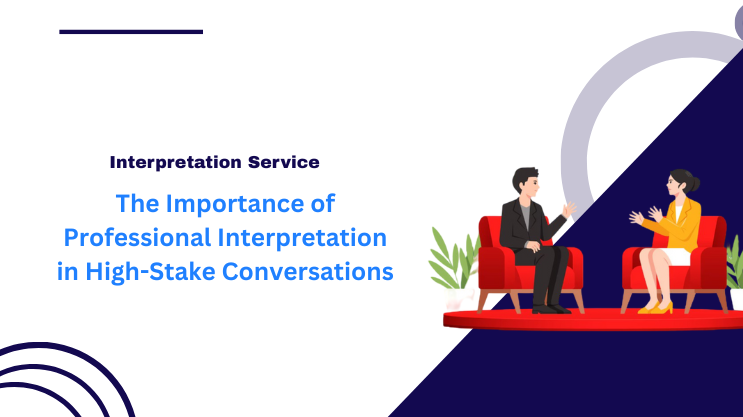
  • The Importance of Professional Interpretation in High-Stake Conversations

    The Importance of Professional Interpretation in High-Stake Conversations

    In today’s globalized world, critical conversations no longer happen in just one language. From legal proceedings and medical consultations to international business negotiations and government interactions, communication often crosses linguistic and cultural boundaries. In such high-stake conversations, even a small misunderstanding can lead to serious consequences. This is where professional interpretation becomes not just helpful-but essential.

    What Are High-Stake Conversations?

    High-stake conversations are situations where accuracy, clarity, and intent matter the most. These include:

    • Legal hearings, court proceedings, and contract discussions
    • Medical consultations, diagnoses, and emergency care
    • Corporate negotiations, mergers, and compliance meetings
    • Immigration interviews and official documentation processes
    • Diplomatic and government-level discussions

    In these scenarios, a single misinterpreted word can affect decisions, outcomes, and even lives.

    Why Professional Interpretation Matters

    1. Accuracy Beyond Literal Translation

    Professional interpreters do more than convert words from one language to another. They convey meaning, tone, and intent, ensuring that the original message remains intact. In high-stake environments, literal or automated interpretation can distort meaning, leading to confusion or legal and ethical risks.

    2. Cultural Understanding and Context

    Language is deeply connected to culture. Professional interpreters understand cultural nuances, formalities, and sensitivities that impact communication. This cultural awareness helps avoid misunderstandings and builds trust between all parties involved.

    3. Real-Time Clarity Under Pressure

    High-stake conversations often happen in fast-paced or emotionally charged environments. Trained interpreters are skilled at maintaining clarity and accuracy under pressure, ensuring smooth communication without interruptions or delays.

    4. Confidentiality and Professional Ethics

    Sensitive discussions require strict confidentiality. Professional interpretation services follow ethical standards and privacy protocols, ensuring that personal, legal, and medical information remains secure.

    Risks of Using Unqualified or Automated Interpretation

    Relying on untrained interpreters or automated tools in high-stake situations can result in:

    • Legal disputes and compliance violations
    • Medical errors and patient safety risks
    • Financial losses and damaged business relationships
    • Loss of credibility and trust

    While technology can support communication, it cannot replace the judgment, experience, and accountability of a trained professional interpreter in critical scenarios.

    Types of Professional Interpretation Used in High-Stake Settings

    • Simultaneous Interpretation – Ideal for conferences, courtrooms, and international meetings
    • Consecutive Interpretation – Common in legal, medical, and business discussions
    • Remote Interpretation – Enables secure and effective communication across locations

    Choosing the right interpretation method ensures efficiency without compromising accuracy.

    How Honey Translation Supports High-Stake Communication

    At Honey Translation, we understand that high-stake conversations demand the highest standards of precision and professionalism. Our experienced interpreters are trained to handle complex, sensitive, and time-critical situations across industries such as legal, medical, corporate, and governmental sectors.

    We combine linguistic expertise, cultural understanding, and ethical responsibility to ensure every conversation is communicated clearly, accurately, and confidently.

    Conclusion

    In high-stake conversations, language is not just a medium-it is a responsibility. Professional interpretation safeguards understanding, protects interests, and ensures that every voice is heard accurately. Investing in expert interpretation services is not a cost, but a crucial step toward clarity, trust, and successful outcomes in a multilingual world.

  • Why Multilingual Strategy Is No Longer Optional for Growing Companies

    Why Multilingual Strategy Is No Longer Optional for Growing Companies

    In today’s interconnected digital economy, growth is no longer limited by geography-but by communication. Companies aiming to expand beyond their home market quickly realize one truth: speaking only one language limits opportunity. A multilingual strategy is no longer a “nice to have”; it is a business necessity for companies that want sustainable growth, customer trust, and global relevance.

    The Global Customer Expects Local Communication

    Modern customers prefer to engage with brands in their native language. Research consistently shows that people are more likely to trust, purchase from, and stay loyal to businesses that communicate clearly and culturally appropriately.

    When content, websites, apps, and customer support are available only in one language:

    • Users feel disconnected
    • Misunderstandings increase
    • Conversion rates drop

    A multilingual approach removes these barriers and makes customers feel valued-wherever they are.

    Growth Markets Are Multilingual by Default

    Emerging and fast-growing markets across Asia, Africa, Europe, and South America are linguistically diverse. English alone cannot reach these audiences effectively. Companies that invest in professional translation and localization can:

    • Enter new markets faster
    • Communicate with confidence
    • Reduce costly errors and misinterpretations

    A multilingual strategy allows businesses to scale globally without losing clarity or consistency.

    Localization Drives Higher Engagement and Sales

    Multilingual strategy goes beyond word-for-word translation. Localization adapts content to culture, tone, and user expectations. This includes:

    • Website and app localization
    • Product descriptions and marketing messages
    • Legal, technical, and support documentation

    Localized content feels natural and relevant, leading to:

    • Higher engagement
    • Better user experience
    • Increased conversions and revenue

    Trust, Compliance, and Brand Credibility Matter

    In industries such as healthcare, legal, finance, and technology, accuracy is critical. Poor translation can result in:

    • Legal risks
    • Compliance issues
    • Brand damage

    Professional language services ensure:

    • Terminology accuracy
    • Industry-specific expertise
    • Consistent brand voice across languages

    A strong multilingual strategy protects both reputation and compliance.

    Multilingual Content Improves Global SEO

    Search behavior varies by language and region. Multilingual websites:

    • Rank better in local search results
    • Attract region-specific traffic
    • Increase global visibility

    By optimizing translated content for local keywords and search intent, businesses gain a significant competitive edge in international markets.

    AI Alone Is Not Enough

    While AI translation tools are helpful for speed, they often lack:

    • Cultural understanding
    • Context awareness
    • Industry accuracy

    Growing companies need a human-led, technology-supported approach to ensure quality, reliability, and clarity. Professional language partners bridge this gap effectively.

    Building a Scalable Multilingual Strategy

    A successful multilingual strategy includes:

    • Identifying key target markets and languages
    • Using professional translation and localization services
    • Maintaining consistency across all communication channels
    • Regularly updating content for accuracy and relevance

    Partnering with an experienced language service provider ensures long-term scalability and quality.

    Final Thoughts

    In a world where customers expect personalization and clarity, language can either unlock growth or block it. Companies that invest in multilingual strategies build stronger relationships, expand faster, and compete more effectively on a global scale.

  • How Localized Messaging Turns Visitors into Loyal Customers

    How Localized Messaging Turns Visitors into Loyal Customers

    In today’s global digital marketplace, attracting visitors to your website is only the first step. The real challenge lies in turning those visitors into loyal, long-term customers. One of the most effective ways to achieve this is through localized messaging—content that speaks not just the language of your audience, but their culture, expectations, and everyday realities.

    What Is Localized Messaging?

    Localized messaging goes beyond direct translation. It adapts your brand’s tone, vocabulary, visuals, and context to match the preferences of a specific region or audience. This includes local expressions, cultural references, currencies, date formats, legal requirements, and even emotional cues that influence purchasing decisions.

    When users feel that your brand “understands” them, trust builds naturally.

    First Impressions Matter

    Visitors form an opinion about your brand within seconds. If they land on a website that feels foreign, generic, or confusing, they are more likely to leave. Localized messaging creates a sense of familiarity from the very first interaction.

    For example:

    • Clear content in the user’s native language reduces friction
    • Local terminology increases clarity and comfort
    • Region-specific messaging feels personal and relevant

    This immediate connection keeps visitors engaged and encourages them to explore further.

    Building Trust Through Cultural Relevance

    Trust is the foundation of customer loyalty. Messaging that aligns with local culture shows respect and professionalism. Cultural missteps or awkward translations can make a brand appear careless or unreliable.

    Localized content helps:

    • Avoid misunderstandings or offensive phrasing
    • Match local communication styles (formal vs casual)
    • Reflect cultural values and buying behaviors

    When customers feel respected, they are far more likely to trust your brand and return.

    Improved User Experience Drives Conversions

    A localized user experience makes it easier for visitors to take action. From product descriptions to call-to-action buttons, localized messaging ensures clarity at every stage of the customer journey.

    Benefits include:

    • Higher engagement rates
    • Lower bounce rates
    • Increased time spent on site
    • Better conversion rates

    When users don’t have to “translate in their heads,” decisions become faster and more confident.

    Emotional Connection Creates Loyalty

    People don’t just buy products-they connect with brands that resonate emotionally. Localized messaging allows you to speak in a tone and style that feels familiar, warm, and relatable.

    Using culturally appropriate storytelling, local success stories, and region-specific campaigns helps your brand move from being just another option to becoming a trusted choice.

    Consistency Across Channels Matters

    Localization should be consistent across all touchpoints-websites, mobile apps, social media, customer support, emails, and marketing campaigns. A unified localized message strengthens brand identity and reinforces trust at every interaction.

    Professional language service providers ensure consistency while maintaining the natural flow of each language.

    Why Professional Localization Makes the Difference

    Effective localization requires linguistic expertise, cultural understanding, and industry knowledge. Automated tools often miss nuances, tone, and context, leading to content that feels unnatural or inaccurate.

    Professional localization services help businesses:

    • Communicate clearly and confidently
    • Maintain brand voice across languages
    • Meet regional and legal standards
    • Build long-term customer relationships

    Conclusion

    Localized messaging is not just a marketing tactic-it’s a customer loyalty strategy. By speaking your audience’s language in the truest sense, you transform casual visitors into engaged users and, ultimately, loyal customers.

    In a competitive global market, brands that invest in meaningful localization stand out, connect deeper, and grow stronger relationships that last.

  • How Translation Technology Enhances Human Expertise

    How Translation Technology Enhances Human Expertise

    Translation is no longer a purely manual task. With globalization accelerating and businesses reaching international audiences, translation technology has become an essential partner for professional translators. While technology streamlines processes, human expertise ensures accuracy, cultural sensitivity, and contextual relevance. The combination of both creates high-quality, efficient, and reliable translations for businesses worldwide.

    1. Computer-Assisted Translation (CAT) Tools

    CAT tools are software applications that help translators work faster and more consistently. They allow the use of translation memories, glossaries, and terminology databases, reducing repetitive work and ensuring uniformity across large projects. While the technology handles consistency, human translators provide judgment, nuance, and context that machines alone cannot replicate.

    2. Translation Memory for Efficiency

    Translation memory stores previously translated phrases, sentences, and paragraphs for future use. This feature helps translators maintain consistency across multiple documents and projects. By leveraging translation memory, human experts can focus on refining meaning, tone, and style rather than re-translating repetitive content, improving both speed and quality.

    3. Machine Translation with Human Post-Editing

    Machine translation, powered by AI, offers instant translations but often lacks accuracy in complex or culturally nuanced content. Human post-editors review and correct machine-generated translations, ensuring that the final output is both accurate and natural. This collaboration allows businesses to benefit from speed without compromising quality.

    4. Terminology Management Systems

    Industry-specific terminology can be challenging to maintain across different languages and projects. Terminology management systems store approved translations of specialized terms, ensuring consistency. Human translators use these systems to guarantee that technical, legal, or medical content is precise and aligns with industry standards.

    5. Quality Assurance Tools

    Translation technology includes quality assurance (QA) tools that detect errors such as missing numbers, formatting inconsistencies, or untranslated segments. Human translators then review these flagged areas to ensure contextual accuracy, making the translation both flawless and culturally appropriate.

    6. Enhancing Collaboration Across Global Teams

    Modern translation platforms enable real-time collaboration among translators, editors, and project managers around the world. Technology facilitates communication, file sharing, and workflow management, while human expertise ensures that translations retain clarity, tone, and cultural relevance.

    In conclusion, translation technology does not replace human expertise-it enhances it. By combining the efficiency and consistency of tools with the insight, judgment, and cultural understanding of professional translators, businesses can achieve translations that are accurate, contextually appropriate, and impactful in any market.

  • The Importance of Proofreading in Professional Translation

    The Importance of Proofreading in Professional Translation

    Proofreading is a critical step in professional translation that ensures accuracy, clarity, and quality. Even the most skilled translators can make minor errors or overlook nuances, which can affect the effectiveness and credibility of the translated content. Proofreading bridges the gap between translation and polished, error-free communication.

    1. Ensuring Accuracy and Consistency

    Proofreading guarantees that the translated content faithfully conveys the original message. It helps identify and correct spelling mistakes, grammatical errors, punctuation issues, and inconsistencies in terminology. This step ensures that every word aligns with the source text and maintains professional quality throughout the document.

    2. Maintaining Cultural and Contextual Relevance

    Language is not just about words-it carries cultural nuances and context. Proofreading allows translators or editors to check that idioms, phrases, and expressions are appropriate for the target audience. This ensures that the message is not only accurate but also culturally sensitive and easily understood.

    3. Avoiding Miscommunication and Errors

    Even small mistakes in translation can lead to misunderstandings, confusion, or reputational damage, especially in legal, medical, or technical content. Proofreading acts as a safety net, catching potential errors that could have serious consequences, and ensures that the final translation is reliable and precise.

    4. Enhancing Professionalism and Credibility

    A polished, error-free translation reflects professionalism and builds trust with clients, partners, and readers. Proofreading elevates the overall quality of the document, making it appear more credible and authoritative, which is crucial for business communication, marketing materials, and official documents.

    5. Improving Readability and Flow

    Proofreading goes beyond correcting errors-it also ensures that the translated content flows naturally and reads smoothly. This includes checking sentence structure, coherence, and tone, so the final translation feels as if it was originally written in the target language, enhancing engagement and comprehension.

    6. Supporting Brand Reputation and Global Communication

    High-quality translation combined with thorough proofreading strengthens brand image and supports global communication efforts. Businesses that prioritize proofreading demonstrate attention to detail, reliability, and commitment to excellence, which resonates with international clients and audiences.

    In conclusion, proofreading is an indispensable part of professional translation. It ensures accuracy, cultural relevance, readability, and credibility, making it a crucial step for delivering translations that truly connect with global audiences and uphold professional standards.

  • How Localized Content Increases Engagement and Sales

    How Localized Content Increases Engagement and Sales

    In the global marketplace, reaching your audience effectively is about more than just translating words-it’s about speaking their language in every sense. Localized content helps brands connect on a deeper level, creating trust, engagement, and ultimately driving sales.

    At Honey Translation, we specialize in transforming your content so that it resonates with local audiences while maintaining your brand identity.

    1. What Is Content Localization?

    Localization goes beyond translation. It adapts content to the cultural, social, and linguistic context of a target market. This includes:

    • Adjusting idioms, expressions, and tone
    • Converting currencies, units, and date formats
    • Tailoring visuals, colors, and design elements
    • Adapting marketing messages to local preferences

    By aligning content with local expectations, businesses can make their messaging feel natural and authentic.

    2. Building Trust Through Cultural Relevance

    Consumers are more likely to engage with brands that understand their culture. Generic translations can feel impersonal or confusing, while localized content shows that a business values its customers.

    For example, a promotional campaign or product description localized for a specific region can:

    • Improve readability and comprehension
    • Make content emotionally appealing
    • Increase confidence in purchasing decisions

    3. Improving Engagement Across Channels

    Localized content doesn’t just enhance websites-it improves engagement across all channels, including:

    • Social media posts
    • Email campaigns
    • Mobile apps
    • Online ads

    When content feels relevant and relatable, audiences spend more time interacting, sharing, and converting.

    4. Boosting Sales Through Personalization

    A global audience expects personalized experiences. Localized content makes products and services feel tailored to the customer’s needs. This directly impacts sales by:

    • Reducing friction in the buyer’s journey
    • Increasing conversion rates
    • Encouraging repeat purchases

    Brands that localize effectively can outperform competitors who rely solely on direct translation.

    5. SEO Benefits of Localization

    Localization also improves search engine visibility. Keywords, search intent, and search behavior vary by region. Professional localization ensures that your content ranks effectively in local search results, driving more organic traffic and potential sales.

    Conclusion

    Localization is more than a marketing tactic-it’s a business strategy. It transforms content from generic to meaningful, helping brands connect with customers on a personal level, increase engagement, and boost revenue.

    Honey Translation helps businesses achieve this by providing expert localization services that combine language expertise, cultural knowledge, and industry experience. With professional localization, global expansion becomes not just possible but profitable.

  • Translation Challenges in E-Commerce and Online Marketplaces

    Translation Challenges in E-Commerce and Online Marketplaces

    The digital marketplace has eliminated borders, giving businesses the opportunity to reach millions of customers worldwide. But expanding globally comes with its own set of challenges-language being one of the most critical. E-commerce businesses must not only translate content but also ensure it resonates with local audiences, builds trust, and drives conversions.

    At Honey Translation, we help brands navigate these challenges by providing accurate, culturally relevant translations that strengthen global customer engagement.

    1. Conveying Brand Voice Across Languages

    Your brand’s tone, personality, and messaging are carefully crafted for your audience. A literal translation may convey the words but not the spirit of your brand.

    Professional translators can adapt marketing messages, product descriptions, and customer communications to maintain your brand voice in different languages. This ensures your audience feels the same connection no matter where they are.

    2. Managing Product Descriptions and Specifications

    E-commerce platforms are filled with detailed product information-sizes, colors, ingredients, features, and legal disclaimers. Small errors can lead to customer confusion, negative reviews, or even regulatory issues.

    At Honey Translation, our team ensures technical accuracy while making the content clear and appealing for local markets.

    3. Cultural Sensitivity and Localization

    Colors, images, pricing formats, and promotional campaigns can carry different meanings in different cultures. What works in one market may offend or confuse customers in another.

    Localization goes beyond language-it adapts your content to the cultural norms, expectations, and preferences of your target audience. This approach increases engagement and conversions while avoiding potential missteps.

    4. SEO and Search Optimization Challenges

    E-commerce websites depend on search engines and marketplace search algorithms to drive traffic. Keywords that work in one language may not translate effectively into another.

    Professional translation teams integrate multilingual SEO strategies, ensuring your products remain discoverable and relevant in global markets.

    5. Handling Customer Reviews and Support

    Customer reviews, FAQs, and support tickets often contain colloquial language, slang, or regional expressions. Automated translations may misinterpret these nuances, leading to misunderstandings or poor customer experiences.

    With human translation, your customer interactions remain accurate, respectful, and helpful, improving brand loyalty across regions.

    6. Keeping Up with Rapid Content Updates

    E-commerce platforms frequently update content-new products, promotions, and seasonal campaigns. Timely and accurate translation is essential to stay competitive.

    Honey Translation offers fast, reliable services with quality checks to keep your content consistent and market-ready.

    Conclusion

    Expanding into global markets is more than just translating words-it requires understanding culture, context, and customer behavior. Businesses that rely solely on automated tools risk miscommunication, lost sales, and damaged brand reputation.

    By partnering with professional translation services like Honey Translation, e-commerce brands can deliver accurate, culturally relevant, and engaging content that resonates worldwide, driving growth and customer loyalty.

  • Why Industry-Specific Translators Matter More Than You Think

    Why Industry-Specific Translators Matter More Than You Think

    In today’s global business environment, translation is no longer just about converting words from one language to another. Accuracy, context, and subject-matter expertise play a critical role in how information is understood across borders. This is where industry-specific translators make a real difference. They bring not only linguistic skills but also deep knowledge of a particular field, ensuring communication is clear, compliant, and trustworthy.

    1. Understanding Industry Terminology and Jargon

    Every industry has its own terminology, abbreviations, and technical language. A legal document, medical report, or engineering manual cannot be translated accurately without understanding these terms in context. Industry-specific translators are familiar with sector-related jargon and know how to translate it precisely, avoiding vague or misleading interpretations that general translators may overlook.

    2. Ensuring Accuracy in High-Risk Content

    In industries such as healthcare, legal, finance, and manufacturing, even a small translation error can lead to serious consequences. A wrong dosage instruction, an incorrectly translated clause, or a technical mistake can cause legal issues, safety risks, or financial loss. Industry-specialized translators understand the sensitivity of such content and follow strict accuracy standards to minimize risk.

    3. Maintaining Compliance with Industry Regulations

    Many sectors operate under strict regulatory frameworks. Legal contracts, medical documentation, and financial reports often need to meet specific local and international compliance standards. Industry-specific translators are aware of these regulations and ensure translations align with required formats, terminology, and legal expectations, helping businesses stay compliant in global markets.

    4. Preserving Meaning, Not Just Words

    Professional translation is about conveying the intended meaning, tone, and purpose of the content. Industry-specific translators understand how concepts are commonly expressed within their field and adapt the language accordingly. This ensures that the translated content sounds natural and professional to the target audience, rather than awkward or generic.

    5. Improving Efficiency and Reducing Rework

    When translators already understand the subject matter, the translation process becomes faster and more efficient. There is less need for repeated revisions, clarifications, or corrections. This saves time, reduces costs, and allows businesses to meet tight deadlines without compromising quality.

    6. Strengthening Brand Trust and Credibility

    Clear, accurate, and professional communication builds trust. When clients, partners, or users read content that feels reliable and well-structured in their own language, it reflects positively on the brand. Industry-specific translators help businesses present themselves as knowledgeable, professional, and globally prepared, strengthening credibility in international markets.

    In conclusion, industry-specific translators are not a luxury but a necessity for businesses operating across languages and borders. Their expertise ensures accuracy, compliance, efficiency, and trust-elements that are essential for successful global communication. Choosing the right translators for the right industry can make all the difference between simply being understood and being truly trusted.