
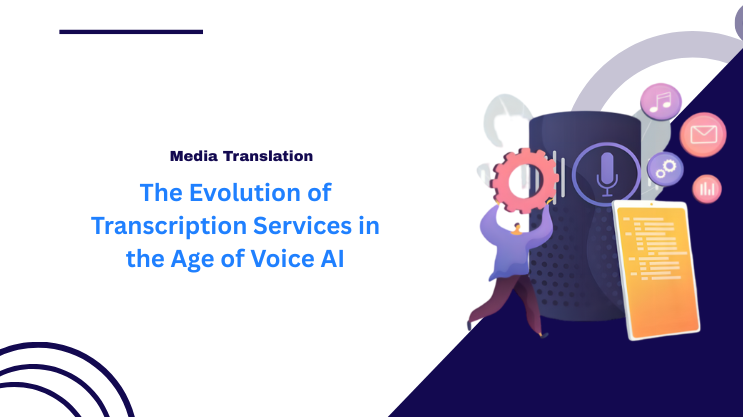
In an era dominated by rapid technological advancements, transcription services have undergone a remarkable transformation. From traditional manual typing to the cutting-edge world of Voice AI, the way we convert speech into text has become faster, smarter, and more efficient. This evolution not only enhances productivity but also opens new possibilities across industries.
1. The Early Days of Transcription
Historically, transcription was a labor-intensive process. Human transcriptionists would listen to audio recordings and manually type every word. Accuracy depended on the skill and concentration of the transcriber, and the process was time-consuming and costly.
Despite these challenges, transcription services were essential in legal proceedings, medical documentation, media production, and business meetings, providing a reliable written record of spoken content.
2. The Shift Towards Digital Tools
With the advent of computers and basic speech-to-text software, transcription began to see its first wave of automation. Early tools were limited in their accuracy and often required extensive human editing.
Digital audio players with variable-speed playback helped transcribers work more efficiently, and specialized software started assisting in medical and legal transcription, laying the groundwork for the AI revolution.
3. Voice AI: A Game Changer
The rise of Voice AI has transformed transcription into a nearly real-time process. Advanced algorithms powered by machine learning can now:
- Accurately recognize multiple accents and dialects
- Identify industry-specific terminology
- Convert speech into text at high speed with minimal errors
Voice AI not only reduces the turnaround time but also makes transcription more scalable and cost-effective. Businesses can now generate transcripts for webinars, podcasts, meetings, and customer service calls almost instantly.
4. Applications Across Industries
- Healthcare: AI-driven transcription helps doctors and nurses document patient records efficiently, improving both speed and accuracy.
- Legal: Lawyers can access automated deposition and court transcripts, saving time on manual note-taking.
- Media & Entertainment: Podcasts, interviews, and video content can now be transcribed quickly, enhancing accessibility and content distribution.
- Business: Meeting transcripts improve collaboration, decision-making, and record-keeping.
5. Challenges and Considerations
While Voice AI is powerful, challenges remain:
- Accuracy in Noisy Environments: Background noise can affect transcription quality.
- Confidentiality: Sensitive information requires robust data security measures.
- Human Touch: Some nuances, context, or emotional subtleties are still better captured by human transcribers.
The ideal approach often combines AI efficiency with human oversight for the highest accuracy.
6. The Future of Transcription Services
The future points toward even greater integration of AI, natural language processing, and real-time transcription in daily workflows. Innovations may include:
- Multilingual transcription with contextual understanding
- AI summarization of long audio or video content
- Seamless integration with virtual assistants and collaboration platforms
As Voice AI continues to evolve, transcription will become faster, smarter, and increasingly indispensable in professional environments.
Conclusion
Transcription services have come a long way from handwritten notes to AI-powered real-time solutions. By embracing Voice AI, businesses and professionals can streamline communication, save time, and enhance productivity, all while keeping pace with the demands of the modern digital world.
