Tag: #MultilingualWebsite

  • Product Description Translation That Boosts International Sales

    Product Description Translation That Boosts International Sales

    In the global marketplace, product descriptions do more than describe-they sell, inform, and build trust. When expanding into international markets, accurate and persuasive product description translation is essential. A well-translated product description not only communicates features but also resonates culturally, persuading customers and driving sales worldwide.

    1. Making Products Accessible to Global Audiences

    Translating product descriptions allows potential customers to understand your products in their native language. Clear communication removes barriers and encourages purchase decisions.

    Key benefits:

    • Wider audience reach
    • Increased international sales opportunities
    • Improved customer understanding

    2. Preserving Brand Voice Across Markets

    Professional translation ensures that the tone, style, and personality of your brand remain consistent, even across languages and cultures. This consistency strengthens brand identity and recognition globally.

    Impact:

    • Builds brand trust
    • Maintains brand personality
    • Enhances professional image

    3. Cultural Relevance Drives Engagement

    Product descriptions are more effective when culturally adapted. Translators who understand local preferences, idioms, and purchasing habits can tailor descriptions that appeal to specific audiences.

    Benefits include:

    • Higher engagement with target customers
    • Increased conversion rates
    • Stronger emotional connection with buyers

    4. Boosting SEO for International Markets

    Multilingual SEO is key to ensuring your products are discoverable worldwide. Translators and localization experts optimize product descriptions with relevant keywords for each market, improving search engine visibility.

    SEO advantages:

    • Higher rankings in local search results
    • Increased organic traffic
    • More qualified leads and sales

    5. Reducing Misunderstandings and Returns

    Accurate product description translation minimizes misinterpretation, helping customers make informed purchase decisions. This reduces complaints, returns, and negative reviews.

    Business impact:

    • Lower product return rates
    • Fewer customer service issues
    • Enhanced customer satisfaction

    Conclusion

    Product description translation is more than a language service-it is a strategic investment that drives international sales, strengthens brand identity, and ensures customer satisfaction. Businesses that invest in high-quality translation unlock global opportunities and position themselves for success in the competitive international marketplace.
  • Why Multilingual Social Media Strategies Matter for Global Brands

    Why Multilingual Social Media Strategies Matter for Global Brands

    Social media has become a vital platform for brands to connect with audiences worldwide. However, a one-size-fits-all approach rarely works in global markets. Multilingual social media strategies enable brands to communicate in local languages, resonate culturally, and build stronger engagement with diverse audiences. Implementing such strategies is essential for global growth, brand recognition, and customer loyalty.

    1. Reaching a Wider Audience

    By creating content in multiple languages, brands can connect with audiences in different regions who may not be comfortable with English or other dominant languages. Multilingual content broadens reach and ensures the brand is accessible to more potential customers globally.

    2. Enhancing Engagement and Interaction

    Users are more likely to engage with content in their native language. Multilingual posts, comments, and responses encourage likes, shares, and conversations, improving overall social media performance and fostering a sense of community.

    3. Building Cultural Relevance

    Multilingual strategies allow brands to adapt not only language but also messaging, humor, and cultural references. Culturally relevant content resonates with local audiences, making campaigns more relatable and effective.

    4. Strengthening Brand Trust and Loyalty

    When brands communicate in the local language and demonstrate cultural awareness, it builds trust and credibility. Consistent, localized interactions on social media help nurture long-term relationships and encourage brand loyalty.

    5. Supporting Local Campaigns and Promotions

    Tailoring social media campaigns to specific markets allows brands to highlight local offers, events, and holidays. Multilingual content ensures promotional messages are clear, compelling, and culturally appropriate.

    6. Improving Customer Support and Responsiveness

    Responding to queries, complaints, and feedback in the user’s language enhances the customer experience. Multilingual support on social media shows that a brand values all its customers, regardless of region or language.

    7. Enhancing Analytics and Insights

    Tracking engagement, sentiment, and trends in each language provides valuable insights into regional preferences. These analytics help brands refine strategies, optimize content, and make informed decisions for global campaigns.

    8. Staying Competitive in International Markets

    Brands that adopt multilingual social media strategies gain a competitive advantage by connecting authentically with local audiences. Businesses that ignore localization risk losing relevance and engagement to competitors who communicate more effectively.

    In conclusion, multilingual social media strategies are essential for global brands seeking to expand reach, increase engagement, and strengthen customer relationships. By combining cultural understanding, language adaptation, and data-driven insights, brands can maximize the impact of their social media presence across international markets.

  • The Role of Multilingual Content in Enhancing Global E-Commerce Experience

    The Role of Multilingual Content in Enhancing Global E-Commerce Experience

    In the fast-growing world of e-commerce, reaching international customers requires more than just shipping products globally. Multilingual content is a key factor in delivering a seamless shopping experience, improving user engagement, and driving sales across diverse markets. By adapting content to local languages and cultural preferences, businesses can build trust, increase conversions, and strengthen their global presence.

    1. Creating a Personalized Shopping Experience

    Providing product descriptions, reviews, and recommendations in a customer’s native language makes the shopping experience more personal and engaging. Personalization fosters trust and encourages users to explore products confidently.

    2. Improving Product Clarity and Understanding

    Multilingual content ensures that product details, specifications, pricing, and policies are clear to international customers. Accurate and understandable information reduces confusion, prevents returns, and enhances customer satisfaction.

    3. Boosting Conversion Rates

    Shoppers are more likely to make purchases when content is presented in their preferred language. Localized content eliminates barriers, increases confidence in buying decisions, and directly contributes to higher conversion rates.

    4. Enhancing Customer Support and Communication

    Providing FAQs, chat support, and help guides in multiple languages improves the overall customer experience. Multilingual support ensures that users feel valued and can resolve issues quickly, fostering loyalty and repeat purchases.

    5. Optimizing Multilingual SEO for E-Commerce

    Localized product pages and landing pages optimized for regional search engines help attract organic traffic. Multilingual SEO increases visibility in international markets and ensures customers can find products easily in their own language.

    6. Building Brand Trust and Credibility

    A business that invests in multilingual content demonstrates professionalism and a commitment to serving global audiences. This attention to detail enhances brand reputation and builds long-term trust with customers.

    7. Adapting Marketing Campaigns for Local Markets

    Email campaigns, social media promotions, and advertisements in local languages resonate better with audiences. Tailored messaging increases engagement and strengthens the effectiveness of marketing initiatives.

    8. Supporting Global Expansion Strategies

    Multilingual content is essential for scaling e-commerce operations internationally. It enables businesses to enter new markets confidently, meet customer expectations, and compete effectively with local players.

    In conclusion, multilingual content plays a vital role in enhancing the global e-commerce experience. By combining clear communication, cultural relevance, and localized marketing strategies, businesses can improve user engagement, increase conversions, and establish a strong presence in international markets.

  • Localization Automation: Speed Without Compromising Accuracy

    Localization Automation: Speed Without Compromising Accuracy

    In today’s fast-moving digital world, businesses are expanding across borders faster than ever. Websites, apps, software, e-learning platforms, and marketing campaigns must speak the language of global audiences – accurately and instantly. This is where localization automation comes in.

    At Honey Translation Services, we combine smart automation with expert human linguists to deliver fast, accurate, and culturally relevant localization – without sacrificing quality.

    What Is Localization Automation?

    Localization automation is the use of technology, tools, and workflows to streamline the translation and localization process. It helps manage content efficiently across multiple languages while maintaining consistency, speed, and accuracy.

    Automation does not replace human expertise. Instead, it supports translators by handling repetitive tasks such as file processing, terminology management, version control, and quality checks.

    Why Speed Matters in Localization

    Global markets move quickly. Delays in localization can mean missed opportunities, slower product launches, and reduced customer engagement.

    Automation helps businesses:

    • Launch products simultaneously in multiple regions
    • Update multilingual content in real time
    • Reduce turnaround time for large-scale projects
    • Maintain brand consistency across languages

    At Honey Translation Services, automation allows us to deliver faster results while our linguists focus on what matters most – language quality and cultural relevance.

    Accuracy Is Non-Negotiable

    Speed alone is not enough. Poorly localized content can damage brand credibility, confuse users, and even cause legal or compliance issues.

    That’s why our localization automation process includes:

    • Human review by native language experts
    • Industry-specific terminology validation
    • Context-aware translation checks
    • Cultural and regional adaptation

    Automation accelerates workflows, but human expertise ensures precision.

    How Honey Translation Services Uses Smart Localization Automation

    We follow a hybrid approach that balances technology and human skill.

    Automated Workflow Management
    Content is processed efficiently through translation management systems, ensuring faster handling of large volumes.

    Terminology & Translation Memory
    Previously approved translations are reused to maintain consistency and reduce costs without repeating errors.

    Human Linguistic Review
    Every project is reviewed by professional translators who understand cultural nuances and domain-specific language.

    Multi-Format Compatibility
    From websites and mobile apps to software strings, documents, and multimedia content – automation supports diverse formats.

    Industries That Benefit Most from Localization Automation

    Localization automation is especially valuable for industries handling frequent updates and multilingual content, including:

    • IT & Software
    • E-commerce & Retail
    • E-learning & EdTech
    • Healthcare & Life Sciences
    • Legal & Corporate Documentation
    • Marketing & Digital Media

    Honey Translation Services customizes workflows based on industry needs to ensure accuracy and compliance.

    Automation Without Cultural Loss

    One common concern is that automation may remove the human touch. At Honey Translation Services, we ensure this never happens.

    Our experts adapt content for:

    • Local tone and expressions
    • Cultural references and sensitivities
    • Regional regulations and user expectations

    Automation handles the speed – humans protect the meaning.

    SEO Benefits of Automated Localization

    Well-localized content improves international SEO performance. Automation helps maintain multilingual SEO by:

    • Supporting keyword consistency across languages
    • Enabling faster updates to global web pages
    • Ensuring localized metadata and content structure

    With Honey Translation Services, your multilingual content is optimized not just for readers, but also for search engines worldwide.

    The Future of Localization Is Hybrid

    The future is not automation alone or humans alone –  it’s a smart combination of both.

    At Honey Translation Services, localization automation empowers our linguists to work faster, smarter, and more accurately. The result is high-quality multilingual content delivered on time, every time.

    Partner With Honey Translation Services

    If your business needs speed without compromising accuracy, Honey Translation Services is your trusted localization partner. Our automated workflows, combined with expert linguistic review, ensure your message reaches global audiences with clarity and confidence.

  • Why Real-Time Language Translation Is a Game-Changer for International Meetings

    Why Real-Time Language Translation Is a Game-Changer for International Meetings

    In today’s global business environment, international meetings are no longer limited by geography-but language can still be a barrier. Real-time language translation is transforming how global teams communicate, collaborate, and make decisions. By enabling instant understanding across languages, it has become a true game-changer for international meetings.

    1. Eliminates Language Barriers Instantly

    Real-time language translation allows participants to understand discussions as they happen, without waiting for follow-up explanations or summaries. This ensures that every voice is heard and every idea is clearly understood.

    Key benefits:

    • Immediate communication
    • Reduced misunderstandings
    • Inclusive participation for all attendees

    2. Improves Meeting Efficiency and Productivity

    When language barriers are removed, meetings flow more smoothly. Participants can focus on content and decision-making rather than struggling to interpret language differences.

    Business impact:

    • Faster discussions and decisions
    • Less repetition and clarification
    • More productive meetings

    3. Enables Inclusive Global Collaboration

    International teams are often diverse and multilingual. Real-time translation ensures equal participation, empowering team members to contribute confidently in their native language.

    Why it matters:

    • Promotes inclusivity
    • Strengthens teamwork
    • Encourages open communication

    4. Supports High-Stakes Discussions

    From negotiations and client presentations to executive meetings, accuracy is critical. Professional real-time translation—often supported by skilled interpreters and advanced technology-ensures that tone, intent, and nuance are preserved.

    Strategic advantage:

    • Clear understanding in critical discussions
    • Reduced risk of costly errors
    • Stronger trust between stakeholders

    5. Enhances Virtual and Hybrid Meetings

    With the rise of remote work, real-time translation has become essential for virtual and hybrid meetings. It allows global participants to engage fully, regardless of location or language.

    Key outcomes:

    • Seamless cross-border communication
    • Improved engagement in online meetings
    • Better global connectivity

    Conclusion

    Real-time language translation is reshaping international meetings by making them more inclusive, efficient, and effective. By enabling instant communication across languages, it empowers global teams to collaborate confidently and make better decisions together.

    Investing in real-time translation solutions is not just a technological upgrade-it’s a strategic move toward stronger global collaboration and business success.

  • Preparing Multilingual Content for Voice Search and AI Assistants

    Preparing Multilingual Content for Voice Search and AI Assistants

    As voice-activated technologies and AI assistants become increasingly popular, businesses need to adapt their content strategies for multilingual audiences. Optimizing content for voice search ensures that users across the globe can find information quickly and naturally, while AI assistants deliver relevant responses in multiple languages. Proper preparation of multilingual content is essential to remain competitive in the era of voice-driven search.

    1. Understanding the Rise of Voice Search

    Voice search usage is growing rapidly due to AI assistants like Siri, Alexa, Google Assistant, and Cortana. Users prefer conversational, natural-language queries over traditional typed searches, which requires businesses to rethink content structure, keywords, and phrasing for global markets.

    2. Adapting Keywords for Conversational Queries

    Voice search queries are often longer and more question-oriented than typed searches. Multilingual content should incorporate natural, conversational keywords in local languages, including phrases users might speak rather than type, to improve visibility and relevance.

    3. Structuring Content for Quick Answers

    AI assistants prioritize concise, informative responses. Structuring content with clear headings, bullet points, and direct answers enhances the likelihood of being featured in voice search results and provides value to users across languages.

    4. Localizing Content Beyond Translation

    Localization ensures that content is culturally relevant and contextually accurate. This includes adjusting units, dates, idioms, examples, and tone so that AI assistants deliver natural and understandable answers to users in each region.

    5. Optimizing for Multilingual SEO

    Voice search optimization overlaps with multilingual SEO. Content must include localized meta tags, structured data, and regional keywords. Optimizing FAQ pages, product descriptions, and knowledge bases helps AI assistants retrieve and present accurate information.

    6. Integrating with Smart Devices and Platforms

    Multilingual content should be compatible with smart devices, apps, and home assistants. Ensuring proper indexing and accessibility across platforms guarantees that AI assistants can access content and respond accurately to voice queries worldwide.

    7. Testing and Refining for Accuracy

    Regular testing in target languages is crucial to identify errors, unnatural phrasing, or misinterpretations. Feedback loops allow businesses to continuously refine content so that AI assistants provide precise and helpful responses.

    8. Future Trends in Voice Search and AI

    As AI continues to evolve, voice search will become more context-aware and capable of understanding complex queries. Businesses that prepare multilingual content today will be better positioned to leverage future advancements in AI-driven global communication.

    In conclusion, preparing multilingual content for voice search and AI assistants is a strategic necessity for businesses aiming to reach global audiences. By focusing on conversational keywords, localization, structured content, and continuous optimization, companies can ensure they remain discoverable, relevant, and effective in the rapidly growing voice-driven digital landscape.

  • How AI Assisted Translation Improves Time to Market

    How AI Assisted Translation Improves Time to Market

    In today’s fast-paced global economy, businesses must deliver products, services, and marketing campaigns to international markets quickly. AI-assisted translation plays a critical role in reducing turnaround times while maintaining quality and consistency. By combining advanced technology with human expertise, companies can accelerate their global launches and stay competitive.

    1. Faster Translation for Large Volumes of Content

    AI-assisted translation tools can process large amounts of text quickly, including product descriptions, manuals, websites, and marketing materials. This speed ensures that global content is ready for launch without delays, allowing businesses to meet tight deadlines.

    2. Maintaining Consistency Across Multiple Languages

    AI translation often integrates with translation memory systems and brand glossaries. This ensures that terminology, tone, and style remain consistent across all languages, reducing errors and revisions, and further accelerating the launch process.

    3. Streamlining Localization Workflows

    AI-powered platforms automate repetitive tasks, such as formatting, segmenting content, and pre-translating commonly used phrases. This streamlines workflows and allows human translators to focus on nuanced and high-value content, improving overall efficiency.

    4. Supporting Agile Marketing and Product Launches

    With AI-assisted translation, marketing teams can quickly adapt campaigns for multiple regions. Product updates, promotional materials, and ad campaigns can be localized simultaneously, enabling synchronized global launches and faster market penetration.

    5. Real-Time Translation for Dynamic Content

    For websites, apps, and eCommerce platforms that frequently update content, AI-assisted translation provides near real-time localization. This allows businesses to keep their international content current, engaging, and aligned with the latest offerings or promotions.

    6. Reducing Costs While Saving Time

    By handling bulk translation tasks quickly, AI reduces the need for extensive human resources for repetitive content. This not only saves costs but also shortens the overall time required to prepare multilingual content for launch.

    7. Ensuring Quality with Human Oversight

    AI alone cannot handle all cultural nuances or creative messaging. Combining AI translation with professional human review ensures accuracy, cultural relevance, and brand consistency while maintaining rapid delivery schedules.

    8. Measuring Performance and Optimizing Workflows

    AI translation platforms provide analytics on turnaround times, accuracy, and productivity. This data allows teams to refine processes, identify bottlenecks, and continuously improve time-to-market for future launches.

    In conclusion, AI-assisted translation significantly improves time-to-market by speeding up content translation, ensuring consistency, streamlining workflows, and supporting agile global launches. When paired with human expertise, it allows businesses to deliver high-quality, culturally relevant content efficiently, giving them a competitive edge in international markets.

  • The Growing Demand for Localization in FinTech Platforms

    The Growing Demand for Localization in FinTech Platforms

    The FinTech industry is expanding rapidly, serving customers across diverse regions with varying languages, regulations, and financial behaviors. To succeed globally, FinTech platforms must prioritize localization. Effective localization ensures that users feel confident, understood, and comfortable using financial services, ultimately driving adoption, trust, and engagement.

    1. Understanding the Importance of Localization in FinTech

    Localization in FinTech goes beyond translation. It involves adapting language, cultural context, financial terminology, currency formats, date formats, and legal requirements to meet the expectations of local users. Proper localization builds credibility and reduces user friction.

    2. Enhancing User Trust and Confidence

    Financial transactions involve sensitive data, so trust is critical. Users are more likely to engage with platforms that communicate in their native language and adhere to familiar local practices. Clear, localized content increases transparency and fosters user confidence.

    3. Adapting to Regional Regulations and Compliance

    FinTech platforms must comply with local financial regulations, tax requirements, and reporting standards. Localization ensures that legal disclaimers, contracts, and policies are accurately presented, reducing the risk of non-compliance and potential penalties.

    4. Improving User Experience Across Markets

    Localization affects user interfaces, notifications, onboarding flows, and help centers. Adapting content for cultural preferences, readability, and ease of use ensures a seamless experience, improving retention and reducing support queries.

    5. Supporting Multi-Currency and Payment Options

    Different regions have varying currencies and payment preferences. Localizing payment options, currency displays, and transaction messages makes financial interactions straightforward and user-friendly.

    6. Leveraging AI and Translation Tools

    AI-powered translation and localization tools help FinTech platforms scale quickly, translating user interfaces, marketing materials, and support content efficiently while maintaining accuracy and consistency.

    7. Catering to Diverse Customer Segments

    FinTech platforms often target consumers, businesses, and enterprises across multiple countries. Localization allows for personalized messaging and features tailored to different segments, enhancing engagement and conversion rates.

    8. The Competitive Advantage of Effective Localization

    Platforms that invest in localization differentiate themselves from competitors, attract a wider audience, and create a stronger global presence. Providing culturally relevant, understandable, and compliant services builds loyalty and long-term growth.

    In conclusion, the growing demand for localization in FinTech platforms reflects the importance of language, culture, and compliance in global financial services. By prioritizing localization, FinTech companies can enhance user trust, streamline experiences, and achieve sustainable international success.

  • How Multilingual Content Enhances International PR and Media Outreach

    How Multilingual Content Enhances International PR and Media Outreach

    In today’s globalized world, businesses and organizations need to communicate effectively with international audiences. Multilingual content is a key strategy for PR and media outreach, allowing brands to convey their messages accurately, engage diverse audiences, and build strong relationships across borders. By localizing press releases, media kits, and communications, companies can amplify their presence in multiple markets.

    1. Expanding Reach to Global Media

    Creating content in multiple languages enables PR teams to reach journalists, influencers, and media outlets in different regions. Multilingual press releases and media kits increase the likelihood of coverage and help brands gain visibility in local markets.

    2. Building Credibility and Trust

    When companies communicate in the native language of their target audience, it demonstrates professionalism, respect, and commitment. Multilingual content enhances brand credibility and fosters trust among international media and stakeholders.

    3. Tailoring Messages for Cultural Relevance

    Localization ensures that PR messages are culturally appropriate and resonate with local values, traditions, and sensitivities. Adapting tone, examples, and storytelling techniques helps avoid miscommunication and increases engagement with international audiences.

    4. Improving Engagement and Response Rates

    Journalists and media professionals are more likely to respond to content that is clear, relevant, and easy to understand in their native language. Multilingual materials increase the chances of interviews, features, and media partnerships.

    5. Supporting Crisis Communication Globally

    During a crisis, timely and accurate multilingual communication is crucial. Localized statements, announcements, and updates help brands manage reputations effectively across multiple regions and prevent misinformation.

    6. Enhancing Social Media and Online Outreach

    PR campaigns often extend to social media platforms. Multilingual content ensures that social posts, blogs, and online press releases reach audiences in different languages, boosting engagement and sharing across borders.

    7. Aligning Messaging Across Markets

    Consistent messaging across languages and regions is vital for maintaining a coherent global brand image. Multilingual content helps synchronize PR efforts, ensuring that the brand communicates the same core message worldwide.

    8. Measuring Impact and Optimizing Strategies

    Monitoring coverage, engagement, and audience responses in different languages provides valuable insights. Brands can adjust PR strategies based on performance data to maximize impact and reach in each market.

    In conclusion, multilingual content significantly enhances international PR and media outreach by expanding reach, building trust, and ensuring cultural relevance. By investing in accurate and localized communication, brands can strengthen their global presence, foster relationships with international media, and achieve long-term success in multiple markets.

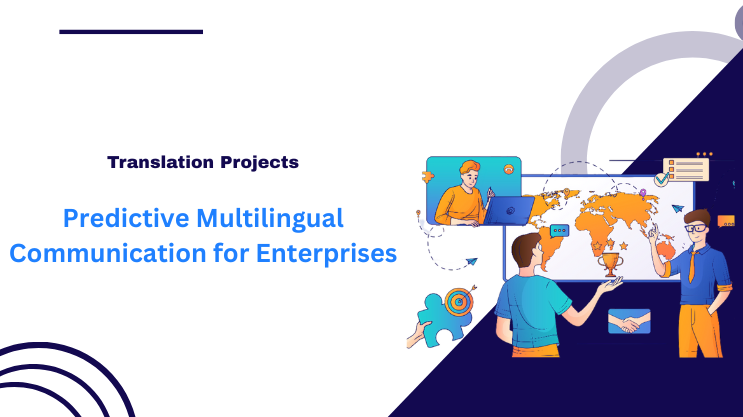
  • Predictive Multilingual Communication for Enterprises

    Predictive Multilingual Communication for Enterprises

    In today’s globalized economy, enterprises are no longer confined to local markets. Expanding into international territories demands seamless communication across multiple languages. This is where predictive multilingual communication comes into play – a strategic approach that enables businesses to anticipate language needs and communicate effectively with diverse audiences. Honey Translation Services specializes in helping enterprises implement this cutting-edge communication strategy to enhance global reach and engagement.

    What is Predictive Multilingual Communication?

    Predictive multilingual communication involves using technology, analytics, and expert linguistic services to anticipate communication needs across different languages. Unlike reactive translation services, which respond after content is created, predictive strategies enable enterprises to plan, adapt, and personalize content for international audiences in advance.

    This approach combines:

    • Language data analytics – Identifying which languages your audience uses most.
    • Cultural insights – Understanding local nuances to avoid miscommunication.
    • Content adaptation – Translating and localizing content proactively.

    By leveraging predictive multilingual communication, enterprises can ensure that marketing campaigns, product information, and customer support are always relevant, accurate, and culturally sensitive.

    Why Enterprises Need Predictive Multilingual Communication

    Global businesses face several challenges without a predictive multilingual strategy:

    1. Delayed Market Response – Reactive translation can slow down campaigns, leading to missed opportunities.
    2. Inconsistent Brand Messaging – Poorly translated content can dilute brand identity and cause misunderstandings.
    3. Customer Frustration – Customers expect instant, accurate communication in their native language.

    Honey Translation Services addresses these challenges by providing proactive language solutions. With our expertise in translation, localization, transcription, DTP, and voice-over services, enterprises can implement predictive multilingual strategies that enhance efficiency, brand consistency, and customer satisfaction.

    Key Components of Predictive Multilingual Communication

    1. Advanced Translation and Localization

    Predictive multilingual communication starts with high-quality translation and localization. Honey Translation Services ensures that all enterprise content is accurately translated while maintaining cultural context. From websites to marketing campaigns, our services help businesses communicate effectively across borders.

    2. AI-Enhanced Content Forecasting

    Using AI and machine learning, enterprises can predict which content will require translation and identify language trends among target markets. Honey Translation Services integrates these insights to streamline the translation workflow, reducing turnaround time and costs.

    3. Transcription and Multilingual Voice-Over

    Video content is increasingly vital in global communication. Predictive multilingual strategies include accurate transcription and voice-over services in multiple languages. Honey Translation Services ensures that multimedia content resonates with audiences worldwide, maintaining clarity and brand voice.

    4. Desktop Publishing (DTP) & Formatting

    Global content often needs precise formatting to fit local expectations. Honey Translation Services provides DTP services that adapt layouts, graphics, and fonts to suit different languages, ensuring a professional and culturally appropriate presentation.

    5. Continuous Feedback Loop

    Predictive communication is iterative. Enterprises benefit from continuous analysis of audience engagement and feedback. Honey Translation Services helps businesses adjust strategies based on insights, improving communication effectiveness over time.

    Benefits for Enterprises

    Implementing predictive multilingual communication with Honey Translation Services offers several advantages:

    • Faster Market Entry – Proactive translation reduces delays, enabling quicker launches in new regions.
    • Enhanced Customer Experience – Providing content in native languages builds trust and loyalty.
    • Cost Efficiency – Planning translation in advance minimizes last-minute expenses and revisions.
    • Brand Consistency – Consistent messaging strengthens brand perception across global markets.
    • Data-Driven Insights – Enterprises gain actionable insights into language trends and audience preferences.

    How Honey Translation Services Supports Enterprises

    At Honey Translation Services, we combine technology, human expertise, and strategic planning to empower enterprises in predictive multilingual communication. Our services include:

    • Professional Translation & Proofreading
    • Content Localization for Websites & Marketing
    • Transcription & Multilingual Voice-Over
    • DTP & Typing Services
    • AI-Enhanced Language Strategy Consultation

    By partnering with Honey, enterprises can confidently approach global communication, ensuring their message reaches the right audience, in the right language, at the right time.

    Conclusion

    Predictive multilingual communication is no longer a luxury; it is essential for enterprises operating in global markets. By anticipating language needs and leveraging professional translation, localization, and content adaptation services, businesses can enhance efficiency, customer engagement, and brand reputation.

    Honey Translation Services stands at the forefront of this revolution, helping enterprises navigate multilingual challenges with precision, foresight, and expertise. With predictive strategies in place, global success becomes not just possible, but predictable.