Tag: #MultilingualWebsite

  • Why Multilingual Websites Perform Better in International SEO

    Why Multilingual Websites Perform Better in International SEO

    In today’s globalized digital world, businesses aiming to expand internationally need more than just a standard English website. Multilingual websites have become a critical asset for companies targeting diverse markets. With the right strategy, they can significantly improve international SEO performance, attract more qualified traffic, and boost conversions.

    Honey Translation Services specializes in helping businesses create effective multilingual websites that resonate with local audiences while maintaining SEO best practices. Here’s why multilingual websites outperform single-language sites in global search rankings.

    Reach a Broader Audience

    The most obvious advantage of a multilingual website is accessibility. Over 75% of internet users prefer browsing in their native language. By offering content in multiple languages, your website becomes more appealing and trustworthy to a wider audience.

    Honey Translation Services ensures translations are not just literal but culturally accurate, capturing local nuances that engage readers. This approach encourages visitors to spend more time on your site, reducing bounce rates – a factor search engines consider for ranking.

    Improve Search Engine Visibility

    Search engines like Google prioritize relevant and localized content for users. A multilingual website allows you to target keywords in multiple languages, increasing your chances of ranking in different regions.

    For example, a company selling eco-friendly products in Germany and Spain can rank for “umweltfreundliche Produkte” in German searches and “productos ecológicos” in Spanish searches. Honey Translation Services implements proper hreflang tags and localized keyword strategies to help your pages get indexed correctly, avoiding duplicate content issues and improving regional search visibility.

    Build Credibility and Trust

    Local consumers are more likely to trust businesses that communicate in their language. A multilingual website signals that your brand values the local culture and customer experience.

    Honey Translation Services emphasizes quality translations that sound natural, helping businesses build credibility. When visitors see content in their language that reflects cultural understanding, they are more likely to engage, share, and convert.

    Enhance User Experience (UX)

    SEO isn’t just about keywords – it’s about user satisfaction. Multilingual websites improve UX by providing content in a language users understand, simplifying navigation, and ensuring calls-to-action resonate.

    By working with Honey Translation Services, businesses can adapt website structure, forms, and buttons for local audiences. This optimization not only boosts engagement but also sends positive signals to search engines, further improving rankings.

    Stay Ahead of Competitors

    Not all international businesses invest in multilingual SEO. By offering high-quality, localized content, you can differentiate your brand in competitive markets. Companies that neglect this opportunity often lose potential traffic to local competitors who prioritize language accessibility.

    Honey Translation Services helps businesses identify key languages to target, create content tailored to specific regions, and implement SEO strategies that drive measurable results.

    Boost Conversions and ROI

    Ultimately, multilingual websites don’t just increase traffic – they drive conversions. Visitors who understand your offerings are more likely to make purchases, subscribe, or contact your business.

    Honey Translation Services ensures that both content and messaging are culturally relevant, persuasive, and aligned with your business goals. This combination of localization and SEO optimization maximizes ROI from international markets.

    Final Thoughts

    Investing in a multilingual website is no longer optional for businesses aiming for global growth. By expanding your reach, improving search engine visibility, building trust, and enhancing user experience, multilingual websites deliver a clear advantage in international SEO.

    Honey Translation Services provides the expertise to create multilingual content that is culturally accurate, SEO-optimized, and conversion-focused. With professional translation and localization strategies, your website can perform better globally, connecting with audiences in their own language and driving sustainable growth.

  • Translation Workflows That Global Companies Are Adopting in 2026

    Translation Workflows That Global Companies Are Adopting in 2026

    In 2026, global companies are rethinking how translation fits into their business operations. Translation is no longer a last-minute task handled after content creation – it is now a strategic, integrated workflow that supports speed, consistency, and global brand trust. From AI-assisted tools to human-led quality assurance, modern translation workflows are evolving rapidly.

    At Honey Translation Service, we closely observe these changes and align our processes with the workflows global enterprises are actively adopting to stay competitive across markets.

    The Shift Toward Integrated Translation Workflows

    One of the biggest changes in 2026 is the integration of translation directly into content and product workflows. Global companies are embedding language services into their CMS, marketing platforms, and product development cycles. This allows multilingual content to be created, translated, reviewed, and published simultaneously.

    Instead of fragmented handoffs, businesses now prefer end-to-end workflows where translators, editors, and reviewers collaborate within a unified system. Honey Translation Service supports this approach by offering streamlined workflows that align with clients’ internal tools and timelines.

    AI-Powered Translation with Human Expertise

    AI has become a core part of translation workflows in 2026, but not as a replacement for humans. Global companies are adopting hybrid models where AI handles initial drafts and language processing, while professional linguists ensure accuracy, tone, and cultural relevance.

    This approach significantly reduces turnaround time while maintaining quality. At Honey Translation Service, AI-assisted translation is paired with expert human review to ensure industry-specific terminology, brand voice, and regulatory compliance are never compromised.

    Centralized Terminology and Brand Consistency

    Consistency is a major concern for global brands operating across multiple regions. In 2026, companies are investing heavily in centralized terminology databases, translation memories, and brand glossaries. These resources ensure that messaging remains uniform across languages and platforms.

    Modern workflows rely on continuously updated linguistic assets that translators can access in real time. Honey Translation Service helps global businesses build and maintain these resources, ensuring consistency across marketing materials, legal documents, websites, and technical content.

    Agile and Scalable Localization Processes

    Speed matters more than ever. Global companies are adopting agile translation workflows that scale with demand. Whether launching a new product, updating software, or releasing global campaigns, translation processes must adapt quickly without sacrificing quality.

    In 2026, workflows are designed to handle high volumes while prioritizing critical content. Honey Translation Service supports scalable workflows that allow clients to expand into new markets smoothly, meeting tight deadlines with reliable turnaround times.

    Industry-Specific Translation Specialization

    Generic translation is no longer sufficient for global enterprises. Companies are adopting workflows that assign content to specialized linguists based on industry expertise – legal, medical, technical, financial, or marketing.

    This specialization ensures accuracy, compliance, and clarity for target audiences. Honey Translation Service follows this best practice by matching each project with subject-matter experts who understand both the language and the industry context.

    Real-Time Collaboration and Review Cycles

    Collaboration has become a defining feature of modern translation workflows. In 2026, companies expect real-time communication between translators, reviewers, and internal stakeholders. Feedback loops are faster, revisions are tracked efficiently, and approvals happen without delays.

    These collaborative workflows reduce errors and improve overall content quality. Honey Translation Service incorporates structured review and feedback processes that allow clients to stay involved while keeping projects on schedule.

    Data-Driven Quality Assurance

    Quality assurance is no longer subjective. Global companies now rely on data-driven QA processes that track accuracy, consistency, and performance over time. Translation workflows in 2026 include automated checks combined with human evaluation to meet high quality standards.

    Honey Translation Service applies multi-layered quality assurance workflows, ensuring every translation meets linguistic, technical, and cultural expectations before delivery.

    Why Modern Translation Workflows Matter in 2026

    As global expansion accelerates, translation workflows directly impact brand reputation, customer trust, and market success. Companies that adopt modern, efficient workflows gain a competitive edge by delivering clear, culturally relevant communication across languages.

    By aligning with the workflows global companies are adopting in 2026, Honey Translation Service helps businesses navigate multilingual challenges with confidence, accuracy, and efficiency – ensuring their message resonates worldwide.

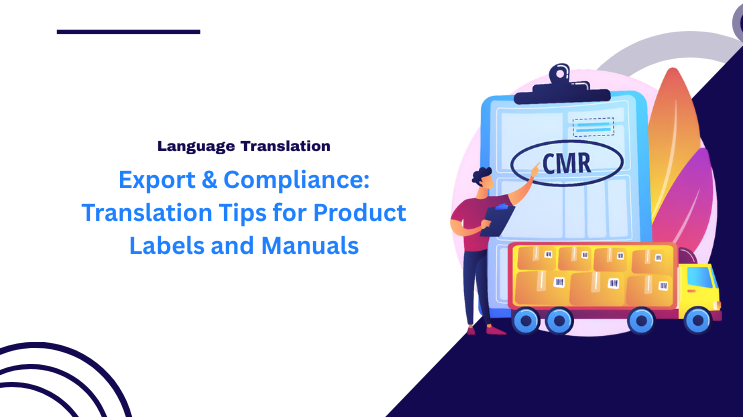
  • Export & Compliance: Translation Tips for Product Labels and Manuals

    Export & Compliance: Translation Tips for Product Labels and Manuals

    When products cross borders, words carry legal weight. A single mistranslated instruction or missing compliance statement can delay shipments, trigger recalls, or result in costly penalties. For exporters and manufacturers, translation is not just about clarity-it’s about compliance.

    Accurate, regulation-aware translation of product labels and manuals is essential for smooth international trade.

    Why Translation Matters in Export Compliance

    Global markets operate under strict regulatory frameworks. Authorities require product information to be presented in the local language, following specific terminology and formatting rules.

    Well-executed translation helps to:

    • Meet country-specific legal requirements
    • Ensure user safety and correct product usage
    • Avoid customs delays and rejections
    • Protect brand reputation and reduce liability

    Poor translation, on the other hand, can quickly become a compliance risk.

    1. Understand Country-Specific Regulations

    Each country has its own labeling and documentation standards. What is acceptable in one market may be non-compliant in another.

    Key considerations include:

    • Mandatory language requirements
    • Legal terminology and disclaimers
    • Units of measurement and symbols
    • Font size and placement rules

    Tip: Always research local regulations before starting translation.

    2. Use Industry-Approved Terminology

    Product labels and manuals often involve technical, safety, or medical language. Incorrect terminology can lead to misuse or regulatory violations.

    Best practices:

    • Follow approved glossaries and standards
    • Maintain consistent terminology across all documents
    • Avoid literal translations for technical terms

    Industry accuracy builds both trust and compliance.

    3. Prioritize Safety and Warning Statements

    Safety instructions and warnings are among the most scrutinized elements in product documentation.

    Common risks include:

    • Softened warning language
    • Ambiguous instructions
    • Missing hazard symbols

    Tip: Translate warnings with the same strength and clarity as the source-never dilute meaning.

    4. Adapt Measurements, Dates, and Formats

    Numeric formats vary globally. Incorrect units or date formats can cause confusion and non-compliance.

    Key adaptations include:

    • Metric vs. imperial units
    • Local date and time formats
    • Decimal and comma usage
    • Electrical ratings and symbols

    Precision here is essential for both usability and legality.

    5. Design with Multilingual Layouts in Mind

    Translation often expands or contracts text, which can affect label layouts and manuals.

    Avoid these issues by:

    • Allowing space for text expansion
    • Using readable fonts that support all languages
    • Avoiding hardcoded text in images

    Good DTP planning prevents costly redesigns later.

    6. Ensure Consistency Across Labels and Manuals

    Regulators expect consistency between packaging, labels, and user manuals.

    Common mistakes include:

    • Different translations for the same term
    • Mismatched safety instructions
    • Inconsistent product descriptions

    Tip: Centralize content and use translation memory tools for uniformity.

    7. Conduct Linguistic and Compliance Reviews

    Translation alone isn’t enough. Final checks are critical.

    Recommended reviews include:

    • Native-language linguistic review
    • Compliance verification against local laws
    • Final DTP and formatting QA

    This layered review process reduces risk significantly.

    Final Thoughts

    In international trade, translation errors can have serious consequences. Product labels and manuals must be accurate, compliant, and culturally precise to ensure safe use and legal acceptance.

    When done right, translation becomes a powerful enabler of global expansion-not a compliance obstacle.

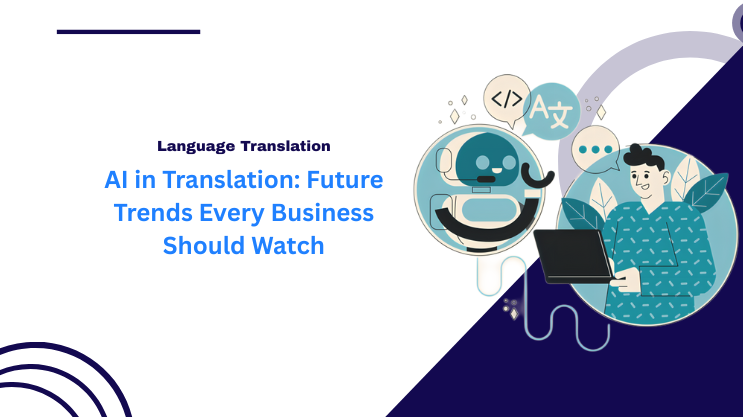
  • AI in Translation: Future Trends Every Business Should Watch

    AI in Translation: Future Trends Every Business Should Watch

    Artificial Intelligence is rapidly reshaping the translation industry. What once required days of manual effort can now happen in minutes-yet speed is only part of the story. AI is not replacing human translation; it is redefining how global communication works.

    For businesses operating across borders, understanding AI-driven translation trends is no longer optional-it’s strategic.

    The Rise of AI-Powered Translation

    AI translation has evolved from basic word-for-word output to sophisticated systems that learn from context, industry data, and user behavior. Neural Machine Translation (NMT) models now produce more fluent and natural language than ever before.

    However, quality today comes from human-AI collaboration, not automation alone.

    1: Human-in-the-Loop Translation Models

    The future of translation is hybrid. AI handles speed and scalability, while human linguists ensure accuracy, tone, and cultural relevance.

    Why it matters for businesses:

    • Faster turnaround times
    • Reduced costs without sacrificing quality
    • Brand-consistent multilingual content

    Human-in-the-loop workflows are becoming the industry standard.

    2: Industry-Specific AI Engines

    Generic AI translation struggles with specialized content. New AI models are being trained for specific industries such as legal, medical, technical, and marketing.

    Business impact:

    • Improved terminology accuracy
    • Fewer compliance risks
    • Better domain-specific consistency

    Custom AI engines are giving businesses more control over quality.

    3: Real-Time and Conversational Translation

    AI is enabling real-time translation for meetings, customer support, and live events.

    Key use cases include:

    • Multilingual customer service chats
    • Live video subtitles and voice translation
    • Cross-border team collaboration

    This trend is reducing communication barriers and accelerating global decision-making.

    4: AI-Driven Localization, Not Just Translation

    Modern AI systems are moving beyond text translation into content localization. This includes tone adaptation, sentiment analysis, and cultural alignment.

    Businesses benefit by:

    • Delivering more natural, market-specific messaging
    • Improving customer engagement
    • Reducing cultural missteps

    Localization powered by AI is becoming smarter-and more brand aware.

    5: Smarter Translation Memory and Glossary Management

    AI is enhancing translation memories by learning which phrases perform best in different contexts.

    Advantages include:

    • Consistent terminology across markets
    • Faster updates and revisions
    • Reduced duplication of effort

    This leads to long-term efficiency and cost savings.

    6: AI and Quality Prediction

    New AI tools can predict translation quality before human review by analyzing risk factors such as ambiguity, sentence complexity, and terminology use.

    Why this matters:

    • Early error detection
    • Better project planning
    • Improved quality assurance

    Quality prediction helps businesses prioritize human review where it matters most.

    The Limits of AI: What Businesses Should Remember

    Despite rapid progress, AI still struggles with:

    • Creative and emotional language
    • Brand voice and storytelling
    • Cultural nuance and humor
    • High-risk legal or regulatory content

    AI is a powerful assistant-but human expertise remains essential.

    Preparing Your Business for the Future

    To stay competitive, businesses should:

    • Adopt AI-assisted translation workflows
    • Invest in human linguistic expertise
    • Build strong terminology and style guides
    • Treat AI as a strategic tool, not a shortcut

    The goal isn’t faster translation-it’s better global communication.

    Final Thoughts

    AI is transforming translation from a back-office function into a strategic advantage. Businesses that understand and adopt these trends will communicate faster, smarter, and more effectively across markets.

    The future of translation isn’t human or AI. It’s human and AI-working together.

  • Future-Proof Localization Workflows for High-Growth Enterprises

    Future-Proof Localization Workflows for High-Growth Enterprises

    For high-growth enterprises expanding into global markets, scalable and efficient localization workflows are essential. Future-proofing these processes ensures consistency, speed, and quality across multiple languages and regions. By adopting advanced technologies, standardized processes, and strategic planning, enterprises can maintain brand integrity while meeting the demands of rapidly growing international audiences.

    1. Establishing a Centralized Localization Framework

    A centralized system manages all translation and localization tasks, from content creation to review. Standardized workflows ensure consistency in terminology, style, and tone across all markets while reducing redundancy and errors.

    2. Leveraging AI and Machine Learning

    AI-powered translation, content adaptation, and quality assurance tools accelerate workflows and reduce manual effort. Machine learning improves over time, providing more accurate and contextually relevant localization outputs.

    3. Integrating Localization into Content Management Systems

    Seamless integration with CMS, marketing platforms, and product management systems allows for real-time updates across multiple languages. This ensures that new content, campaigns, and updates are deployed efficiently in all target markets.

    4. Prioritizing Scalability for Growth

    Future-proof workflows are designed to scale as the enterprise grows. By using modular processes, reusable translation assets, and translation memory systems, companies can handle increasing volumes of content without compromising quality.

    5. Maintaining Brand Voice Across Languages

    Consistency in messaging is critical for global recognition. Localization workflows must preserve the enterprise’s brand voice while adapting content to local cultural and linguistic norms.

    6. Implementing Continuous Quality Assurance

    Automated and human-led reviews help maintain high-quality localization. Continuous QA ensures that translations are accurate, culturally appropriate, and aligned with enterprise standards across all markets.

    7. Facilitating Collaboration Between Teams

    Cross-functional collaboration between marketing, product, legal, and localization teams is key. Efficient communication channels and collaborative platforms ensure that localized content is aligned with business objectives and market needs.

    8. Using Analytics to Optimize Localization Efforts

    Monitoring performance metrics such as engagement, conversions, and user feedback provides insights into the effectiveness of localization. Data-driven optimization ensures resources are focused on high-impact areas for maximum ROI.

    In conclusion, future-proof localization workflows are essential for high-growth enterprises aiming for global success. By combining technology, standardized processes, and strategic planning, companies can scale effectively, maintain quality, and deliver culturally relevant experiences that resonate with international audiences.

  • The Impact of Multilingual Content on Global Customer Retention

    The Impact of Multilingual Content on Global Customer Retention

    In today’s competitive global marketplace, retaining customers is just as important as acquiring them. Multilingual content plays a crucial role in keeping international customers engaged, satisfied, and loyal. When brands communicate clearly in multiple languages, they create meaningful experiences that encourage long-term relationships and repeat interactions.

    1. Enhancing Customer Understanding and Confidence

    Providing content in a customer’s native language improves comprehension of products, services, and policies. Clear communication builds confidence, reduces misunderstandings, and encourages customers to continue engaging with the brand.

    2. Creating a Personalized Customer Experience

    Multilingual content makes interactions feel personal and relevant. Personalized messaging, localized recommendations, and region-specific content help customers feel valued, increasing emotional connection and loyalty.

    3. Improving Customer Support and Satisfaction

    Offering multilingual customer support through help centers, chat, and email ensures issues are resolved efficiently. Customers are more likely to stay loyal when they can communicate comfortably in their preferred language.

    4. Building Trust Through Consistent Communication

    Consistency across websites, apps, emails, and notifications in multiple languages reinforces trust. Reliable and accurate multilingual communication assures customers that the brand is dependable and professional.

    5. Reducing Friction Across the Customer Journey

    Multilingual content removes barriers at every stage of the customer journey, from onboarding to post-purchase support. A smooth, language-friendly experience reduces frustration and increases retention rates.

    6. Encouraging Repeat Purchases and Engagement

    Customers are more likely to return when they fully understand product updates, promotions, and usage tips in their native language. Ongoing multilingual engagement drives repeat purchases and long-term usage.

    7. Strengthening Brand Loyalty and Advocacy

    When customers feel understood and respected, they develop stronger loyalty. Satisfied multilingual users are more likely to recommend the brand, becoming advocates in their local markets.

    8. Supporting Long-Term Global Growth

    High retention rates across international markets contribute to sustainable growth. Multilingual content helps brands maintain strong relationships globally, ensuring stability and continued success in diverse regions.

    In conclusion, multilingual content has a direct and lasting impact on global customer retention. By delivering clear, personalized, and culturally relevant communication, businesses can build trust, enhance satisfaction, and foster long-term loyalty among international customers.

  • Why Cultural Intelligence Matters in Global Content Localization

    Why Cultural Intelligence Matters in Global Content Localization

    In global content localization, success depends not only on linguistic accuracy but also on cultural understanding. Cultural intelligence enables businesses to communicate effectively across borders by recognizing values, behaviors, and communication styles unique to each market. When content reflects cultural awareness, it builds trust, avoids misunderstandings, and strengthens global brand impact.

    1. Moving Beyond Word-for-Word Translation

    Cultural intelligence ensures that content is adapted rather than simply translated. Idioms, humor, symbols, and expressions are localized to preserve meaning and emotional impact for local audiences.

    2. Respecting Cultural Norms and Sensitivities

    Different cultures interpret messages in different ways. Understanding social norms, traditions, and sensitivities helps prevent offense and ensures content is respectful and well-received.

    3. Enhancing Brand Credibility and Trust

    Brands that demonstrate cultural awareness appear more authentic and reliable. Localized content that aligns with cultural expectations builds credibility and encourages long-term customer relationships.

    4. Improving User Engagement and Experience

    Content that resonates culturally captures attention and encourages interaction. When users feel understood, they are more likely to engage, explore, and respond positively to the brand.

    5. Adapting Visual and Design Elements

    Cultural intelligence extends to visuals, colors, imagery, and layout. Localizing these elements ensures they align with cultural preferences and avoid unintended meanings.

    6. Supporting Effective Global Marketing Campaigns

    Culturally intelligent localization allows marketing messages to connect emotionally with diverse audiences. Campaigns tailored to local values perform better and achieve higher impact.

    7. Reducing Communication Risks

    Misinterpretations and cultural missteps can harm brand reputation. Cultural intelligence minimizes these risks by ensuring content is appropriate, accurate, and context-aware.

    8. Enabling Sustainable Global Growth

    By integrating cultural intelligence into localization strategies, businesses can scale globally with confidence. Respectful and relevant communication fosters loyalty and supports long-term international success.

    In conclusion, cultural intelligence is a critical component of global content localization. By understanding and respecting cultural differences, businesses can deliver meaningful, engaging, and effective content that resonates across markets and drives sustainable global growth.

  • Preparing Multilingual Content for the Metaverse and Virtual Spaces

    Preparing Multilingual Content for the Metaverse and Virtual Spaces

    The metaverse and virtual environments are redefining how people interact, learn, and conduct business across borders. As these immersive spaces attract global audiences, preparing multilingual content becomes essential for inclusivity, engagement, and seamless user experiences. Effective localization in virtual spaces ensures that users from different linguistic and cultural backgrounds can participate fully and meaningfully.

    1. Understanding Language Diversity in Virtual Communities

    Virtual spaces bring together users from multiple regions and cultures. Identifying key languages and communication preferences helps create content that is accessible and welcoming to a broad global audience.

    2. Localizing User Interfaces and Navigation

    Menus, prompts, controls, and system messages should be localized to ensure smooth navigation. Clear multilingual interfaces improve usability and reduce friction in immersive environments.

    3. Adapting Virtual Communication and Interaction

    Chat systems, voice interactions, and avatars require multilingual support. Real-time translation and localized expressions enable natural interaction and collaboration among users in virtual spaces.

    4. Creating Culturally Relevant Virtual Experiences

    Virtual environments should reflect cultural norms, symbols, and storytelling styles. Localizing visuals, scenarios, and interactions ensures content feels authentic and engaging for diverse audiences.

    5. Integrating Real-Time Translation Technologies

    AI-powered real-time translation and speech recognition tools support live events, meetings, and social interactions in the metaverse. These technologies help break language barriers and enable global participation.

    6. Ensuring Accessibility and Inclusivity

    Multilingual subtitles, voice options, and text-based communication enhance accessibility for users with different abilities and language proficiencies. Inclusive design expands reach and improves user satisfaction.

    7. Maintaining Brand Consistency in Virtual Spaces

    Brands operating in the metaverse must ensure their messaging, tone, and identity remain consistent across languages. Localized branding builds trust and recognition in virtual environments.

    8. Planning for Scalable and Future-Ready Localization

    As virtual platforms evolve, localization strategies must be flexible and scalable. Using adaptable technologies and standardized workflows allows content to grow seamlessly with expanding global user bases.

    In conclusion, preparing multilingual content for the metaverse and virtual spaces is essential for creating inclusive, immersive, and engaging experiences. By combining cultural sensitivity, advanced translation technologies, and scalable strategies, organizations can connect with global audiences and thrive in the next generation of digital interaction.

  • How Real-Time Translation Enhances Global Sales Conversations

    How Real-Time Translation Enhances Global Sales Conversations

    In today’s interconnected business landscape, global sales teams regularly engage with prospects and customers across different languages and regions. Real-time translation has emerged as a powerful tool that removes communication barriers, enabling clearer conversations, faster decision-making, and stronger relationships. By supporting seamless multilingual interactions, real-time translation directly enhances the effectiveness of global sales conversations.

    1. Breaking Language Barriers Instantly

    Real-time translation allows sales teams to communicate with international prospects without delays. Instant language support ensures conversations flow naturally, reducing misunderstandings and keeping engagement high throughout discussions.

    2. Building Trust and Confidence with Prospects

    When buyers can communicate in their native language, they feel more comfortable and understood. Real-time translation demonstrates respect and professionalism, helping sales representatives build trust quickly and establish credibility.

    3. Accelerating Sales Cycles

    Language barriers often slow down negotiations and follow-ups. Real-time translation enables faster clarification of requirements, pricing, and terms, helping sales teams move prospects through the funnel more efficiently.

    4. Supporting Multilingual Virtual Meetings

    With the rise of virtual sales meetings, real-time translation integrated into video conferencing platforms allows participants to follow conversations in their preferred language. This enhances collaboration and ensures key messages are clearly understood.

    5. Improving Product and Value Communication

    Clear explanation of product features, benefits, and use cases is critical in sales. Real-time translation ensures accurate delivery of value propositions, minimizing confusion and increasing buyer confidence.

    6. Enabling Effective Negotiations

    Negotiations require precision and nuance. Real-time translation helps both parties communicate terms clearly, reducing the risk of misinterpretation and fostering smoother, more productive negotiations.

    7. Enhancing Customer Experience and Engagement

    Sales conversations are often the first touchpoint with a brand. Seamless multilingual communication creates a positive experience, encouraging engagement and setting the stage for long-term customer relationships.

    8. Combining Technology with Human Sales Expertise

    While real-time translation provides speed and accessibility, skilled sales professionals add empathy, persuasion, and cultural awareness. Together, technology and human expertise deliver impactful global sales conversations.

    In conclusion, real-time translation plays a vital role in enhancing global sales conversations. By enabling instant communication, building trust, and accelerating deal closures, it empowers sales teams to connect effectively with international customers and drive global revenue growth.

  • The Role of Localization in Building Global Employer Brands

    The Role of Localization in Building Global Employer Brands

    As digital products reach users across borders, multilingual UX design has become a critical factor in global success. Designing experiences that work seamlessly across languages and cultures ensures usability, inclusivity, and customer satisfaction. Multilingual UX design goes beyond translation, shaping how users interact with digital products and perceive brands worldwide.

    1. Improving Usability for Diverse Audiences

    Multilingual UX design ensures that navigation, labels, and instructions are easy to understand in different languages. Clear and intuitive interfaces reduce friction and allow users to interact confidently with digital products.

    2. Enhancing Cultural Relevance

    Design elements such as color, icons, imagery, and layout can carry different meanings across cultures. Multilingual UX design adapts these elements to align with local expectations, creating more relatable and engaging experiences.

    3. Supporting Language Expansion Without Redesign

    Scalable UX frameworks allow products to support multiple languages without frequent redesigns. Flexible layouts accommodate text expansion and different writing systems, enabling smooth global growth.

    4. Optimizing User Onboarding Experiences

    Localized onboarding flows guide users through product features in their native language. This improves comprehension, reduces drop-off rates, and encourages long-term engagement with the product.

    5. Building Trust Through Familiar Interfaces

    Users trust digital products that feel familiar and easy to use. Multilingual UX design delivers consistency across languages while respecting local conventions, strengthening user confidence and brand loyalty.

    6. Improving Accessibility and Inclusion

    Multilingual UX considers accessibility standards across regions, ensuring content is usable for people with different abilities and language proficiencies. Inclusive design expands reach and supports diverse user needs.

    7. Enhancing Conversion and Engagement

    When users can easily understand calls-to-action, forms, and product information in their language, they are more likely to engage and convert. Multilingual UX directly contributes to improved business outcomes.

    8. Supporting Continuous Product Evolution

    Multilingual UX design enables efficient updates and feature rollouts across markets. Consistent design systems and localization workflows ensure that global users receive improvements simultaneously.

    In conclusion, multilingual UX design plays a vital role in shaping successful global digital products. By prioritizing usability, cultural relevance, and scalability, businesses can create digital experiences that resonate with international audiences and support sustainable global growth.