Tag: #Interpretationservice

  • How to book an online interpretation service for business meetings

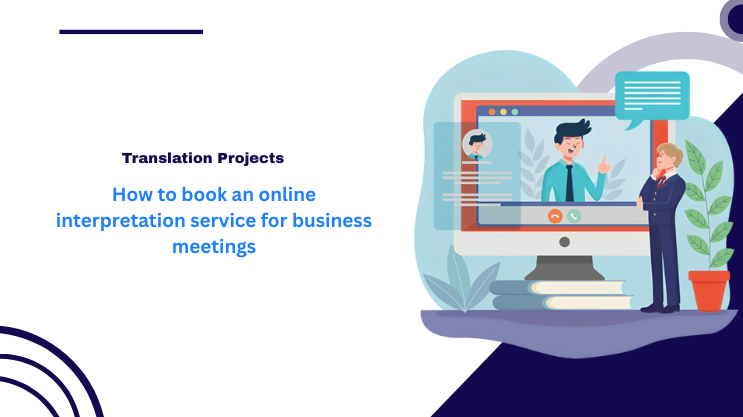
    How to book an online interpretation service for business meetings

    In today’s global business environment, clear communication across languages is essential. Online interpretation services ensure smooth conversations, eliminate misunderstandings, and save time for international meetings. Here’s a simple guide to booking the right service for your business needs.

    1. Identify Your Interpretation Needs

    Start by determining the type of interpretation required for your meeting.

    • Simultaneous Interpretation: Interpreters translate in real-time during live discussions—ideal for conferences or webinars.
    • Consecutive Interpretation: The interpreter speaks after the speaker finishes—suitable for smaller meetings or one-on-one sessions.
    • Specialized Interpretation: For industries like legal, medical, or technical, specialized knowledge may be necessary.

    Understanding your needs ensures you choose the right service and interpreter.

    2. Choose a Reliable Interpretation Platform

    Select an online platform that supports video conferencing and real-time interpretation. Look for:

    • User-friendly interface
    • Compatibility with your preferred video call tools
    • Security and confidentiality features
    • Multi-language support

    A dependable platform reduces technical issues during meetings.

    3. Select Qualified Interpreters

    Professional interpreters bring accuracy and cultural nuance to your meetings. Check:

    • Language proficiency and certifications
    • Industry-specific experience
    • Availability for your meeting time zone
    • Positive client reviews

    Booking qualified interpreters ensures effective communication and professional outcomes.

    4. Schedule and Confirm Your Session

    Once you select the interpreter, schedule your meeting in advance. Provide:

    • Meeting agenda
    • Presentation materials or documents
    • Specific terminology or industry jargon

    Early scheduling allows the interpreter to prepare and deliver precise translations.

    5. Test Your Technology

    Before the meeting, test your audio, video, and platform features. Confirm:

    • Microphone and speaker quality
    • Internet connectivity
    • Interpreter’s access and setup

    A technical test minimizes disruptions and ensures a smooth session.

    6. Conduct the Meeting Effectively

    During the meeting:

    • Speak clearly and at a moderate pace
    • Allow the interpreter to relay information without interruption
    • Encourage participants to follow interpreter cues

    These practices optimize understanding and make meetings productive.

    7. Provide Feedback

    After the session, share feedback with your interpreter and service provider. Constructive feedback helps improve future meetings and strengthens collaboration.


    Conclusion:
    Booking an online interpretation service for business meetings is straightforward when you plan carefully, select qualified interpreters, and ensure your technology works seamlessly. By following these steps, businesses can confidently engage with international clients and partners, fostering clear communication and successful outcomes.

  • Best interpretation service providers in India

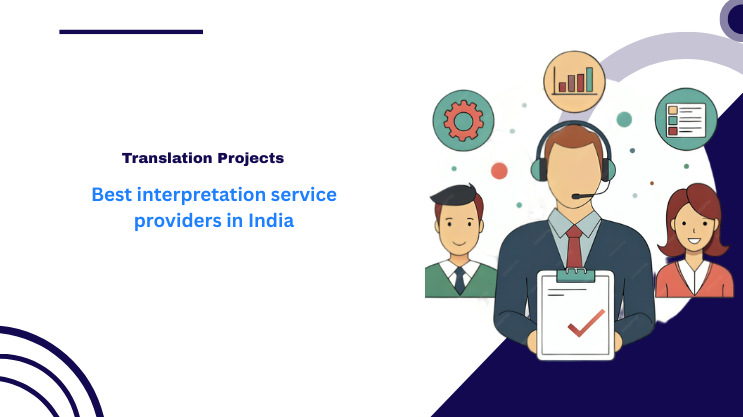
    Best interpretation service providers in India

    In today’s globalized world, communication across languages is essential for business, legal, medical, and international events. Interpretation services help bridge language barriers, ensuring clarity and accuracy. India, being a multilingual country, has some of the best interpretation service providers catering to diverse industries.

    Why Interpretation Services Matter

    Interpretation services are crucial for:

    • Business Meetings: Ensuring smooth discussions between international partners.
    • Legal Proceedings: Accurate understanding in courts or arbitrations.
    • Medical Consultations: Helping doctors and patients communicate effectively.
    • Conferences and Events: Facilitating real-time interaction for global audiences.

    Professional interpreters not only translate words but also convey tone, context, and cultural nuances.

    Top Qualities to Look for in Interpretation Providers

    When choosing a service provider, consider:

    • Expertise: Skilled interpreters with industry-specific knowledge.
    • Accuracy: Commitment to precise translation without altering meaning.
    • Technology Integration: Use of remote or virtual interpretation tools.
    • Confidentiality: Strong privacy policies for sensitive conversations.
    • Availability: Support for on-site, remote, or 24/7 services.

    Leading Interpretation Services in India

    Some of the top providers in India focus on professional standards and multilingual coverage. They offer:

    • Simultaneous Interpretation: Real-time translation for conferences and events.
    • Consecutive Interpretation: Step-by-step translation for meetings and negotiations.
    • Remote Interpretation: Virtual services via audio or video platforms.
    • Specialized Services: Legal, medical, business, and technical interpretation.

    These providers often have certified interpreters fluent in Indian languages such as Hindi, Tamil, Bengali, Telugu, Marathi, Kannada, and more, alongside global languages like English, French, German, and Chinese.

    Choosing the Right Provider

    Select a provider based on your specific needs:

    • Event Size: For large conferences, simultaneous interpretation is ideal.
    • Industry: Legal and medical interpretation requires domain expertise.
    • Mode: Decide between on-site, telephonic, or video interpretation.
    • Budget: Compare service quality and pricing to get the best value.

    Conclusion

    The best interpretation service providers in India combine professional expertise, cultural awareness, and modern technology to make communication seamless. Whether it’s for business, legal matters, or international conferences, choosing the right interpreter ensures accuracy, trust, and efficiency.

  • How to choose an interpretation service for a large corporate event?

    How to choose an interpretation service for a large corporate event?

    Planning a large corporate event comes with many moving parts, and choosing the right interpretation service is crucial to ensure smooth communication across languages. Here’s how to make the best choice.

    1. Identify Your Language Needs

    Start by listing all the languages your attendees speak. Consider whether you need simultaneous interpretation (real-time translation during speeches) or consecutive interpretation (speaker pauses while the interpreter translates). Knowing your exact needs helps narrow down suitable service providers.

    2. Check Experience and Expertise

    Look for interpretation services with experience in corporate events, conferences, or international meetings. Specialized knowledge ensures interpreters understand industry-specific terms and jargon, keeping your event professional and seamless.

    3. Consider the Format of Your Event

    The event format influences your interpretation requirements. Large auditoriums often require simultaneous interpretation with headsets, while smaller meetings might work with consecutive interpretation. Make sure the service can handle your venue’s size and setup.

    4. Evaluate Technology and Equipment

    High-quality interpretation relies on reliable technology. Confirm that the service provides professional audio equipment, headsets, and backup systems. For hybrid or virtual events, ensure they offer virtual interpretation platforms that integrate smoothly with your streaming setup.

    5. Review Interpreter Qualifications

    Certified and experienced interpreters deliver accurate and culturally sensitive translations. Ask about their training, certifications, and familiarity with your industry to ensure quality.

    6. Request References and Samples

    Ask for client references or case studies of similar events. A reputable service provider should be able to share success stories and demonstrate their capability to handle large-scale corporate events efficiently.

    7. Consider Budget and Value

    While cost is important, prioritize value over price. A reliable, experienced service may cost more but prevents miscommunication and enhances the attendee experience, which is vital for corporate reputation.

    8. Plan Logistics Early

    Book your interpretation service well in advance. Early planning ensures enough time to coordinate languages, test equipment, and brief interpreters about your event schedule, key speakers, and industry terminology.

    Conclusion
    Selecting the right interpretation service can make or break a large corporate event. By focusing on language needs, experience, technology, and professional expertise, you ensure your message is clearly communicated to every attendee, creating a successful and inclusive experience.

  • Interpretation Services Explained: From On-Site to Remote

    Interpretation Services Explained: From On-Site to Remote

    In today’s globalized world, effective communication across languages is crucial. Interpretation services bridge language gaps, ensuring accurate and immediate understanding in various settings. Whether it’s a business meeting, a medical consultation, or a legal proceeding, interpreters play a vital role in connecting people.

    On-Site Interpretation

    On-site interpretation involves a professional interpreter physically present at the location. This type of service is ideal for situations that require nuanced communication, such as conferences, legal proceedings, or high-stakes business negotiations. The interpreter can observe body language, tone, and context, which enhances the accuracy of interpretation.

    Remote Interpretation

    Remote interpretation allows participants to communicate seamlessly without being in the same location. This can be done through phone or video platforms. Remote services offer flexibility, cost savings, and instant access to interpreters from around the world. They are especially useful for urgent situations or when travel is not feasible.

    Simultaneous vs. Consecutive Interpretation

    • Simultaneous Interpretation: The interpreter translates in real-time while the speaker is talking, often used in conferences and webinars.
    • Consecutive Interpretation: The interpreter speaks after the speaker pauses, suitable for small meetings or one-on-one consultations.

    Industries That Rely on Interpretation Services

    • Healthcare: Ensures patients understand medical instructions and consent forms.
    • Legal: Facilitates fair communication in courts and law offices.
    • Business: Supports negotiations, international meetings, and conferences.
    • Government and Social Services: Helps in immigration, social support, and community programs.

    Choosing the Right Interpretation Service

    Selecting the right type of interpretation depends on your needs, audience size, and setting. For high-profile events, on-site simultaneous interpretation may be best. For quick consultations or remote teams, virtual interpretation provides efficiency and accessibility.

    Conclusion

    Interpretation services are essential tools for clear communication in a multilingual world. Whether on-site or remote, they ensure messages are accurately conveyed, relationships are strengthened, and global interactions run smoothly. Investing in professional interpretation enhances understanding and fosters success in every industry.

  • The Rise of Video Remote Interpreting in Digital Workspaces

    The Rise of Video Remote Interpreting in Digital Workspaces

    In today’s globalized business world, communication across languages is no longer optional—it’s essential. Video Remote Interpreting (VRI) is transforming how companies connect with clients, colleagues, and partners worldwide. By combining technology and professional interpretation, VRI enables seamless multilingual communication without physical presence.

    What is Video Remote Interpreting?

    Video Remote Interpreting is a service that allows interpreters to provide real-time language support through video calls. Unlike traditional in-person interpreting, VRI leverages digital platforms to connect interpreters with individuals or teams from anywhere in the world. This approach is fast, efficient, and adaptable to modern digital workspaces.

    Benefits for Digital Workspaces

    1. Enhanced Accessibility: Employees and clients can access interpretation services instantly, no matter their location.
    2. Cost Efficiency: Eliminates travel costs and reduces time delays associated with in-person interpreting.
    3. Flexibility: Supports multiple languages and can be scheduled on-demand or for recurring meetings.
    4. Productivity Boost: Teams spend less time waiting for interpreters and more time collaborating effectively.

    Industries Embracing VRI

    • Corporate Meetings: Global businesses use VRI for board meetings, client presentations, and negotiations.
    • Healthcare: Doctors and patients communicate effectively across language barriers without requiring in-person interpreters.
    • Legal Services: Courts and law firms rely on VRI for remote depositions and multilingual consultations.
    • Education: Online learning platforms and universities provide language support for international students.

    Challenges and Solutions

    While VRI offers immense benefits, challenges such as connectivity issues, privacy concerns, and limited technological familiarity can arise. Addressing these requires reliable internet connections, secure platforms, and training for staff and interpreters to ensure smooth communication.

    Future of VRI in the Workplace

    As remote and hybrid work models continue to grow, VRI is set to become a standard tool in global business operations. AI-driven features like automated scheduling, real-time transcription, and multilingual support are expected to enhance efficiency even further.

    Conclusion

    Video Remote Interpreting is reshaping how organizations communicate in digital workspaces. By breaking down language barriers, VRI not only promotes inclusivity but also drives productivity, efficiency, and global collaboration. For businesses aiming to thrive in an interconnected world, investing in VRI technology is no longer optional—it’s essential.

  • The Evolution of Interpreting: From In-Person to Video

    The Evolution of Interpreting: From In-Person to Video

    Language has always been a bridge connecting people, cultures, and ideas. Over the years, the field of interpreting has evolved dramatically, adapting to technological innovations and the demands of a globalized world. Today, businesses, governments, and individuals rely on interpreting services more than ever—both in-person and through digital platforms.

    The Early Days of In-Person Interpreting

    Traditionally, interpreting was a highly personal service. Interpreters would be present in courtrooms, hospitals, conferences, or business meetings to ensure accurate communication between parties who spoke different languages. This approach allowed for nuanced understanding, immediate clarification, and human connection—elements that remain essential in sensitive situations like legal proceedings or medical consultations.

    The Rise of Telephone Interpreting

    With globalization accelerating, the need for remote solutions grew. Telephone interpreting emerged as a practical option, enabling immediate communication across distances. This method became particularly valuable in emergency situations or in locations where in-person interpreters were not available. While efficient, it had limitations: the absence of visual cues sometimes led to misunderstandings, and complex topics could be harder to convey accurately.

    Video Interpreting: Bridging Distance and Connection

    The introduction of video technology transformed interpreting. Video Remote Interpreting (VRI) combines the immediacy of in-person interaction with the convenience of remote access. Professionals can now connect instantly with clients, patients, or colleagues worldwide. VRI enhances communication by allowing interpreters to read body language, facial expressions, and gestures—crucial components of effective interpretation.

    Advantages of Video Interpreting

    Video interpreting offers several benefits:

    • Accessibility: Clients in remote areas can access expert interpreters without travel.
    • Speed: Appointments and emergency situations are handled faster.
    • Cost-Effectiveness: Travel expenses and logistical challenges are minimized.
    • Flexibility: Interpreters can serve multiple locations and industries efficiently.

    Challenges and Considerations

    Despite its advantages, video interpreting has challenges. Technical issues like poor internet connections can disrupt communication. Additionally, certain settings—like highly sensitive legal cases—may still benefit from in-person presence. Security and confidentiality are also critical concerns that must be addressed when using digital platforms.

    The Future of Interpreting

    As technology continues to advance, the future of interpreting will likely blend human expertise with AI-assisted tools. Real-time AI translation and speech recognition can support interpreters, but the human touch—understanding cultural context, tone, and emotion—remains irreplaceable. The trend points to a hybrid model where in-person, telephone, and video interpreting coexist, offering businesses and individuals greater flexibility than ever before.

    Conclusion

    The journey of interpreting—from in-person interactions to telephone and video solutions—reflects the evolving needs of a connected world. While technology has revolutionized access and convenience, the essence of interpreting remains unchanged: bridging languages, fostering understanding, and connecting people across boundaries.

  • Types of Interpretation Services and Their Real-World Applications

    Types of Interpretation Services and Their Real-World Applications

    In an increasingly globalized world, interpretation services bridge language gaps, making communication seamless across borders. From business meetings to healthcare settings, interpreters ensure messages are accurately conveyed, fostering understanding and collaboration.

    1. Simultaneous Interpretation

    Simultaneous interpretation happens in real-time, with the interpreter translating the speaker’s words almost instantly. This service is ideal for conferences, international summits, and live broadcasts. Attendees can listen through headsets while the speaker continues without interruption, creating a smooth, uninterrupted flow of communication.

    Real-World Application: United Nations assemblies, multinational conferences, and live webinars often rely on simultaneous interpretation to engage audiences from different linguistic backgrounds simultaneously.

    2. Consecutive Interpretation

    In consecutive interpretation, the speaker pauses at intervals to allow the interpreter to convey the message. This method ensures high accuracy and is often used in smaller meetings, legal proceedings, or interviews where precision is critical.

    Real-World Application: Courtrooms, business negotiations, medical consultations, and diplomatic meetings often use consecutive interpretation to ensure clarity and correctness.

    3. Whispered Interpretation

    Also known as chuchotage, whispered interpretation involves the interpreter quietly translating the speaker’s words directly to one or a few listeners without disturbing others. It is a practical solution when only a small part of the audience requires translation.

    Real-World Application: Business tours, small group meetings, or VIP interactions where only a few participants need interpretation.

    4. Telephone and Remote Interpretation

    With the rise of remote communication, telephone and video-based interpretation services allow interpreters to facilitate conversations without being physically present. These services are essential for businesses, healthcare providers, and government agencies operating across regions.

    Real-World Application: Telemedicine appointments, customer support for international clients, and virtual conferences use remote interpretation to maintain seamless communication regardless of location.

    5. Sign Language Interpretation

    Sign language interpreters bridge communication between hearing and deaf or hard-of-hearing individuals. They are trained in specific sign languages and often work in education, healthcare, and public services.

    Real-World Application: Hospitals, schools, public events, and legal settings use sign language interpreters to ensure inclusivity and accessibility for all participants.

    6. Community and Public Service Interpretation

    This type of interpretation is common in community centers, immigration services, and public institutions. Interpreters help individuals navigate essential services like healthcare, legal aid, and social support programs.

    Real-World Application: Public health campaigns, immigration interviews, and social welfare consultations rely on community interpretation to reach diverse populations.

    Conclusion
    Interpretation services play a critical role in connecting people across languages and cultures. Whether in high-stakes international conferences, legal settings, or everyday community services, skilled interpreters ensure messages are accurately and effectively conveyed. Choosing the right type of interpretation for your needs can improve communication, enhance accessibility, and foster stronger global and local connections.

  • Exploring Different Types of Data Interpretation: A Comprehensive Guide

    Exploring Different Types of Data Interpretation: A Comprehensive Guide

    In an increasingly data – driven environment, the ability to accurately interpret data is essential for informed decision – making. While data collection provides the foundation, it is data interpretation that transforms raw information into meaningful insights. Organizations across industries rely on effective interpretation methods to evaluate performance, identify trends, and develop strategic initiatives.

    This guide provides a comprehensive overview of the different types of data interpretation, their applications, and their relevance in modern business and research contexts.

    What Is Data Interpretation?

    Data interpretation refers to the systematic process of analyzing, evaluating, and presenting data to extract meaning and actionable insights. It involves applying analytical techniques, contextual understanding, and logical reasoning to identify patterns, relationships, and implications within datasets.

    Effective data interpretation ensures that data – driven conclusions are accurate, relevant, and aligned with organizational objectives.

    Importance of Data Interpretation

    Accurate data interpretation enables organizations to:

    • Support evidence – based decision – making
    • Minimize risk and uncertainty
    • Enhance operational efficiency
    • Identify opportunities for growth and innovation
    • Improve strategic planning and forecasting

    Conversely, poor interpretation may result in inaccurate conclusions and ineffective strategies.

    Types of Data Interpretation

    Different forms of data require different interpretation approaches. The most commonly used types are outlined below.

    1. Qualitative Data Interpretation

    Qualitative data interpretation focuses on non – numerical information, such as opinions, experiences, and behavioral insights.

    Common Data Sources

    • Interviews and focus groups
    • Open – ended survey responses
    • Observational and ethnographic studies

    Interpretation Methods

    • Thematic analysis
    • Content analysis
    • Narrative analysis

    Applications

    • Market and consumer research
    • Social science and behavioral studies
    • User experience analysis

    Objective: To understand underlying motivations, perceptions, and contextual factors.

    2. Quantitative Data Interpretation

    Quantitative data interpretation involves the analysis of numerical and measurable data to identify trends and relationships.

    Common Data Sources

    • Structured surveys
    • Financial and operational data
    • Performance and usage metrics

    Interpretation Methods

    • Statistical analysis
    • Data modeling
    • Graphical representation

    Applications

    • Business intelligence and reporting
    • Financial analysis
    • Scientific and technical research

    Objective: To measure outcomes and validate assumptions using numerical evidence.

    3. Statistical Data Interpretation

    Statistical interpretation applies formal mathematical and statistical techniques to analyze datasets and test hypotheses.

    Key Techniques

    • Descriptive statistics (mean, median, standard deviation)
    • Inferential statistics
    • Probability analysis
    • Hypothesis testing

    Applications

    • Academic and clinical research
    • Policy evaluation
    • Quality assurance studies

    Objective: To draw reliable conclusions with a defined level of statistical confidence.

    4. Visual Data Interpretation

    Visual data interpretation presents information through charts, graphs, dashboards, and visual summaries to enhance comprehension.

    Common Tools

    • Bar and line charts
    • Pie charts and heat maps
    • Interactive dashboards

    Applications

    • Executive reporting
    • Performance monitoring
    • Data – driven storytelling

    Objective: To simplify complex data and support quick, informed decision – making.

    5. Comparative Data Interpretation

    Comparative interpretation examines multiple datasets or time periods to identify similarities, differences, or performance variations.

    Examples

    • Year – over – year performance analysis
    • Market share comparison
    • A/B testing outcomes

    Applications

    • Competitive benchmarking
    • Trend analysis
    • Program and campaign evaluation

    Objective: To assess relative performance and measure change over time.

    6. Diagnostic Data Interpretation

    Diagnostic interpretation focuses on understanding the causes behind observed outcomes.

    Common Techniques

    • Root cause analysis
    • Drill – down analysis
    • Correlation analysis

    Applications

    • Operational issue resolution
    • Process improvement initiatives
    • Marketing and sales performance analysis

    Objective: To identify factors contributing to success or failure.

    7. Predictive Data Interpretation

    Predictive interpretation uses historical data and analytical models to forecast future trends and outcomes.

    Methods Used

    • Trend analysis
    • Predictive modeling
    • Machine learning algorithms

    Applications

    • Demand and sales forecasting
    • Risk management
    • Customer behavior analysis

    Objective: To anticipate future scenarios and support proactive planning.

    8. Prescriptive Data Interpretation

    Prescriptive interpretation provides recommended actions based on data – driven insights.

    Key Features

    • Scenario simulation
    • Optimization models
    • Decision – support systems

    Applications

    • Strategic planning
    • Supply chain and resource optimization
    • Pricing and investment decisions

    Objective: To guide optimal decision – making through data – backed recommendations.

    Selecting the Appropriate Interpretation Method

    The choice of data interpretation approach depends on:

    • The nature and structure of the data
    • Business or research objectives
    • Required accuracy and depth of analysis
    • Available tools and analytical expertise

    In many cases, combining multiple interpretation methods delivers more comprehensive insights.

    Challenges in Data Interpretation

    Organizations often face challenges such as:

    • Data quality and completeness issues
    • Bias and misrepresentation
    • Overreliance on visualizations without context
    • Misinterpretation of statistical results

    Addressing these challenges requires robust data governance, analytical rigor, and domain expertise.

    Future Trends in Data Interpretation

    Advancements in artificial intelligence, automation, and real – time analytics are transforming data interpretation practices. While technology enhances speed and scale, human oversight remains critical to ensure contextual understanding, ethical considerations, and accurate conclusions.

    Conclusion

    Data interpretation plays a central role in transforming raw data into strategic insights. By understanding and applying the appropriate interpretation methods, organizations can improve decision quality, enhance performance, and maintain a competitive advantage in an increasingly data – centric environment.
  • How Phone Interpretation Services Enable Global Communication

    How Phone Interpretation Services Enable Global Communication

    In today’s interconnected world, businesses, healthcare providers, and organizations frequently interact with people who speak diverse languages. Effective communication across languages is no longer optional-it’s a necessity. Phone interpretation services have emerged as a vital tool to bridge language gaps and enable seamless global communication.

    What Are Phone Interpretation Services?

    Phone interpretation services are real-time language solutions provided via telephone. Unlike in-person interpreters or AI translation tools, phone interpreters connect instantly, allowing two or more parties to communicate efficiently without being in the same location. These services cover a wide range of industries, including healthcare, legal, corporate, and government sectors.

    Benefits of Phone Interpretation for Global Communication

    1. Instant Access to Multilingual Support

    With phone interpretation, language barriers are no longer a bottleneck. Businesses can connect with clients, partners, or patients in multiple languages instantly, without waiting for an in-person interpreter. This real-time support ensures smoother interactions and faster decision-making.

    2. Cost-Effective and Flexible

    Hiring on-site interpreters for every language need can be expensive and logistically challenging. Phone interpretation eliminates travel costs and scheduling conflicts, providing access to professional interpreters at a fraction of the cost.

    3. Enhances Customer Experience

    When customers or clients feel understood, their trust in your organization grows. Phone interpretation allows companies to provide personalized support in the customer’s native language, improving satisfaction, loyalty, and retention.

    4. Facilitates Compliance and Accuracy

    In sectors like healthcare and law, miscommunication can have serious consequences. Phone interpreters are trained professionals who ensure accurate, confidential communication, helping organizations comply with legal and regulatory requirements.

    5. Supports Remote and Global Teams

    In a world where remote work and global collaboration are increasingly common, phone interpretation services allow multinational teams to communicate without language limitations. This promotes inclusion, productivity, and collaboration across borders.

    Real-Life Applications

    • Healthcare: Doctors and patients can communicate effectively, reducing medical errors and improving patient care.
    • Legal Services: Lawyers and clients can discuss sensitive matters accurately, ensuring informed decisions.
    • Customer Support: Companies can handle calls in multiple languages, expanding their market reach.
    • Government and Social Services: Citizens receive essential services in their native languages, enhancing accessibility.

    Choosing the Right Phone Interpretation Service

    To maximize the benefits of phone interpretation, organizations should look for services that offer:

    • 24/7 availability across multiple time zones
    • Certified and experienced interpreters
    • Broad language coverage
    • Secure and confidential communication channels
    • Easy integration with existing phone or communication systems

    Conclusion

    Phone interpretation services are more than just a convenience-they are a strategic asset for global communication. By enabling real-time, accurate, and cost-effective interactions across languages, these services empower organizations to connect with diverse audiences, build trust, and operate efficiently on a global scale.

  • How Interpretation Services Reduce Miscommunication in Global Teams

    How Interpretation Services Reduce Miscommunication in Global Teams

    In today’s globalized business environment, teams often span multiple countries, cultures, and languages. While diversity brings innovation and broader perspectives, it also increases the risk of miscommunication. Language barriers, cultural nuances, and differing communication styles can lead to misunderstandings that affect productivity, trust, and business outcomes. This is where professional interpretation services play a critical role. At Honey Translation Services, interpretation solutions are designed to bridge communication gaps and help global teams collaborate with clarity and confidence.

    Understanding Miscommunication in Global Teams

    Miscommunication in global teams goes beyond simple language differences. It can arise from unclear terminology, unfamiliar accents, cultural assumptions, or real-time conversations where participants struggle to express ideas accurately. In meetings, negotiations, training sessions, or virtual conferences, even a small misunderstanding can lead to costly errors, delays, or damaged relationships. Relying on bilingual staff or automated tools may seem convenient, but they often lack the precision and cultural awareness needed for high-stakes communication.

    What Are Interpretation Services?

    Interpretation services involve converting spoken language from one language to another in real time or near real time. Unlike translation, which focuses on written content, interpretation supports live communication. Common types include simultaneous interpretation for conferences, consecutive interpretation for meetings or interviews, and remote interpretation for virtual teams. Honey Translation Services provides professional interpreters trained to deliver accurate, culturally appropriate communication across industries and languages.

    Ensuring Clear and Accurate Communication

    One of the primary ways interpretation services reduce miscommunication is by ensuring accuracy. Professional interpreters are not just fluent in languages; they understand industry-specific terminology, context, and intent. This allows them to convey messages clearly without distortion. In global team meetings, this accuracy ensures that everyone receives the same information, reducing confusion and the risk of misaligned decisions.

    Bridging Cultural and Contextual Gaps

    Language and culture are closely connected. Words, gestures, and tone can have different meanings across cultures. Interpretation services help bridge these gaps by incorporating cultural sensitivity into communication. Interpreters from Honey Translation Services are trained to recognize cultural nuances and adapt messaging accordingly. This helps global teams avoid unintended offense, misinterpretation, or confusion, fostering mutual respect and smoother collaboration.

    Supporting Real-Time Collaboration

    Global teams often rely on real-time communication through video conferences, workshops, and live discussions. Interpretation services enable participants to communicate naturally in their preferred language without pauses or disruptions. With simultaneous or remote interpretation, conversations flow smoothly, allowing teams to focus on ideas and problem-solving rather than language barriers. This real-time support enhances engagement and ensures that all voices are heard equally.

    Improving Productivity and Decision-Making

    Miscommunication can slow down projects, lead to repeated clarifications, or cause mistakes that require rework. By providing clear and immediate understanding, interpretation services help teams work more efficiently. Meetings become more productive, decisions are made faster, and instructions are followed accurately. Honey Translation Services helps organizations streamline communication, saving time and resources while improving overall team performance.

    Building Trust and Inclusion in Global Teams

    When team members feel understood, they are more likely to participate actively and share ideas. Interpretation services promote inclusivity by allowing everyone to communicate comfortably in their native language. This builds trust and confidence among team members, especially in multinational environments. Over time, this inclusive communication culture strengthens collaboration and employee satisfaction.

    Reducing Risks in High-Stakes Interactions

    In global business, certain interactions carry higher risks, such as contract negotiations, compliance discussions, training sessions, or conflict resolution meetings. Miscommunication in these situations can have legal, financial, or reputational consequences. Professional interpretation services reduce these risks by delivering precise and consistent communication. Honey Translation Services ensures that critical messages are conveyed accurately, helping organizations protect their interests and maintain professional credibility.

    Enhancing Virtual and Remote Team Communication

    With the rise of remote work, global teams increasingly depend on virtual platforms. Remote interpretation services make it possible for geographically dispersed teams to communicate effectively without travel. Honey Translation Services offers flexible interpretation solutions that integrate seamlessly with online meetings and webinars, ensuring clear communication regardless of location.

    Why Choose Honey Translation Services for Interpretation

    Honey Translation Services combines linguistic expertise with industry knowledge and advanced technology to deliver reliable interpretation solutions. Interpreters are carefully selected based on language pairs, subject matter expertise, and communication skills. This ensures consistent quality and a professional experience for global teams across sectors such as corporate, legal, healthcare, and technology.

    Conclusion

    Miscommunication is one of the biggest challenges faced by global teams, but it is also one of the most preventable. Professional interpretation services play a vital role in reducing misunderstandings, improving collaboration, and supporting inclusive communication. By choosing Honey Translation Services, organizations can empower their global teams to communicate clearly, work efficiently, and build stronger international relationships. In a world where clear communication drives success, interpretation services are not just a support function – they are a strategic advantage.