Tag: #GlobalBusiness

  • From Global Vision to Local Connection: The Power of Content Localization

    From Global Vision to Local Connection: The Power of Content Localization

    In a world where brands reach audiences across continents in seconds, having a global vision is only the beginning. True impact happens when that vision connects locally. Content localization bridges this gap by transforming global messages into experiences that feel personal, relevant, and authentic in every market.

    What Is Content Localization?

    Content localization goes beyond translating words. It adapts messaging to fit local language, culture, tone, context, and expectations. This includes adjusting visuals, formats, humor, references, and even user experience so the content feels created for a specific audience—not adapted as an afterthought.

    Why Localization Matters More Than Ever

    Global audiences are more discerning than ever. They don’t just want to understand your message; they want to feel seen by it. Localization helps brands earn trust, build credibility, and foster emotional connections that generic global content cannot achieve.

    Key benefits include stronger audience engagement, improved brand perception, higher conversion rates, reduced cultural misunderstandings, and long-term customer loyalty.

    From One Message to Many Meaningful Connections

    A single global message can inspire millions, but its impact depends on how well it resonates locally. Localization ensures that tone, values, and intent remain consistent while expression changes to suit regional preferences. This allows brands to stay unified globally while sounding native locally.

    The Role of Culture in Localized Content

    Culture shapes how people interpret words, visuals, and emotions. Colors may symbolize different ideas, humor may not translate directly, and certain phrases may carry unintended meanings. Content localization accounts for these nuances, ensuring messages are respectful, relevant, and effective in every market.

    Localization Across Digital Touchpoints

    Content localization impacts every interaction point, including websites, blogs, social media, apps, videos, email campaigns, and customer support materials. When localization is applied consistently, users experience a seamless brand journey regardless of location.

    Business Growth Through Local Relevance

    Localized content performs better in search results, keeps users engaged longer, and increases trust. By speaking the language of your audience—both literally and culturally—brands can expand globally while maintaining strong local relationships.

    Human Insight Meets Smart Technology

    While AI tools accelerate translation and scalability, human expertise ensures cultural accuracy and emotional relevance. The most effective localization strategies combine technology with human insight to deliver content that is fast, accurate, and deeply resonant.

    Final Thoughts

    A global vision gives direction, but local connection gives meaning. Content localization transforms broad ideas into personal experiences, helping brands communicate with clarity, empathy, and authenticity across borders.

    In today’s interconnected world, success doesn’t come from speaking to everyone the same way. It comes from speaking to everyone in a way that feels just right for them.
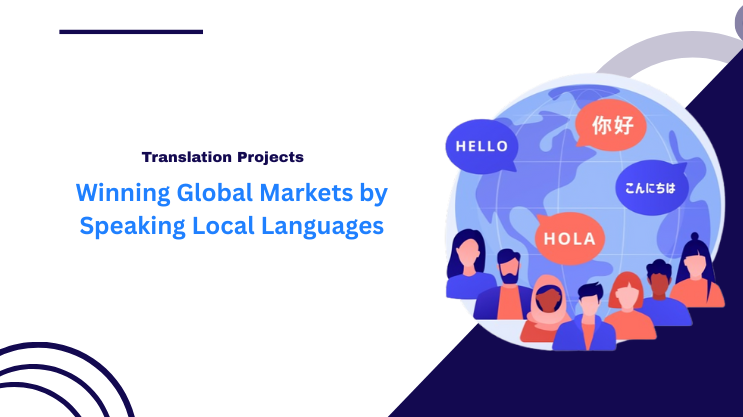
  • Winning Global Markets by Speaking Local Languages

    Winning Global Markets by Speaking Local Languages

    Global expansion is no longer just about entering new regions—it’s about connecting with people in ways that feel familiar, natural, and trustworthy. In today’s competitive landscape, brands that speak local languages don’t just communicate better; they perform better. Speaking the customer’s language is one of the most powerful ways to win global markets.

    Language as a Business Advantage

    Language influences how people perceive brands. When content is presented in a user’s native language, it instantly creates comfort and credibility. Customers are far more likely to engage with, trust, and purchase from brands that communicate clearly and culturally. Speaking local languages shows respect for the audience and signals long-term commitment to the market.

    Beyond Translation: Local Communication

    Successful global brands go beyond word-for-word translation. They adapt tone, messaging, and cultural references to match local expectations. Idioms, humor, formality levels, and even emotional triggers vary from one region to another. Localized communication ensures the message feels natural, not imported.

    Building Trust and Emotional Connection

    People connect emotionally when a brand speaks their language. Local language content feels personal and inclusive, making customers feel understood rather than targeted. This emotional connection strengthens brand loyalty, improves customer retention, and encourages positive word-of-mouth in local markets.

    Improving Visibility and Discoverability

    Speaking local languages also improves digital visibility. Search behavior differs across regions, and users search in their native language. Localized websites, blogs, and product pages rank better in regional search engines, driving qualified traffic and increasing conversion opportunities.

    Enhancing Customer Experience

    From websites and mobile apps to customer support and documentation, localized communication creates smoother user journeys. Customers can navigate, understand, and interact with products more easily when content matches their language and cultural norms. This reduces friction and increases satisfaction at every touchpoint.

    Reducing Risk and Miscommunication

    Language mistakes can damage brand reputation. Incorrect phrasing, cultural misunderstandings, or poorly translated content can confuse or offend audiences. Local language expertise helps avoid these risks by ensuring clarity, accuracy, and cultural sensitivity.

    Creating Scalable Global Growth

    Speaking local languages allows brands to scale globally without losing relevance. A strong localization strategy ensures consistency in brand identity while allowing flexibility for regional expression. This balance helps brands grow sustainably across multiple markets.

    Final Thoughts

    Winning global markets isn’t about speaking louder-it’s about speaking smarter. Brands that invest in local languages create stronger relationships, better experiences, and lasting trust. In a global-first world, speaking local isn’t just a strategy-it’s the key to success.

  • From Screen to Culture: Translating Visual Content the Right Way

    From Screen to Culture: Translating Visual Content the Right Way

    Understanding Visual Content as a Global Language

    Visual content is more than just images and videos-it’s a language of its own. When brands expand globally, simply translating text is not enough. Every visual element communicates meaning, emotion, and cultural context, making visual translation a critical part of global communication. Missteps can confuse audiences, dilute brand identity, or even offend.

    Beyond Words: Adapting Graphics and Multimedia

    Translating visual content goes beyond language. It involves adapting graphics, videos, UI elements, and multimedia to resonate with local audiences. Colors, symbols, gestures, and even typography can carry different connotations in different cultures. For example, a color that signifies celebration in one country might signify mourning in another. Understanding these nuances ensures your content communicates the intended message universally.

    Cultural Relevance in Visual Translation

    Cultural relevance is key. Visual translation requires assessing context, audience expectations, and cultural norms. Localization specialists work closely with designers and content creators to adapt visuals while keeping brand consistency intact. This might include swapping images, reformatting layouts, or even changing icons and symbols to better fit local sensibilities.

    Typography and Layout Considerations

    Typography and text placement also play a crucial role. When translating visual content, languages vary in length, reading direction, and script style. A well-designed layout in English may break or lose clarity when translated into German, Arabic, or Japanese. Proper attention to text expansion, alignment, and font compatibility is essential for a seamless user experience.

    Translating Video Content Effectively

    Video content requires similar care. Subtitles, voiceovers, and on-screen text must be synchronized and culturally appropriate. Scenes or visual references that work for one audience may need modification for another to avoid misinterpretation. This ensures that both the message and the emotional impact are preserved.

    The Role of Technology and Human Oversight

    Technology supports this process, with AI-assisted tools for automatic subtitling, video editing, and image adaptation. However, human oversight remains essential for cultural sensitivity and creative judgment. A hybrid approach-combining automation with expert review-yields the most accurate and culturally resonant results.

    Conclusion: Bridging Culture Through Visual Translation

    Translating visual content effectively is about bridging culture, not just language. Brands that pay attention to cultural cues, visual details, and audience expectations create experiences that resonate globally. From screen to culture, the right approach to visual translation enhances engagement, builds trust, and strengthens brand identity across markets.

  • Why Global Trust Begins with Certified Translation

    Why Global Trust Begins with Certified Translation

    Building Credibility in a Globalized World

    In an increasingly interconnected world, businesses are no longer judged solely by the quality of their products or services. Their credibility is also measured by how accurately and professionally they communicate across languages and borders. Certified translation plays a pivotal role in building this trust, ensuring that every document, contract, and communication reflects accuracy, authenticity, and professionalism.

    Certified Translation: More Than a Legal Formality

    Certified translation is more than a legal requirement; it is a statement of reliability. When a translation is certified, it guarantees that the content has been accurately translated by a qualified professional and meets industry or regulatory standards. This is especially critical for legal documents, financial reports, medical records, and official communications, where even minor errors can lead to misunderstandings, compliance issues, or reputational damage.

    Sending the Right Message to International Partners

    For businesses expanding internationally, certified translation sends a clear message to clients, partners, and regulatory authorities: precision and accountability matter. Whether it is a contract with an overseas client, an international marketing campaign, or product documentation for a foreign market, accuracy builds confidence. Customers and stakeholders are more likely to trust a brand that invests in certified, professional translation over one that relies solely on automated tools or unverified language services.

    Ensuring Consistency Across Markets

    Certified translation also guarantees consistency and standardization across multiple regions. Multinational companies often need to maintain uniform messaging, terminology, and compliance across different markets. Certified translators not only translate words but also adapt them with cultural and legal nuances in mind, preserving meaning while respecting local requirements. This meticulous approach safeguards a brand’s reputation and prevents costly misinterpretations.

    Compliance and Trust in Regulated Industries

    In regulated sectors such as healthcare, law, and finance, certified translation is often a legal requirement. Beyond compliance, it protects businesses from liability and reinforces transparency. Officially certified documents foster trust, reduce friction in negotiations, and strengthen relationships across borders.

    Conclusion: Certified Translation as a Foundation for Global Trust

    Ultimately, global trust begins with clarity. Certified translation is the bridge that connects businesses to their international audiences with confidence, precision, and credibility. Companies that prioritize certified translation demonstrate professionalism, respect for local regulations, and commitment to their global partners, laying a solid foundation for long-term international success.

  • One Small Translation Error That Can Cost You Big Internationally

    One Small Translation Error That Can Cost You Big Internationally

    The High Stakes of Global Communication

    In today’s global marketplace, businesses are expanding across borders faster than ever. Yet, even the most successful brands can face setbacks if they overlook one crucial detail: accurate translation. One small translation error can cost a company millions in lost revenue, damaged reputation, or legal trouble.

    Translation: More Than Just Words

    Translation is more than just converting words from one language to another. It’s about conveying meaning, tone, and cultural context. A mistranslated phrase, a misused word, or an overlooked idiom can turn your carefully crafted message into confusion—or worse, offense. Consider how a single marketing slogan or product description, when poorly translated, can create embarrassment and harm consumer trust.

    The Financial Risks of Errors

    The financial impact of translation errors is often underestimated. Legal documents with incorrect terminology can result in lawsuits, regulatory penalties, or contract disputes. Marketing campaigns that fail to resonate due to linguistic mistakes can lead to wasted ad spend, low engagement, and lost market share. Even minor errors in user manuals or product labeling can create safety risks and erode brand credibility.

    Cultural Nuances Matter

    Cultural nuances are particularly critical. Words and phrases carry different connotations in different regions, and literal translation rarely captures the intended meaning. Humor, idioms, and local expressions require careful adaptation to avoid misinterpretation. A global brand must ensure that every piece of content speaks naturally to the target audience, reflecting both linguistic accuracy and cultural awareness.

    Combining Human Expertise with Smart Technology

    The solution lies in combining professional human expertise with smart technology. Skilled translators understand cultural context and industry-specific terminology, while AI-powered tools can enhance efficiency, consistency, and quality assurance. Businesses that adopt a rigorous review process, including linguistic validation and DTP checks, reduce the risk of costly mistakes.

    Conclusion: Translation as a Strategic Priority

    Ultimately, one small translation error is not just a language problem-it’s a business problem. Companies that prioritize precise, culturally aware translation gain a competitive edge, build stronger customer relationships, and protect their brand on the international stage. In a global economy, attention to detail in translation isn’t optional; it’s essential for success.

  • Language Consistency and Its Impact on Search Rankings

    Language Consistency and Its Impact on Search Rankings

    In today’s global digital landscape, maintaining language consistency across your website and content is no longer optional  –  it’s a crucial factor that directly affects your search engine rankings. For businesses looking to reach international audiences, inconsistency in language, tone, or terminology can confuse both users and search engines, ultimately harming visibility. Honey Translation Services specializes in helping companies achieve linguistic precision, ensuring every piece of content is accurate, coherent, and optimized for search performance.

    What Is Language Consistency?

    Language consistency refers to the uniform use of grammar, terminology, style, and tone across all written and spoken communication channels. For websites, blogs, product descriptions, and marketing materials, consistent language creates a cohesive brand identity. It ensures that your audience understands your messaging without confusion, and it signals to search engines that your content is trustworthy and authoritative.

    Key elements of language consistency include:

    • Terminology consistency: Using the same terms for products, services, or features across all pages.
    • Grammar and punctuation consistency: Ensuring rules are applied uniformly.
    • Tone and style consistency: Maintaining the same level of formality, voice, and personality across communications.
    • Localized adaptation: Tailoring content to the linguistic and cultural norms of the target audience while keeping consistency in brand messaging.

    Why Language Consistency Matters for SEO

    Search engines prioritize websites that provide a clear, coherent, and user-friendly experience. Language inconsistencies can negatively impact SEO in several ways:

    1. Improved Crawlability and Indexing

    When content is inconsistent, search engine crawlers may struggle to understand the context of your pages. For example, using multiple terms for the same product can split keyword relevance and weaken your ranking potential. Consistent terminology ensures that search engines correctly index and rank your content for relevant queries.

    2. Enhanced User Experience

    Users expect clarity and professionalism. Inconsistent language can confuse visitors, increase bounce rates, and reduce engagement  –  all of which signal to search engines that your content may not meet user intent. Honey Translation Services ensures that your translations and multilingual content maintain consistency, enhancing readability and user trust.

    3. Stronger Authority and Credibility

    Consistent content demonstrates expertise and reliability. When search engines detect authoritative content that aligns with user queries, it boosts your ranking potential. This is particularly important for businesses targeting international markets, where localized content must remain accurate and professional.

    4. Better Keyword Performance

    SEO relies heavily on strategic keyword placement. If different pages use varying terminology for the same concept, your keyword strategy may become fragmented. Language consistency consolidates your keyword focus, improving the visibility of high-priority search terms.

    How Honey Translation Services Ensures Consistency

    Honey Translation Services offers a comprehensive approach to language consistency, particularly for businesses expanding globally:

    • Professional Translation and Localization: Our certified linguists provide accurate translations while maintaining consistent terminology across all languages.
    • Style Guides and Glossaries: We develop brand-specific guides to ensure uniform tone, terminology, and formatting in all content.
    • Content Audits: We review existing content for inconsistencies and optimize it for SEO, user engagement, and cultural relevance.
    • Multilingual SEO Optimization: Our team ensures that translated content aligns with SEO best practices, boosting rankings across search engines worldwide.

    Final Thoughts

    Language consistency is more than a stylistic choice  –  it is a strategic tool for improving search rankings, building brand credibility, and enhancing user experience. For businesses targeting global markets, investing in consistent and high-quality translations is essential. Honey Translation Services empowers companies to communicate effectively in any language, ensuring that every word contributes to both clarity and search engine performance.

    By maintaining language consistency across your website and digital content, you not only strengthen your SEO but also create a seamless experience that resonates with international audiences.

  • Localization Testing for International Digital Products

    Localization Testing for International Digital Products

    Expanding your digital products to international markets is exciting, but success goes beyond translation. Localization testing ensures your app, website, or software works seamlessly across languages, cultures, and devices. At Honey Translation Services, we specialize in helping businesses adapt their digital content with precision and cultural sensitivity.

    What Is Localization Testing?

    Localization testing is the process of validating that a product is correctly adapted for a specific locale or culture. Unlike standard functional testing, which checks if a feature works, localization testing evaluates language, cultural relevance, design, and functionality in the target market.

    For example:

    • Text translation accuracy
    • Date, time, and number formatting
    • Currency display
    • Local legal compliance
    • UI adjustments for text expansion or contraction

    Without proper localization testing, even a well-translated product can fail in user adoption.

    Why Is Localization Testing Crucial for Digital Products?

    Digital products today reach global audiences instantly. Minor errors in localization can lead to poor user experience, lost revenue, and brand damage. Here’s why localization testing is essential:

    1. Cultural Accuracy
      Users expect interfaces, content, and visuals that resonate with their culture. Localization testing ensures graphics, colors, and icons are culturally appropriate.
    2. Functional Consistency
      Some languages require more space for text, which can break UI elements. Localization testing identifies these issues early, preventing frustration for end users.
    3. Regulatory Compliance
      Each region has its own rules regarding privacy, accessibility, and content. Testing ensures your product meets local standards.
    4. Enhanced User Experience
      Products that feel native to users encourage engagement and build brand trust, improving retention and satisfaction.

    How Honey Translation Services Supports Localization Testing

    At Honey Translation Services, we provide a comprehensive localization testing solution designed for international digital products:

    • Multilingual QA: Our linguists test the accuracy of translations across all supported languages.
    • UI/UX Testing: We ensure that your design works seamlessly for different languages and scripts.
    • Functional Verification: Beyond text, we check buttons, forms, and workflows for localized functionality.
    • Cultural Consultation: We advise on visuals, symbols, and content that resonate with local audiences.

    Our approach combines linguistic expertise with technical testing, ensuring your product is market-ready and fully optimized for global users.

    Best Practices for Effective Localization Testing

    To get the most out of localization testing, consider these best practices:

    1. Test Early and Often
      Don’t wait until the final stages. Continuous localization testing prevents costly fixes later.
    2. Use Realistic Test Data
      Simulate real-world scenarios using local currencies, addresses, and user inputs to catch potential errors.
    3. Prioritize User Feedback
      Beta testing with native speakers provides valuable insights that automated checks may miss.
    4. Combine Automated and Manual Testing
      Automated tools catch obvious errors quickly, while human testers ensure nuanced cultural and linguistic accuracy.

    Conclusion

    Localization testing is a critical step in launching successful international digital products. With Honey Translation Services, businesses can confidently expand globally, knowing their products are not only translated but fully adapted for each market.

    Investing in professional localization testing improves user experience, boosts engagement, and protects your brand reputation worldwide.

  • Managing Vendor Performance in Language Services: Ensuring Quality and Efficiency

    Managing Vendor Performance in Language Services: Ensuring Quality and Efficiency

    In today’s globalized world, businesses increasingly rely on language service providers (LSPs) to bridge communication gaps, localize content, and maintain brand consistency across markets. For companies like Honey Translation Services, ensuring that vendors deliver top-quality translations on time is crucial for maintaining client trust and operational efficiency. Managing vendor performance effectively not only improves translation quality but also reduces costs and streamlines project workflows.

    Understanding the Role of Vendors in Language Services

    Vendors, including freelance translators, localization agencies, and interpreting services, are essential partners in the language services ecosystem. They bring specialized linguistic skills, cultural knowledge, and industry expertise that internal teams may lack. However, the diversity of vendors can lead to inconsistencies in quality, turnaround times, and adherence to client guidelines.

    Honey Translation Services emphasizes selecting vendors who align with the company’s standards, values, and client expectations. This ensures that every document, website, or audio-visual content piece maintains accuracy and cultural relevance.

    Key Metrics for Measuring Vendor Performance

    Measuring vendor performance goes beyond simply checking if a project is delivered on time. Here are key performance indicators (KPIs) Honey Translation Services uses to evaluate vendors:

    1. Translation Quality

    The accuracy and clarity of translations are paramount. Errors can lead to miscommunication, reputational damage, or legal issues. Quality is assessed through:

    • Linguistic accuracy: Correct grammar, terminology, and style.
    • Cultural relevance: Appropriate localization for the target audience.
    • Consistency: Alignment with client glossaries and style guides.

    2. Timeliness and Reliability

    Meeting deadlines is critical in fast-paced industries. Vendors are monitored for:

    • On-time delivery rate: Percentage of projects delivered as scheduled.
    • Responsiveness: Speed of communication and problem-solving during projects.

    3. Cost Efficiency

    While cost should not compromise quality, it is important to ensure competitive pricing. Honey Translation Services evaluates:

    • Budget adherence: Projects completed within agreed budgets.
    • Value for money: Quality delivered relative to cost.

    4. Client Feedback and Satisfaction

    Client satisfaction is a direct reflection of vendor performance. Feedback mechanisms include:

    • Surveys and ratings after project completion.
    • Repeat assignments and long-term engagement as indicators of trust.

    Strategies for Improving Vendor Performance

    Honey Translation Services follows several strategies to maintain high vendor performance and minimize risks:

    1. Clear Guidelines and Expectations

    Providing detailed project briefs, style guides, and glossaries ensures vendors understand client requirements. This clarity reduces revisions and accelerates project timelines.

    2. Regular Performance Reviews

    Conducting periodic evaluations based on KPIs allows Honey Translation Services to recognize top-performing vendors and identify areas for improvement. Constructive feedback fosters stronger partnerships.

    3. Training and Knowledge Sharing

    Investing in vendor development through training sessions, webinars, and resource sharing enhances skills, efficiency, and alignment with company standards.

    4. Technology Integration

    Using translation management systems (TMS), CAT tools, and quality assurance software enables better workflow management, consistent quality checks, and real-time tracking of vendor performance.

    Building Long-Term Vendor Relationships

    Sustainable partnerships with reliable vendors benefit both parties. Honey Translation Services focuses on creating transparent, mutually beneficial relationships by:

    • Offering fair compensation and timely payments.
    • Recognizing high-performing vendors with rewards or priority projects.
    • Encouraging open communication and collaboration.

    Strong vendor relationships contribute to smoother project execution, faster turnaround times, and consistent delivery of high-quality translations.

    Conclusion

    Managing vendor performance in language services is an ongoing process that directly impacts quality, efficiency, and client satisfaction. By implementing clear performance metrics, leveraging technology, providing training, and nurturing long-term partnerships, Honey Translation Services ensures that its vendors consistently deliver excellence. This approach not only strengthens the company’s reputation but also enables businesses to communicate effectively in a multilingual world.

  • Apostille Requirements for Educational and Employment Documents

    Apostille Requirements for Educational and Employment Documents

    Navigating international documentation can be challenging, especially when your educational or employment documents need to be recognized abroad. This is where apostille services come in. At Honey Translation Services, we specialize in guiding individuals and organizations through the apostille process to ensure smooth international acceptance of your important documents.

    What is an Apostille?

    An apostille is a certification that authenticates the origin of a public document. It is used in countries that are part of the 1961 Hague Convention, making your documents legally recognized overseas without additional legalization. Educational certificates, employment letters, and professional credentials often require an apostille when being submitted to foreign authorities.

    Why Educational and Employment Documents Need Apostille

    When applying for higher studies abroad, job opportunities, or professional licensing, authorities in foreign countries require verified documentation. An apostille ensures that:

    • Your degrees and transcripts are officially recognized.
    • Employment verification letters meet international standards.
    • Diplomas and certificates are authenticated for visa applications.

    Without an apostille, your documents may be rejected, causing delays and unnecessary complications.

    Common Documents That Require Apostille

    Honey Translation Services assists with a wide range of documents that typically require apostille, including:

    • Educational Documents:
      Degrees, diplomas, mark sheets, transcripts, and certificates from schools, colleges, or universities.
    • Employment Documents:
      Experience letters, reference letters, appointment letters, and professional licenses.
    • Other Important Documents:
      Power of attorney, birth certificates, marriage certificates, and affidavits related to employment or education.

    The Apostille Process

    The apostille process may vary slightly depending on the issuing country, but generally follows these steps:

    1. Document Verification:
      Ensure your educational or employment documents are authentic and signed by the issuing authority.
    2. Notarization (if required):
      Some documents may require notarization before applying for an apostille.
    3. Submission to Competent Authority:
      The documents are submitted to the designated government office that issues apostilles.
    4. Apostille Issuance:
      The authority attaches an apostille certificate, verifying the document for international use.
    5. Translation Services (if needed):
      For documents in a local language, translation into the target language may be required for recognition abroad. Honey Translation Services provides certified translations to complement your apostille.

    How Honey Translation Services Helps

    At Honey Translation Services, we simplify the apostille process for you:

    • Guidance: Step-by-step assistance on which documents require apostille.
    • Certified Translation: Accurate translations of your documents to meet international standards.
    • Efficiency: Fast and reliable processing to meet deadlines for admissions, employment, or visa applications.
    • Expertise: Experienced in handling apostille requirements for multiple countries, ensuring compliance with international conventions.

    Our goal is to reduce the stress and uncertainty involved in international documentation, making your transition smoother whether for education, work, or professional purposes.

    Tips for a Smooth Apostille Process

    • Always check the specific requirements of the country where your documents will be used.
    • Keep multiple certified copies of your documents.
    • Plan ahead, as apostille processing may take several weeks.
    • Use a trusted service provider like Honey Translation Services to ensure accuracy and compliance.

    Conclusion

    Obtaining an apostille for educational and employment documents is crucial for international recognition. With the right guidance and certified translation, you can avoid unnecessary delays and complications. Honey Translation Services provides end-to-end support, from document verification to translation and apostille guidance, ensuring your documents are ready for international use.

    Trust Honey Translation Services to make your apostille process seamless, accurate, and stress-free.

  • From Text to Tone: Perfecting the Art of Global Content Localization

    From Text to Tone: Perfecting the Art of Global Content Localization

    In a world where content travels instantly across borders, language alone is no longer enough. Brands can translate their words flawlessly and still fail to connect. The real challenge of global communication lies not in what is said-but in how it feels.

    This is where content localization transforms text into tone, and messages into meaningful connections.

    Beyond Translation: What Localization Really Means

    Translation converts words. Localization adapts intent, emotion, and cultural context. It ensures that content sounds natural, relevant, and authentic to each audience.

    True localization considers:

    • Tone of voice and brand personality
    • Cultural norms and expectations
    • Regional idioms and expressions
    • Visual and contextual alignment

    The goal is not accuracy alone-it’s resonance.

    Why Tone Matters in Global Content

    Tone shapes perception. A message that feels friendly in one culture may feel unprofessional or overly casual in another.

    When tone is ignored:

    • Brands risk sounding robotic or generic
    • Emotional impact is lost
    • Trust and engagement decline

    When tone is localized effectively, content feels human-no matter the language.

    Adapting Tone Across Markets

    Global brands rarely use a single tone everywhere. Localization fine-tunes messaging while protecting core brand identity.

    Key considerations include:

    • Formal vs. informal communication styles
    • Direct vs. indirect messaging
    • Emotional vs. informational tone
    • Local preferences in humor and persuasion

    Successful localization balances consistency with cultural flexibility.

    The Role of Cultural Context

    Words carry cultural weight. Colors, symbols, gestures, and references can change meaning across regions. Localization ensures that content aligns with local values and avoids unintended interpretations.

    Cultural adaptation includes:

    • Region-appropriate examples and metaphors
    • Locally relevant references
    • Sensitive handling of traditions and beliefs

    This cultural awareness turns global content into local conversation.

    Technology Meets Human Insight

    AI and automation have made localization faster and more scalable. But tone, emotion, and nuance still require human judgment.

    The most effective localization workflows combine:

    • AI for efficiency and consistency
    • Human linguists for tone and intent
    • Style guides and brand voice frameworks

    This collaboration ensures both speed and authenticity.

    Where Tone-Driven Localization Matters Most

    Tone-sensitive localization is especially critical in:

    • Marketing and advertising content
    • Website and app UX copy
    • Social media and community engagement
    • Video scripts, subtitles, and voice-over
    • Customer support communication

    In these areas, how something is said can matter more than what is said.

    Measuring Localization Success

    Perfecting tone isn’t guesswork. Success can be measured through:

    • Engagement and conversion rates
    • Customer feedback and sentiment analysis
    • Reduced bounce rates
    • Improved brand perception across regions

    Effective localization delivers measurable business impact.

    Final Thoughts

    Global content succeeds when it speaks the language of the audience-not just linguistically, but emotionally and culturally. From text to tone, localization is the art of making global messages feel local, personal, and authentic.

    In today’s competitive global market, mastering this art isn’t optional-it’s essential.