Tag: #BusinessLocalization

  • How Cross-Cultural Marketing Shapes Global Brand Perception

    How Cross-Cultural Marketing Shapes Global Brand Perception

    In today’s global marketplace, brand perception is heavily influenced by how well companies understand and engage with diverse cultural audiences. Cross-cultural marketing involves tailoring messaging, visuals, and campaigns to align with local values, norms, and preferences. By connecting authentically with multiple cultures, businesses can strengthen brand reputation, increase loyalty, and expand their global reach.

    1. Understanding Cultural Nuances

    Successful cross-cultural marketing begins with a deep understanding of cultural differences. Language, social norms, traditions, and consumer behavior all influence how messages are perceived in different markets.

    2. Adapting Messaging and Tone

    Brands must adjust their communication style to resonate with local audiences. This includes selecting appropriate language, tone, humor, and storytelling techniques that align with cultural expectations.

    3. Localizing Visual Content

    Colors, symbols, imagery, and design elements carry different meanings across cultures. Localized visuals ensure campaigns are culturally sensitive and visually appealing to target audiences.

    4. Avoiding Cultural Missteps

    Cross-cultural marketing helps prevent misinterpretation, offense, or backlash that can damage brand reputation. Proper research and localization mitigate risks associated with global messaging.

    5. Building Emotional Connections

    Marketing that reflects local values and experiences fosters emotional engagement. Consumers are more likely to trust and support brands that demonstrate cultural awareness and relevance.

    6. Enhancing Customer Loyalty and Advocacy

    When brands communicate effectively across cultures, they create positive experiences that encourage repeat business and word-of-mouth promotion. Culturally resonant campaigns drive long-term loyalty.

    7. Leveraging Multilingual Channels

    Delivering content in local languages across social media, websites, and marketing platforms ensures accessibility and strengthens connection with diverse audiences. Multilingual engagement reinforces brand credibility globally.

    8. Driving Global Brand Consistency with Local Relevance

    Cross-cultural marketing balances global brand identity with regional adaptation. Maintaining core brand values while customizing campaigns ensures recognition and relevance in every market.

    In conclusion, cross-cultural marketing is a critical strategy for shaping global brand perception. By understanding cultural nuances, localizing content, and creating meaningful engagement, businesses can build strong international reputations, foster loyalty, and achieve sustainable growth across diverse markets.
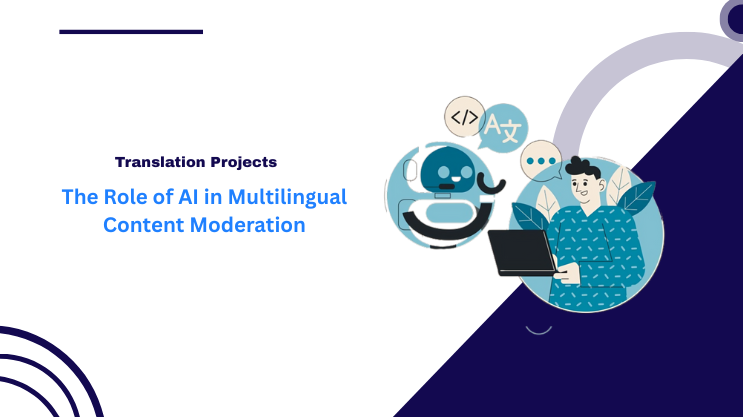

  • The Role of AI in Multilingual Content Moderation

    The Role of AI in Multilingual Content Moderation

    As digital platforms expand globally, moderating user-generated content across multiple languages has become a complex challenge. AI plays a crucial role in enabling scalable, accurate, and timely multilingual content moderation. By leveraging machine learning and natural language processing, organizations can maintain safe online environments while respecting linguistic and cultural diversity.

    1. Handling High Volumes of Multilingual Content

    AI systems can process vast amounts of text, images, and videos in multiple languages simultaneously. This scalability allows platforms to moderate global content efficiently without delays or resource constraints.

    2. Detecting Harmful and Inappropriate Content

    AI-powered moderation tools identify hate speech, abuse, misinformation, and policy violations across languages. Advanced models understand context, tone, and intent, reducing the risk of harmful content spreading online.

    3. Adapting to Cultural and Linguistic Nuances

    Multilingual AI models are trained to recognize regional expressions, slang, and cultural references. This helps ensure moderation decisions are accurate and culturally sensitive rather than based on literal translations alone.

    4. Real-Time Content Monitoring

    AI enables real-time analysis of live chats, comments, and social media posts. Immediate detection and action prevent the escalation of harmful content and maintain platform integrity.

    5. Supporting Human Moderators

    AI assists human moderators by prioritizing flagged content and providing contextual insights. This hybrid approach improves efficiency, reduces workload, and ensures more consistent moderation outcomes.

    6. Reducing Bias and Improving Consistency

    Automated moderation applies uniform standards across languages and regions. Continuous model training helps minimize bias and ensures fair enforcement of content policies globally.

    7. Enhancing Compliance with Global Regulations

    AI-driven moderation supports compliance with international regulations and platform policies. Accurate multilingual moderation helps organizations meet legal requirements while protecting user rights.

    8. Continuous Learning and Improvement

    AI systems evolve by learning from new data, user feedback, and moderation outcomes. This continuous improvement ensures better accuracy, adaptability, and effectiveness in managing multilingual content.

    In conclusion, AI is transforming multilingual content moderation by enabling scalability, accuracy, and cultural awareness. By combining intelligent automation with human oversight, organizations can create safer digital spaces while effectively managing content across diverse languages and global communities.

  • Optimizing Localized Landing Pages for Conversion

    Optimizing Localized Landing Pages for Conversion

    In today’s global marketplace, businesses are no longer limited by geography. Expanding into new markets requires more than simply translating your website – it demands localized landing pages designed to connect with local audiences and drive conversions. Honey Translation Service specializes in helping companies create landing pages that resonate culturally, linguistically, and contextually, ensuring maximum engagement.

    Why Localized Landing Pages Matter

    A landing page is often the first point of contact between your brand and potential customers. A poorly localized page can feel generic or confusing, reducing trust and engagement. Localized landing pages address language, cultural nuances, and user behavior, resulting in higher click-through rates and conversions.

    For instance, a U.S.-centric landing page might highlight fast shipping, but a French audience may respond better to eco-friendly packaging. Honey Translation Service ensures your landing pages reflect the values, tone, and preferences of each target market.

    Key Elements of an Effective Localized Landing Page

    1. Accurate and Contextual Translation

    Translation goes beyond literal word-for-word conversion. Localization captures cultural context, idiomatic expressions, and tone. With Honey Translation Service, businesses receive translations that feel natural, not robotic. This ensures that your brand voice remains consistent while speaking directly to your audience’s expectations.

    2. Cultural Adaptation of Visual Content

    Images, colors, and symbols have different meanings across cultures. For example, while white symbolizes purity in some cultures, it can signify mourning in others. Localized landing pages use visuals strategically to enhance user trust and engagement. Honey Translation Service advises on culturally appropriate images and designs that complement your messaging.

    3. Optimized Call-to-Action (CTA)

    CTAs are central to conversions. Localizing a CTA involves more than translating text – it requires understanding local consumer behavior. A CTA that works in Japan might be ineffective in Brazil due to differences in phrasing, urgency, or politeness. Honey Translation Service ensures CTAs are both compelling and culturally aligned, maximizing conversion potential.

    4. SEO-Friendly Localization

    Localizing a landing page isn’t complete without adapting it for search engines. This includes researching local keywords, meta descriptions, and content structure. Honey Translation Service integrates multilingual SEO strategies to help your pages rank higher in local search results, increasing visibility and attracting qualified leads.

    5. Mobile and UX Considerations

    User experience varies globally. Some markets prefer longer-form content, while others favor concise information. Mobile optimization is critical, especially in regions where smartphones are the primary internet access device. Honey Translation Service works with your team to ensure localized landing pages are responsive, intuitive, and easy to navigate, regardless of device.

    Measuring Success of Localized Landing Pages

    To ensure your investment pays off, it’s essential to track the performance of localized landing pages. Metrics such as bounce rates, conversion rates, and average session duration provide insights into how well your pages resonate with local audiences. Honey Translation Service not only creates high-quality localized content but also advises on A/B testing strategies to continuously refine and improve performance.

    Best Practices for Higher Conversions

    • Prioritize relevance: Align content with local trends, culture, and consumer preferences.
    • Maintain consistency: Your brand voice should remain recognizable across markets while adapting to local context.
    • Simplify forms: Minimize friction by tailoring forms to local user behavior and legal requirements.
    • Leverage testimonials: Local reviews and case studies build trust with new audiences.
    • Monitor analytics: Use data to iterate and enhance your localized landing pages.

    Conclusion

    Creating landing pages that convert in diverse markets requires more than translation – it demands cultural insight, linguistic precision, and strategic design. Honey Translation Service empowers businesses to craft landing pages that truly resonate, driving higher engagement and conversions. By localizing content thoughtfully, companies can unlock global opportunities and ensure that every click counts.

  • Localization Strategies for Emerging Virtual Reality Markets

    Localization Strategies for Emerging Virtual Reality Markets

    As virtual reality (VR) technologies gain momentum across industries such as gaming, education, training, and retail, global adoption is accelerating. To succeed in emerging VR markets, businesses must go beyond traditional localization and adapt immersive experiences for diverse languages, cultures, and user behaviors. Effective VR localization ensures accessibility, engagement, and long-term growth in international markets.

    1. Localizing In-World Text and User Interfaces

    VR environments often include menus, prompts, instructions, and interactive elements. Translating and adapting in-world text ensures users can navigate experiences intuitively in their native language without breaking immersion.

    2. Adapting Voiceovers and Audio Cues

    Audio plays a critical role in VR experiences. Localized voiceovers, sound effects, and narration improve comprehension and emotional engagement while maintaining synchronization with virtual interactions.

    3. Cultural Adaptation of Virtual Environments

    VR content should reflect cultural preferences, symbols, and social norms. Adapting avatars, gestures, visuals, and scenarios ensures experiences feel natural and culturally respectful to local users.

    4. Optimizing Performance for Regional Hardware and Connectivity

    Emerging markets may use different VR devices and have varying internet capabilities. Localization strategies should account for hardware compatibility, performance optimization, and accessibility across regions.

    5. Supporting Multilingual Interaction and Communication

    Multiplayer and social VR platforms require real-time multilingual communication. Integrating live translation or multilingual chat features enhances collaboration and user engagement across borders.

    6. Ensuring Accessibility and Inclusivity

    Localized VR experiences should consider accessibility needs, including subtitles, audio descriptions, and simplified navigation. Inclusive design broadens reach and supports diverse user groups globally.

    7. Aligning Content with Local Regulations and Standards

    Different regions have regulations related to data privacy, content sensitivity, and age restrictions. Localizing VR content ensures compliance while maintaining a consistent global experience.

    8. Leveraging Analytics to Improve Localization

    Tracking user behavior and feedback across regions helps refine localized VR experiences. Data-driven insights enable continuous improvement and ensure content remains relevant as markets evolve.

    In conclusion, localization is essential for unlocking the full potential of emerging virtual reality markets. By adapting language, culture, technology, and user experience, businesses can deliver immersive, inclusive, and engaging VR content that resonates with global audiences and drives sustainable growth.

  • The Impact of Voice AI on Multilingual Customer Engagement

    The Impact of Voice AI on Multilingual Customer Engagement

    Voice AI is rapidly transforming how businesses interact with customers across global markets. By enabling natural, voice-based communication in multiple languages, Voice AI helps brands deliver faster, more personalized, and more accessible customer experiences. This technology is reshaping multilingual customer engagement by breaking language barriers and creating seamless interactions across regions.

    1. Enabling Natural Multilingual Conversations

    Voice AI allows customers to interact with brands in their native language through speech. Natural language processing and speech recognition enable smooth conversations, making interactions more intuitive and human-like.

    2. Improving Accessibility and Inclusivity

    Voice-based interfaces support users with limited literacy or visual impairments. Multilingual Voice AI ensures that customers from diverse backgrounds can access information and services easily, improving inclusivity.

    3. Enhancing Customer Support Efficiency

    AI-powered voice assistants handle routine inquiries instantly in multiple languages. This reduces wait times, improves response accuracy, and allows human agents to focus on more complex issues.

    4. Delivering Personalized Customer Experiences

    Voice AI analyzes user preferences, history, and behavior to offer personalized responses. Multilingual personalization strengthens customer relationships and increases satisfaction across different regions.

    5. Supporting Real-Time Language Translation

    Real-time voice translation enables seamless communication between customers and support teams who speak different languages. This capability improves global service delivery and strengthens customer trust.

    6. Scaling Global Customer Engagement

    Voice AI systems can handle high volumes of interactions simultaneously across markets. This scalability allows businesses to expand globally without proportional increases in customer support resources.

    7. Integrating Voice AI Across Customer Touchpoints

    From call centers and mobile apps to smart devices and virtual assistants, Voice AI provides consistent multilingual engagement across multiple channels, ensuring a unified customer experience.

    8. Building Trust Through Accurate Communication

    Clear, accurate voice interactions in the customer’s preferred language enhance trust and confidence. Reliable multilingual communication strengthens brand credibility and long-term loyalty.

    In conclusion, Voice AI is redefining multilingual customer engagement by delivering accessible, personalized, and scalable communication. By adopting Voice AI solutions, businesses can enhance customer satisfaction, improve operational efficiency, and build stronger connections with global audiences.

  • Quality Benchmarks for Professional Dubbing Services

    Quality Benchmarks for Professional Dubbing Services

    In today’s global media landscape, dubbing is no longer just an optional addition – it’s a necessity for reaching diverse audiences effectively. Quality dubbing ensures that content resonates with viewers across languages while maintaining the authenticity of the original material. At Honey Translation Services, we understand the nuances that make professional dubbing not only accurate but engaging.

    Understanding Professional Dubbing

    Professional dubbing is the process of replacing the original voice in audio-visual content with a new voice track in a different language. Unlike simple translation, dubbing requires cultural adaptation, precise timing, and voice talent that captures the emotion and tone of the original dialogue.

    For businesses, studios, and content creators, investing in high-quality dubbing can significantly enhance audience engagement, brand credibility, and international reach.

    Key Quality Benchmarks in Dubbing

    Ensuring top-tier dubbing involves multiple layers of quality control. Honey Translation Services focuses on these critical benchmarks:

    1. Accurate Translation and Localization

    A flawless dubbing process starts with precise translation. This goes beyond literal word-for-word translation to include cultural nuances, idiomatic expressions, and context-specific adaptations. Proper localization ensures that dialogues feel natural and relatable to the target audience, preserving the original intent and humor.

    2. Professional Voice Talent

    The choice of voice actors is crucial for effective dubbing. Professionals must match the age, tone, and emotion of the original performers. Honey Translation Services collaborates with a network of experienced voice artists, ensuring every character is authentic and engaging.

    3. Lip-Sync and Timing Precision

    One of the biggest challenges in dubbing is synchronization. High-quality dubbing requires that dialogue matches lip movements and scene timing accurately. Our team employs advanced software and meticulous review processes to guarantee seamless synchronization, enhancing viewer immersion.

    4. Sound Quality and Mixing

    Dubbing quality is not just about voice accuracy; it’s also about audio clarity. Proper sound mixing ensures consistent volume levels, background sound integration, and removal of unwanted noise. Honey Translation Services prioritizes studio-grade recording techniques and post-production polishing to deliver professional results.

    5. Cultural Sensitivity

    Cultural adaptation is key to global content success. Poorly localized content can lead to misunderstandings or audience disengagement. Our experts ensure that every dubbed script respects cultural sensitivities while maintaining the original storyline’s integrity.

    6. Multi-Language Support

    To reach a global audience, content must be dubbed into multiple languages. Honey Translation Services offers multilingual dubbing solutions, covering major and regional languages with consistent quality standards. This helps brands and media creators maximize their international reach efficiently.

    Benefits of High-Quality Dubbing

    Investing in professional dubbing brings measurable benefits:

    • Enhanced Audience Engagement: Viewers connect better with content in their native language.
    • Brand Credibility: Professionally dubbed content reflects a commitment to quality.
    • Global Reach: Multilingual dubbing expands content accessibility to international markets.
    • Emotional Connection: Accurate voice and tone convey emotions more effectively, creating a memorable viewer experience.

    Why Choose Honey Translation Services for Dubbing

    At Honey Translation Services, we combine technology with human expertise to ensure superior dubbing quality. Our dedicated team manages every stage – from translation and voice casting to synchronization and final audio mastering. We understand that every project is unique, and we tailor our services to meet specific audience and content needs.

    Whether you’re producing films, educational content, or marketing campaigns, our professional dubbing services help you break language barriers without compromising quality.

    Conclusion

    High-quality dubbing is more than a technical process; it’s an art that requires linguistic precision, cultural insight, and creative expertise. By adhering to strict quality benchmarks, Honey Translation Services ensures that your content resonates with audiences globally, preserving its original impact and appeal.

    Invest in professional dubbing today and take your content to the next level of international engagement.

  • Localization Planning for Startups Entering Global Markets

    Localization Planning for Startups Entering Global Markets

    Entering global markets is an exciting milestone for startups – but success depends on more than just translating content word for word. Effective localization planning ensures your product, brand voice, and customer experience resonate with diverse audiences. For startups aiming to scale internationally, partnering with expert language providers like Honey Translation Service can make the difference between global growth and costly missteps.

    Why Localization Matters for Startups

    Many startups assume translation alone is enough to reach international users. In reality, localization adapts your content to cultural, linguistic, and regional expectations. This includes tone, visuals, currencies, legal terms, and even user behavior patterns.

    For startups with limited budgets and tight timelines, early localization planning helps avoid rework, protects brand credibility, and accelerates market entry.

    Start Localization Planning from Day One

    Localization should not be an afterthought. Integrating it into your initial growth strategy allows smoother expansion later.

    Startups working with Honey Translation Service benefit from early-stage localization audits that identify content priorities such as websites, apps, marketing materials, and customer support documentation. This proactive approach reduces long-term costs and ensures consistency across markets.

    Identify Target Markets and Languages

    Not all global markets require the same approach. Startups should analyze:

    • Market demand and growth potential
    • Language preferences and dialects
    • Cultural sensitivities and buying behavior
    • Local competitors and regulations

    Honey Translation Service helps startups prioritize languages based on market research and industry insights, ensuring resources are invested where they matter most.

    Build a Scalable Localization Workflow

    A scalable workflow is critical as startups grow. This includes:

    • Centralized content management
    • Consistent terminology and brand voice
    • Use of translation memory and glossaries
    • Human expertise combined with smart language technology

    Honey Translation Service designs localization workflows tailored for startups, allowing teams to scale content efficiently without sacrificing quality.

    Focus on Cultural Adaptation, Not Just Translation

    Successful localization goes beyond language accuracy. Cultural adaptation ensures your messaging feels native to local audiences.

    Examples include adjusting marketing slogans, adapting imagery, localizing date and number formats, and aligning content with regional values. Honey Translation Service combines native linguists with cultural experts to deliver content that connects emotionally with global users.

    Localize Your Digital Products Strategically

    For startups offering apps, SaaS platforms, or digital products, localization directly impacts user adoption and retention.

    Key areas to localize include:

    • User interface and user experience text
    • Onboarding flows and help sections
    • Error messages and notifications
    • SEO-friendly metadata for regional search engines

    Honey Translation Service ensures digital localization is user-focused, functional, and optimized for international visibility.

    Optimize Localization for Global SEO

    Localization plays a vital role in search engine optimization. Simply translating keywords is not enough – each market has unique search behavior.

    Honey Translation Service provides multilingual SEO localization by adapting keywords, meta descriptions, and content structure to align with local search intent. This helps startups improve rankings, increase organic traffic, and build credibility in new regions.

    Ensure Legal and Compliance Accuracy

    Startups entering global markets must comply with local laws, data protection rules, and industry regulations. Poorly localized legal content can lead to serious risks.

    Honey Translation Service offers precise localization for contracts, privacy policies, terms of service, and regulatory documents, ensuring clarity, accuracy, and compliance across jurisdictions.

    Measure and Improve Localization Performance

    Localization planning doesn’t end after launch. Continuous improvement is essential.

    Startups should track metrics such as user engagement, conversion rates, customer feedback, and regional performance. Honey Translation Service supports ongoing optimization by refining content based on market response and evolving business goals.

    Partner with the Right Localization Expert

    For startups, time and trust are critical. Choosing a reliable language partner ensures quality, speed, and strategic alignment.

    Honey Translation Service understands the challenges startups face and delivers flexible, scalable localization solutions designed for global expansion. From planning to execution, expert localization support empowers startups to enter international markets with confidence.

    Final Thoughts

    Localization planning is a strategic investment for startups entering global markets. With the right approach and the expertise of Honey Translation Service, startups can build strong international foundations, connect with diverse audiences, and scale globally without losing their brand identity.

    By planning early, localizing smartly, and adapting culturally, startups can turn global ambition into long-term success.

  • The Secret to Translating Apps Without Losing UX Quality

    The Secret to Translating Apps Without Losing UX Quality

    In the digital age, apps are more than just tools-they are experiences. When an app expands to international markets, translation is often seen as a necessary step. But translation alone is not enough. A poorly localized app can confuse users, break interfaces, or damage brand perception.

    Maintaining user experience (UX) quality while translating is essential for global success.

    Why UX Matters in App Translation

    UX is about how users feel while interacting with an app. A great UX ensures users can navigate intuitively, complete tasks efficiently, and enjoy the overall experience.

    When apps are translated without UX consideration:

    • Text may overflow buttons or menus
    • Layouts may break due to text expansion or contraction
    • Icons and visual cues may become culturally irrelevant
    • Users may abandon the app due to frustration

    In short, poor UX can undo even the most accurate translations.

    1. Plan for Localization from the Start

    One of the biggest mistakes is treating translation as an afterthought. App architecture, design elements, and content should be localization-ready from the beginning.

    Tips:

    • Leave extra space for text expansion
    • Avoid embedding text in graphics
    • Use global-ready fonts that support multiple scripts

    A proactive approach minimizes UX compromises later.

    2. Consider Text Expansion and Contraction

    Languages differ in length. For example:

    • German can be up to 30% longer than English
    • Chinese and Japanese can be more compact

    Impact on UX:

    • Buttons, menus, and labels may become misaligned
    • Text may be truncated or overlap

    Solution: Use dynamic layouts that adapt automatically to different text lengths.

    3. Mind Cultural and Contextual Relevance

    An app’s UX is influenced by cultural expectations. Colors, icons, symbols, and even interaction patterns may convey different meanings in different regions.

    Examples:

    • Red can signal danger in some cultures, luck in others
    • Gestures or swipe directions may be interpreted differently
    • Certain images or metaphors may confuse or offend

    Localized UX isn’t just about language-it’s about contextual experience.

    4. Keep UI Text Short and Clear

    Concise, clear text improves readability and reduces the risk of layout problems. Avoid long strings that may be difficult to fit in buttons or menus.

    Best practices:

    • Prioritize microcopy that communicates intent quickly
    • Use placeholders instead of hardcoding strings
    • Collaborate with translators to maintain brevity without losing meaning

    5. Test Multilingual UX Rigorously

    Even the best translation strategy can fail if not tested properly. Multilingual UX testing ensures the app works seamlessly across languages.

    Steps to follow:

    • Simulate different text lengths and scripts
    • Test navigation, menus, and input fields
    • Conduct user testing in target regions

    Testing helps uncover issues that might be invisible in standard translation reviews.

    6. Collaborate Between Designers, Developers, and Translators

    Successful app localization is a team effort. Designers, developers, and translators must communicate to maintain both visual design and functional experience.

    Collaboration tips:

    • Provide translators with design context
    • Developers should implement flexible layouts
    • Designers should account for cultural and linguistic variation

    When teams work together, UX quality remains consistent across languages.

    Final Thoughts

    Translating apps without compromising UX is not magic-it’s strategy, planning, and attention to detail.

    The secret lies in:

    • Designing with localization in mind
    • Prioritizing clear, concise, culturally aware content
    • Testing extensively across languages
    • Encouraging cross-functional collaboration

    In a competitive global market, an app that feels native everywhere wins user trust and engagement.

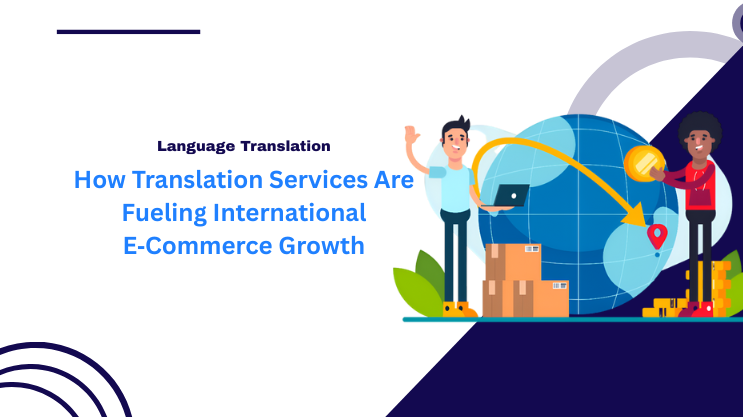
  • How Translation Services Are Fueling International E‑Commerce Growth

    How Translation Services Are Fueling International E‑Commerce Growth

    The digital marketplace has erased borders. Today, consumers can browse, compare, and buy products from anywhere in the world. For e‑commerce brands, this global reach presents enormous opportunities-but only if customers can understand and trust your content. This is where translation services play a pivotal role.

    By bridging language barriers, translation is not just a support function-it has become a key driver of international e‑commerce growth.

    The Global E-Commerce Opportunity

    E-commerce sales continue to surge worldwide. Markets that were previously inaccessible are now open to small and large businesses alike. However, entering a new market isn’t just about listing products online-it’s about speaking the local language.

    Studies show that over 70% of consumers are more likely to buy from websites in their native language, and more than 50% rarely or never purchase from English-only sites in non-English-speaking countries.

    Without translation, brands risk leaving revenue-and customers-on the table.

    Translation: More Than Words

    Translation services go beyond literal word-for-word conversion. High-quality translation ensures:

    • Cultural relevance: Messaging aligns with local norms and expectations
    • Clear communication: Product descriptions, instructions, and policies are easy to understand
    • Brand consistency: Tone, voice, and values remain intact across markets

    By localizing content, e-commerce businesses can create trust and credibility, which are critical for online purchases.

    Key Areas Where Translation Drives E-Commerce Growth

    1. Product Listings and Descriptions
      Accurate, persuasive translations increase customer confidence and reduce returns.
    2. Marketing Campaigns and Ads
      Multilingual marketing ensures promotions resonate with local audiences, boosting engagement and conversions.
    3. Customer Support and Chatbots
      Offering multilingual support improves satisfaction and loyalty, which drives repeat purchases.
    4. Terms, Policies, and FAQs
      Clear, understandable legal and transactional content reduces misunderstandings and compliance risks.
    5. SEO and Local Search Optimization
      Translating keywords, meta descriptions, and product titles improves visibility in local search engines.

    Translation Services as a Growth Engine

    The brands that thrive internationally are those that treat translation as a strategic investment, not just an operational task. By integrating professional translation services:

    • Revenue grows through broader market reach
    • Customer retention improves via personalized experiences
    • Brand reputation strengthens in new markets
    • Operational efficiency increases by reducing errors and miscommunication

    In short, translation services fuel sustainable global growth.

    Real-World Impact: Case in Point

    Consider an online fashion retailer expanding to multiple countries. Translating product listings, sizing charts, and promotional campaigns allowed them to increase sales by over 60% in new markets within a year, while also reducing return rates.

    This demonstrates that accurate, culturally sensitive translation directly correlates with revenue and customer satisfaction.

    Final Thoughts

    International e-commerce isn’t just about shipping products worldwide-it’s about communicating effectively in every market. Translation services transform language barriers into opportunities, helping brands connect, convert, and thrive globally.

    In a borderless digital marketplace, translation isn’t optional-it’s a competitive advantage.

  • How Multilingual Data Analysis Improves Global Decision-Making

    How Multilingual Data Analysis Improves Global Decision-Making

    In a data-driven global economy, organizations collect vast amounts of information from customers, markets, and operations across different regions and languages. Multilingual data analysis enables businesses to unlock insights from diverse linguistic sources, helping leaders make informed, accurate, and timely decisions. By analyzing data beyond language barriers, organizations gain a clearer understanding of global trends and customer behavior.

    1. Consolidating Data from Multiple Regions

    Multilingual data analysis allows organizations to gather and process information from various markets in different languages. This consolidated view provides decision-makers with a comprehensive understanding of global performance and regional variations.

    2. Understanding Local Customer Sentiment

    Analyzing reviews, feedback, surveys, and social media content in native languages reveals authentic customer sentiment. This insight helps businesses identify preferences, pain points, and expectations across different markets.

    3. Improving Market Forecasting Accuracy

    When data from all regions is analyzed in its original language, predictions become more accurate. Multilingual insights support better forecasting, risk assessment, and strategic planning for global expansion.

    4. Enhancing Product and Service Optimization

    Localized data highlights how products and services perform in specific regions. Businesses can refine features, pricing, and offerings based on region-specific insights, improving overall competitiveness.

    5. Supporting Smarter Marketing Decisions

    Multilingual analysis of campaign performance and audience behavior enables more effective targeting. Marketers can tailor messaging, channels, and strategies based on language-specific engagement trends.

    6. Identifying Regional Risks and Opportunities

    Analyzing multilingual news, reports, and regulatory updates helps organizations identify emerging risks and opportunities. Early detection supports proactive decision-making and minimizes potential disruptions.

    7. Enabling Inclusive and Balanced Leadership Decisions

    Access to insights from all linguistic regions ensures that leadership decisions are inclusive and data-driven. This balanced perspective prevents bias toward dominant markets and supports equitable global strategies.

    8. Strengthening Competitive Intelligence

    Monitoring competitor activity, customer responses, and market movements in multiple languages provides a competitive edge. Multilingual intelligence helps organizations stay ahead in diverse and fast-moving global markets.

    In conclusion, multilingual data analysis is a powerful tool for improving global decision-making. By transforming language-diverse data into actionable insights, organizations can make smarter decisions, respond effectively to market changes, and drive sustainable growth across international markets.