
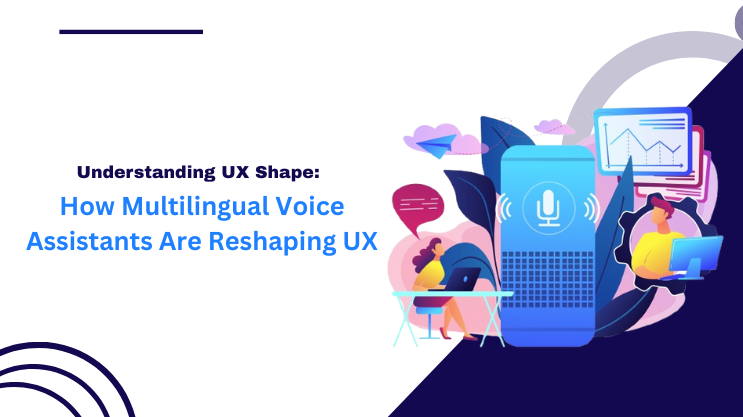
Voice technology has revolutionized how users interact with digital products. With the rise of multilingual voice assistants, businesses can now reach global audiences with more natural, intuitive, and personalized experiences. These assistants do more than understand commands-they shape how users navigate interfaces, access services, and engage with content across languages and cultures.
What Are Multilingual Voice Assistants?
Multilingual voice assistants are AI-powered tools capable of understanding and responding to multiple languages and dialects. Examples include Amazon Alexa, Google Assistant, and Apple Siri. They go beyond text-based interfaces, enabling users to:
- Search for information
- Control smart devices
- Make purchases
- Access services through spoken commands
Impact on User Experience (UX)
- Enhanced Accessibility: Voice assistants make digital products usable for people with visual impairments, literacy challenges, or those on the go.
- Cultural Adaptation: Multilingual capabilities allow assistants to recognize local expressions, idioms, and accents, providing a personalized experience.
- Simplified Navigation: Users can interact naturally without needing to memorize menus, buttons, or complex UI structures.
- Faster Engagement: Voice interactions can reduce friction, improving task completion rates and user satisfaction.
Challenges in Designing UX for Multilingual Voice Assistants
- Language Nuances: Understanding context, slang, and dialects is critical to avoid misinterpretation.
- Speech Recognition Accuracy: Accents and regional pronunciations can affect system responsiveness.
- Privacy Concerns: Voice data collection requires strict adherence to global privacy regulations.
- Consistency Across Languages: Ensuring the assistant provides the same quality of response across all supported languages is essential.
Best Practices for Multilingual Voice UX
- Contextual Testing: Evaluate the assistant in real-life scenarios across different languages to ensure accuracy and usability.
- Inclusive Design: Consider diverse speech patterns, accents, and accessibility needs.
- Clear Feedback: Provide users with confirmations and error corrections in their preferred language.
- Continuous Improvement: Regularly update language models and user data to adapt to evolving communication styles.
The Future of UX with Voice Assistants
As AI and natural language processing evolve, multilingual voice assistants will continue to redefine UX design. They will not only support more languages but also anticipate user intent, offer proactive suggestions, and integrate seamlessly across devices. For global businesses, investing in voice-enabled UX is a strategic move toward better engagement, loyalty, and market reach.
multilingual voice assistants, voice UX design, global UX, voice technology, AI voice assistants, multilingual digital experience, UX innovation, accessibility UX, Honey Translation Services
