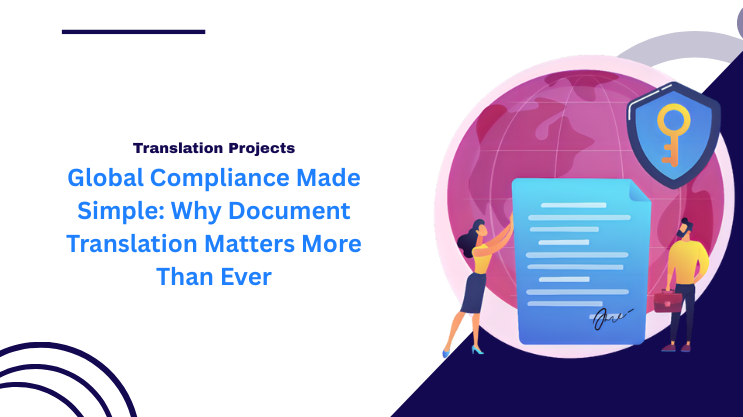
In a world of expanding regulations and cross-border operations, compliance is no longer limited to understanding the rules-it’s about communicating them accurately across languages. From contracts and policies to regulatory filings and safety manuals, document translation has become a cornerstone of global compliance.
When compliance fails, the cost is high. When translation fails, compliance often follows.
The Growing Complexity of Global Compliance
Every country has its own legal, regulatory, and documentation requirements. As businesses expand internationally, they must navigate:
- Local labor laws and employment policies
- Industry-specific regulations
- Data protection and privacy standards
- Health, safety, and environmental requirements
Misunderstanding even a single clause due to poor translation can lead to fines, delays, or legal disputes.
Why Accurate Document Translation Is Critical
Compliance documents are not marketing content-they are legally binding and often scrutinized by authorities. Accuracy, clarity, and consistency are essential.
High-quality document translation ensures:
- Legal intent is preserved
- Regulatory terminology is used correctly
- Instructions are clearly understood
- Audits and inspections proceed smoothly
Translation errors in compliance documents can have real-world consequences.
Common Compliance Documents That Require Translation
Businesses operating globally often need to translate:
- Contracts and agreements
- Corporate policies and codes of conduct
- Regulatory submissions and certifications
- Financial reports and disclosures
- Safety manuals and training materials
- Medical, technical, and legal documentation
Each document demands precision, domain expertise, and strict quality control.
The Role of Specialized Translators
Compliance translation is not a task for general translators. It requires linguists with deep knowledge of:
- Legal and regulatory terminology
- Industry standards
- Local compliance frameworks
- Documentation formats and conventions
Specialized translators help reduce risk by ensuring translations meet both linguistic and regulatory expectations.
Consistency: The Hidden Compliance Requirement
Inconsistent terminology across documents can raise red flags during audits. A single term translated differently in multiple files may suggest ambiguity or non-compliance.
Maintaining consistency through:
- Approved glossaries
- Translation memory systems
- Style guides
helps businesses present clear, unified documentation across markets.
Technology and Compliance Translation
AI and translation tools can support compliance workflows, but they must be used carefully.
Best practices include:
- Using AI for efficiency, not final approval
- Applying human review for all high-risk content
- Implementing secure and confidential translation systems
Technology enhances speed, but human expertise ensures compliance.
Simplifying Compliance Through the Right Translation Partner
The right translation partner does more than convert text. They help businesses:
- Understand local documentation expectations
- Meet regulatory deadlines
- Protect sensitive information
- Avoid costly revisions and penalties
Reliable document translation turns compliance from a burden into a manageable process.
Final Thoughts
Global compliance doesn’t have to be overwhelming. With accurate, consistent, and professionally translated documents, businesses can operate confidently across borders.
In today’s regulatory environment, document translation is no longer a support function-it’s a compliance safeguard. Getting the words right means getting compliance right.