
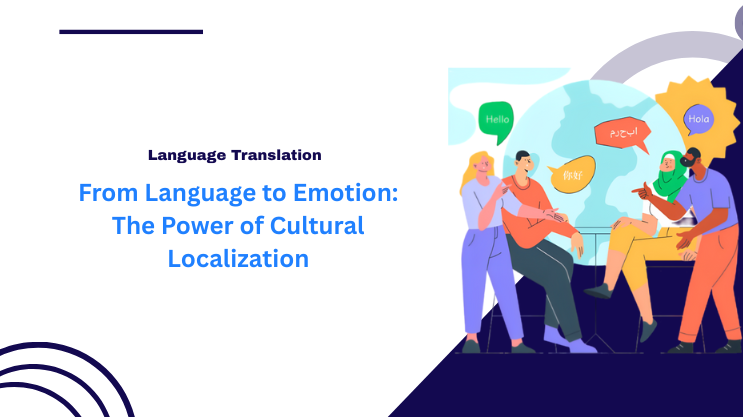
In today’s global digital landscape, businesses no longer compete only on price or quality-they compete on connection. While translation converts words from one language to another, cultural localization transforms meaning into emotion. It ensures that your message not only makes sense but also feels right to your audience.
From marketing campaigns to websites and mobile apps, cultural localization plays a crucial role in building trust, engagement, and long-term customer relationships.
What Is Cultural Localization?
Cultural localization goes beyond literal translation. It adapts content to reflect the cultural norms, values, emotions, and expectations of a specific target audience.
This includes:
- Tone and communication style
- Cultural references and idioms
- Colors, symbols, and imagery
- Date, time, and number formats
- Local traditions, beliefs, and social behavior
The goal is to make content feel native, not translated.
Why Language Alone Is Not Enough
A grammatically perfect translation can still fail if it ignores cultural context. Words carry emotional weight, and that weight differs across cultures.
For example:
- Humor that works in one country may offend another.
- A marketing slogan may sound inspiring in one language but confusing in another.
- Certain colors or symbols may carry unintended meanings in different regions.
Without cultural localization, brands risk misunderstanding, disengagement, or even reputational damage.
Turning Words into Emotional Connections
Emotion is what drives decisions. Culturally localized content speaks directly to the audience’s identity and values, creating familiarity and trust.
When content is localized effectively:
- Customers feel understood and respected
- Brand messages resonate on a personal level
- Engagement rates increase
- Conversion and loyalty improve
Localization transforms communication from informative to impactful.
Cultural Localization in Business & Marketing
Successful global brands invest heavily in cultural localization to ensure consistency without losing local relevance.
Key areas where localization matters most:
- Websites & Apps: Navigation, visuals, and user experience adapted to local habits
- Marketing Campaigns: Emotion-driven messaging tailored to regional preferences
- E-commerce Content: Product descriptions that match buying behavior
- Legal & Corporate Content: Culturally appropriate tone and terminology
Localized content helps brands appear global in reach but local in presence.
The Role of Human Expertise
While AI-powered tools assist with speed and scalability, human cultural insight remains irreplaceable. Professional linguists understand subtle emotional cues, cultural sensitivities, and regional nuances that machines often miss.
Human-led localization ensures:
- Emotional accuracy
- Cultural sensitivity
- Brand consistency across markets
- Higher-quality audience engagement
Conclusion
Cultural localization bridges the gap between language and emotion. It transforms words into experiences, messages into connections, and brands into trusted voices across borders.
In a world where customers value authenticity, businesses that invest in cultural localization don’t just speak different languages-they speak to hearts.
