
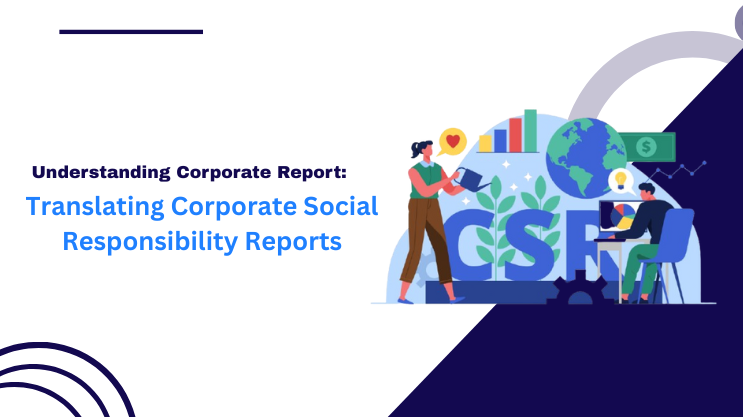
Corporate Social Responsibility (CSR) reports communicate a company’s commitment to ethical practices, sustainability, and social impact. For multinational companies, these reports reach diverse stakeholders worldwide-from investors and partners to customers and employees. Translating CSR reports is more than converting text from one language to another; it requires precision, cultural sensitivity, and industry-specific knowledge to maintain credibility and transparency.
Why CSR Report Translation Matters
- Global Stakeholder Engagement: Accurate translations help convey your company’s CSR commitments clearly to international audiences.
- Brand Reputation: Transparent, well-translated reports build trust and strengthen your company’s global image.
- Regulatory Compliance: Some countries require CSR disclosures in local languages, making translation essential.
- Consistency Across Markets: Uniform messaging ensures all stakeholders, regardless of language, understand your initiatives.
Challenges in Translating CSR Reports
- Complex Terminology: CSR reports often include legal, environmental, and financial terminology that requires precise translation.
- Cultural Nuances: Social initiatives may resonate differently across cultures; messaging must adapt without losing intent.
- Numerical Accuracy: Figures, statistics, and performance indicators must be translated carefully to avoid misinterpretation.
- Consistency in Tone: CSR reports reflect corporate values; maintaining a professional, transparent, and ethical tone across languages is crucial.
Best Practices for Translating CSR Reports
- Use Professional Translators: Choose linguists experienced in CSR, finance, or sustainability reporting to ensure accuracy and clarity.
- Maintain Brand Voice: Align translations with your company’s tone, values, and style guide.
- Localize, Don’t Just Translate: Adapt cultural references, examples, and idioms to make content meaningful for local readers.
- Fact-Check and Proofread: Ensure all data, statistics, and references are accurate in every language.
- Leverage Technology: Use Translation Management Systems (TMS) or glossaries to maintain consistency across multiple reports.
Tools That Help with CSR Report Translation
- Translation Memory Systems (TMS): Store previous translations for consistency and efficiency.
- Style Guides and Glossaries: Ensure terminology, tone, and formatting remain consistent across languages.
- In-context Review Platforms: Enable translators and reviewers to see text in the final report layout.
- Quality Assurance Tools: Check for formatting, numeric, and linguistic accuracy before publishing.
Conclusion
Translating CSR reports is a critical component of global corporate communication. Beyond mere translation, it requires cultural insight, precise terminology, and a consistent brand voice to maintain credibility. By investing in professional translation services, companies can effectively communicate their social responsibility efforts worldwide, strengthen stakeholder trust, and enhance their international reputation.
CSR report translation, corporate social responsibility translation, sustainability report translation, multilingual CSR reports, global CSR communication, Honey Translation Services.