Introduction:
Translation is often perceived as a simple task-just swapping words from one language to another. However, professional translation is a highly skilled craft that goes far beyond literal word-for-word conversion. It requires deep cultural understanding, linguistic expertise, and attention to nuance. Unfortunately, many misconceptions surround this field, leading to undervaluation of translators’ work. Let’s clear up some of the most common myths about translation.
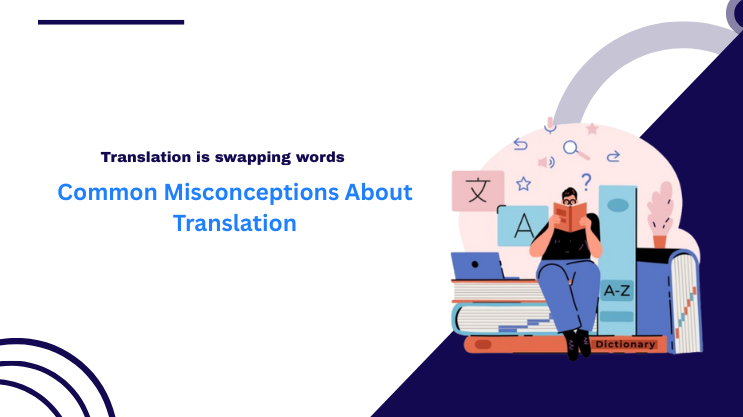
Misconception 1: Translation is just swapping words
Translation is much more than replacing words in a dictionary. A professional translator ensures that the meaning, tone, and context of the original content are preserved. Idioms, metaphors, humor, and cultural references often cannot be translated literally. For example, the French phrase “avoir le cafard” literally means “to have the cockroach,” but in context, it means “to feel down or depressed.” A literal translation would confuse readers.
Misconception 2: AI can replace human translators
While AI and machine translation tools like Google Translate or DeepL are useful for basic understanding, they cannot fully replicate human judgment. Machines struggle with context, tone, cultural nuances, and creativity. For instance, marketing campaigns or literary works require emotional resonance and cultural sensitivity that AI simply cannot provide. A slogan that works in English may completely fail or even offend in another language if not adapted properly.
Misconception 3: Translators don’t need expertise
Professional translation often demands subject-specific knowledge. Legal translators must understand contracts, court terminology, and local laws. Medical translators need to be familiar with technical terms, procedures, and patient safety considerations. Even general content requires mastery of grammar, style, and cultural norms. Translation is not just a language skill—it is an intersection of knowledge, research, and expertise.
Misconception 4: Translation is quick and easy
Quality translation takes time. Translators must read, understand, research, translate, revise, and proofread to ensure accuracy and clarity. Rushing the process can result in errors, misinterpretations, or even reputational damage for businesses and authors. Professional translators also use tools like CAT (Computer-Assisted Translation) software to maintain consistency, especially for large projects.
Translation is both an art and a science. It requires linguistic skill, cultural understanding, and subject-matter expertise. By appreciating the depth and complexity of professional translation, we can better value the people who bridge languages and connect the world.