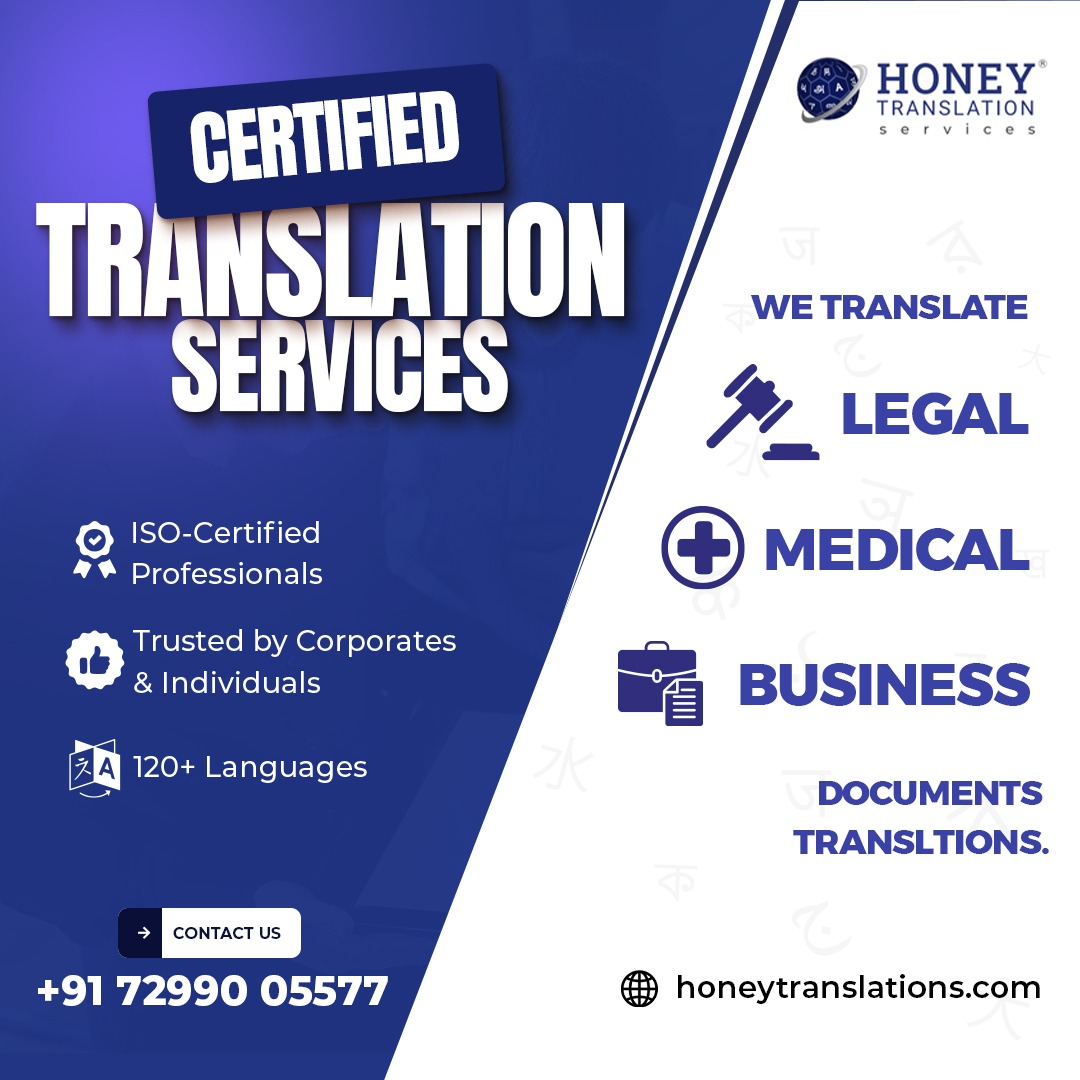

In an increasingly global world, documents travel across borders every day. From immigration applications and international contracts to academic admissions and business registrations, accuracy and authenticity are non-negotiable. This is where certified translations become essential.
Certified translations are not just about translating words-they are about ensuring legal acceptance, credibility, and smooth international transactions.
What Is a Certified Translation?
A certified translation is an official translation of a document accompanied by a signed statement of accuracy from the translator or translation agency. This certification confirms that the translation is complete, accurate, and faithful to the original document.
Certified translations are commonly required by:
- Government authorities
- Courts and legal institutions
- Universities and educational bodies
- Immigration and visa offices
- International businesses
Why Certified Translations Matter
When dealing with official processes, even a small translation error can lead to delays, rejections, or legal complications. Certified translations provide assurance that your documents meet formal requirements.
Key benefits include:
- Legal and institutional acceptance
- Reduced risk of document rejection
- Faster processing times
- Enhanced credibility and trust
They act as a safeguard in high-stakes international interactions.
Common Documents That Require Certification
Certified translations are typically required for:
- Birth, marriage, and death certificates
- Passports and identity documents
- Academic transcripts and diplomas
- Legal contracts and court documents
- Immigration and visa paperwork
- Business registration and compliance documents
Each document must be handled with strict accuracy and confidentiality.
Certified vs. Notarized Translations
These terms are often confused, but they serve different purposes.
- Certified Translation: Includes a declaration of accuracy by the translator or agency.
- Notarized Translation: Involves a notary public verifying the identity of the person signing the certification-not the translation quality itself.
Some authorities require one, the other, or both-so understanding the difference is crucial.
The Role of Accuracy and Confidentiality
Certified translations demand the highest level of precision. Terminology, formatting, names, dates, and numbers must match the source document exactly.
Equally important is confidentiality. Trusted providers follow strict data protection practices to ensure sensitive personal and legal information remains secure.
How Certified Translations Support Global Business
For businesses expanding internationally, certified translations help ensure:
- Compliance with local regulations
- Smooth contract execution
- Clear communication with global partners
- Professional brand representation
They reduce friction and build confidence in cross-border dealings.
Choosing the Right Certified Translation Provider
Not all translation services offer true certification. When selecting a provider, look for:
- Qualified and experienced translators
- Clear certification statements
- Industry or government recognition
- Proven confidentiality standards
- Consistent quality assurance processes
The right partner ensures your documents are accepted the first time.
Final Thoughts
Certified translations are a vital bridge between languages, legal systems, and institutions. They eliminate uncertainty, protect your interests, and enable seamless international transactions. Whether for personal, academic, or business purposes, investing in certified translations is investing in accuracy, credibility, and peace of mind for every cross-border endeavor.