Category: Guide

  • Localizing Health Apps for Global Patient Trust

    Localizing Health Apps for Global Patient Trust

    In today’s digital healthcare ecosystem, health apps play a vital role in patient engagement, diagnosis support, wellness tracking, and remote care. As these apps expand across borders, one critical factor determines their success: trust. Patients are more likely to rely on a health app when it speaks their language, respects their culture, and aligns with local healthcare expectations. This is where health app localization becomes essential-not just for usability, but for building long-term global patient trust.


    What Is Health App Localization?

    Health app localization goes beyond simple translation. It involves adapting app content, design, and functionality to suit the linguistic, cultural, regulatory, and medical norms of a target region. This includes:

    • Medical terminology accuracy
    • Cultural sensitivity in health messaging
    • Local units of measurement and date formats
    • Compliance with regional healthcare regulations

    Effective localization ensures that users feel the app is designed for them, not merely translated.


    Why Localization Is Critical for Patient Trust

    Clear Medical Communication

    Health information must be precise. Even small translation errors can lead to misunderstandings, misdiagnosis, or misuse of medical advice. Professional medical localization ensures clarity, accuracy, and safety.

    Cultural Relevance and Sensitivity

    Health beliefs vary across cultures. A localized app respects regional attitudes toward mental health, nutrition, gender, and wellness-helping users feel understood and respected.

    Regulatory Compliance

    Localized apps align with local healthcare laws and data privacy regulations such as HIPAA, GDPR, or regional health authority guidelines, reinforcing credibility and legal trust.

    Improved User Experience

    When users navigate an app in their native language with familiar visuals and formats, engagement increases—and trust follows naturally.


    Key Elements of Health App Localization

    Medical Translation by Experts

    Healthcare content should always be translated by certified medical linguists who understand both language and clinical context.

    Localized UI/UX Design

    Icons, colors, layouts, and navigation should be culturally appropriate and intuitive for local users.

    Privacy and Data Localization

    Clear localization of privacy policies, consent forms, and data handling practices reassures users about data security.

    Multilingual Customer Support

    Offering support in the user’s language strengthens reliability and patient confidence.


    Challenges in Localizing Health Apps

    • Maintaining medical accuracy across languages
    • Managing multiple regulatory requirements
    • Adapting sensitive health topics culturally
    • Keeping content updated across all localized versions

    These challenges highlight why professional language service providers are crucial in healthcare localization projects.


    Benefits for Healthcare Brands and Developers

    • Increased app adoption in global markets
    • Higher patient engagement and retention
    • Reduced legal and compliance risks
    • Stronger brand reputation and trustworthiness

    Localized health apps don’t just reach more users-they build meaningful, lasting relationships with patients worldwide.


    Future of Health App Localization

    As AI-powered healthcare and telemedicine expand, localization will play an even bigger role. Combining AI tools with human medical linguists will enable faster, scalable, and culturally accurate localization-without compromising patient safety or trust.


    Conclusion

    Localizing health apps is no longer optional-it’s a strategic necessity. By delivering culturally relevant, medically accurate, and regulation-compliant experiences, healthcare brands can earn global patient trust and improve health outcomes across borders. In healthcare, trust saves lives-and localization builds that trust.

    Health app localization, medical translation services, healthcare localization, multilingual health apps, patient trust, global healthcare apps.
  • How Cultural Precision Turns Products into Global Favorites

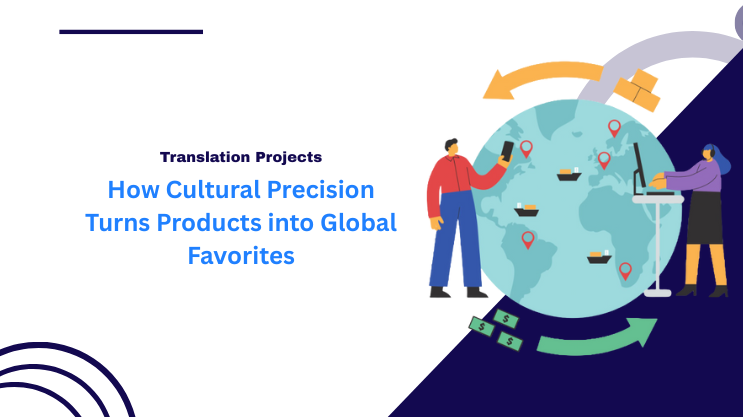
    How Cultural Precision Turns Products into Global Favorites

    In today’s borderless marketplace, a great product alone is no longer enough. What separates globally loved brands from those that struggle abroad is cultural precision-the ability to understand, respect, and adapt to local cultures without losing brand identity.

    When businesses invest in cultural precision, they don’t just sell products; they create connections, trust, and loyalty across regions.

    What Is Cultural Precision?

    Cultural precision goes beyond literal translation. It involves adapting:

    • Language and tone
    • Visual design and color symbolism
    • User behavior and expectations
    • Local values, customs, and sensitivities

    The goal is to make a product feel native, not foreign.

    A culturally precise product feels as though it was created for the local audience-even if it originated thousands of miles away.

    Why Cultural Precision Matters in Global Markets

    1. Consumers Buy What Feels Familiar

    People trust what resonates with their cultural norms. A message that feels natural increases comfort, confidence, and purchase intent.

    2. Avoids Costly Cultural Missteps

    A single poorly adapted phrase, image, or color can damage brand reputation. Cultural precision prevents misunderstandings and protects brand credibility.

    3. Builds Emotional Connections

    Global favorites don’t just communicate-they connect emotionally. Cultural relevance helps brands speak to values, humor, and aspirations unique to each region.

    Key Elements of Cultural Precision

    1. Language That Reflects Local Thinking

    Effective localization adapts:

    • Idioms and expressions
    • Formal vs. casual tone
    • Regional dialects and variations

    Literal translations may convey words, but cultural precision conveys meaning.

    2. Design That Matches Cultural Preferences

    Colors, layouts, and imagery carry different meanings worldwide.

    • Colors symbolize different emotions across cultures
    • Reading patterns vary by region
    • Visual density preferences differ

    Design localization ensures visuals support, not contradict, your message.

    3. Content That Aligns with Cultural Values

    Cultural precision means understanding:

    • What motivates local audiences
    • How authority and trust are perceived
    • What storytelling styles resonate

    This alignment transforms marketing from promotion into conversation.

    4. Voice, Audio, and Human Touch

    Voice-over, dubbing, and subtitling require cultural nuance.

    • Accent and pronunciation matter
    • Voice tone influences credibility
    • Timing and emotional delivery vary

    The right voice can make global content feel deeply personal.

    Real Impact: From Products to Global Favorites

    Brands that succeed globally:

    • Adapt packaging and instructions for local use
    • Localize apps and websites for regional habits
    • Customize campaigns to reflect local festivals and values

    These brands aren’t just recognized-they are embraced.

    Cultural precision turns users into advocates and products into trusted companions.

    Cultural Precision Is a Long-Term Investment

    While speed matters, accuracy and cultural relevance matter more. Businesses that prioritize cultural precision:

    • Build long-lasting global trust
    • Reduce rework and brand risk
    • Increase customer retention and loyalty

    Global success is not about being everywhere-it’s about belonging everywhere.

    Final Thoughts

    In a world full of choices, customers choose brands that understand them. Cultural precision transforms products from international offerings into local favorites with global reach.

    When brands respect culture, culture rewards them with loyalty.

  • From Market Entry to Market Trust: The Power of Smart Localization

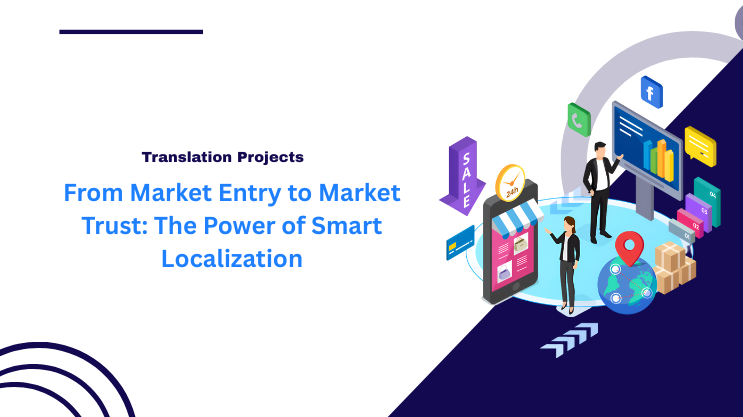
    From Market Entry to Market Trust: The Power of Smart Localization

    Entering a new market is an exciting milestone for any business-but true success doesn’t come from entry alone. It comes when your brand earns trust, relevance, and emotional connection with local audiences. This is where smart localization plays a transformative role.

    Localization goes far beyond translation. It’s the strategic process of adapting content, design, tone, and user experience to resonate naturally within a specific market. When done right, localization becomes a powerful trust-building tool.

    Understanding Smart Localization

    Smart localization is the intentional alignment of your brand message with local culture, language, and expectations. It combines linguistic accuracy with cultural intelligence and market insight.

    Unlike basic translation, smart localization considers:

    • Cultural nuances and sensitivities
    • Local buying behavior and preferences
    • Regional tone, humor, and communication style
    • Market-specific regulations and norms

    The result? Content that feels created for the audience-not converted for them.

    Market Entry Is Just the First Step

    Many brands believe launching in a new language equals market readiness. However, audiences can quickly sense when content feels foreign or generic.

    Poorly localized content can lead to:

    • Misunderstood messaging
    • Loss of credibility
    • Low engagement and conversion rates

    Smart localization ensures your first impression is authentic, culturally appropriate, and aligned with local expectations—setting a strong foundation from day one.

    How Smart Localization Builds Market Trust

    1. Speaks the Language of the Audience

    When content mirrors how people naturally communicate, it creates instant familiarity. Customers feel understood, not targeted.

    2. Respects Cultural Identity

    Localization that honors traditions, values, and social norms demonstrates respect-an essential element in trust-building.

    3. Creates Emotional Connection

    Trust grows when audiences feel your brand understands their world, not just their words.

    4. Enhances Brand Credibility

    Consistent, high-quality localized content signals professionalism and long-term commitment to the market.

    Beyond Words: Localization Across Touchpoints

    Smart localization extends to every brand interaction, including:

    • Websites and mobile apps
    • Marketing campaigns and ads
    • Product packaging and manuals
    • Voiceovers, subtitling, and dubbing
    • Visual design, colors, and layouts

    Each touchpoint reinforces trust when localized cohesively and thoughtfully.

    Localization as a Long-Term Strategy

    Market trust is not built overnight. Smart localization evolves with the market:

    • Adapting to language trends
    • Updating cultural references
    • Aligning with changing consumer expectations

    Brands that invest in ongoing localization are seen as local players, not outsiders.

    The Competitive Advantage of Smart Localization

    Businesses that prioritize smart localization benefit from:

    • Higher engagement and customer loyalty
    • Improved conversion and retention rates
    • Stronger brand reputation across regions
    • Sustainable global growth

    In competitive global markets, trust is the ultimate differentiator.

    Conclusion: From Presence to Belonging

    Market entry gets you noticed.
    Smart localization helps you belong.

    When your brand communicates with cultural intelligence and linguistic precision, it transforms from a foreign name into a trusted local voice. In today’s global economy, local relevance is global power.

  • Translating EdTech Platforms for International Students

    Translating EdTech Platforms for International Students

    The global rise of EdTech platforms has transformed how students access education beyond borders. From online universities and learning management systems (LMS) to mobile learning apps and virtual classrooms, digital education is now truly international. However, language remains one of the biggest barriers for international students. Translating EdTech platforms accurately and culturally is essential to ensure inclusive learning, better engagement, and global growth.


    Why Translation Matters in EdTech

    For international students, understanding course content in their native or preferred language directly impacts learning outcomes. Poor or machine-only translations can cause confusion, reduce motivation, and increase dropout rates. Professional translation ensures clarity, accuracy, and consistency across all educational materials, making learning accessible and effective for diverse audiences.


    Key Components of EdTech Translation

    User Interface (UI) and Navigation
    Menus, buttons, dashboards, and instructions must be translated clearly so students can navigate platforms effortlessly without language-related frustration.

    Course Content and Learning Materials
    Video subtitles, lesson text, quizzes, assignments, and downloadable resources must maintain educational accuracy and subject-specific terminology.

    Assessments and Certifications
    Exams, grading instructions, and certificates require precise translation to avoid misinterpretation and maintain academic credibility.

    Support and Communication
    Help sections, FAQs, chatbots, emails, and announcements must be localized to ensure students receive timely and understandable assistance.


    Localization: Beyond Word-for-Word Translation

    Translation alone is not enough for EdTech success. Localization adapts content to cultural, academic, and regional expectations. This includes date formats, grading systems, examples, imagery, tone, and even learning styles. A localized platform feels familiar and trustworthy to international students, improving engagement and satisfaction.


    Challenges in Translating EdTech Platforms

    EdTech translation comes with unique challenges such as technical terminology, frequent content updates, multimedia integration, and platform compatibility. Additionally, maintaining consistency across multiple languages while scaling globally requires structured workflows and experienced language partners.


    Benefits of Professional EdTech Translation

    • Improved learning experience for international students
    • Higher course completion and retention rates
    • Expanded global reach for EdTech providers
    • Stronger brand credibility and trust
    • Compliance with international education standards

    Role of Technology and Human Expertise

    While AI-powered translation tools help speed up processes, human linguists are essential for accuracy, cultural relevance, and educational quality. A hybrid approach-combining technology with professional review-ensures scalability without compromising learning outcomes.


    Conclusion

    Translating EdTech platforms for international students is no longer optional – it is a strategic necessity. Accurate translation and thoughtful localization empower learners, support global education goals, and help EdTech companies expand into international markets with confidence. By investing in professional language services, EdTech providers can create truly inclusive and impactful digital learning experiences.

    EdTech translation services, educational platform localization, LMS translation, online learning localization, multilingual EdTech platforms, translation for international students

  • Language Services in Smart Cities & Digital Governance

    Language Services in Smart Cities & Digital Governance

    As cities around the world embrace smart technologies, digital governance is becoming the backbone of urban development. From e-governance portals and AI-driven public services to smart mobility and digital healthcare, communication plays a crucial role. In multilingual societies, language services are no longer optional – they are essential for inclusive, efficient, and citizen-centric smart cities.

    What Are Smart Cities and Digital Governance?

    A smart city uses digital technology, data, and innovation to improve public services, infrastructure, and quality of life. Digital governance enables governments to deliver services online, automate processes, and engage citizens through digital platforms. However, these systems can only succeed if everyone can understand and access them, regardless of language.

    Why Language Services Matter in Smart Cities

    Smart cities serve diverse populations, including migrants, tourists, elderly citizens, and linguistic minorities. Language barriers can prevent people from accessing essential services such as healthcare, transport, legal support, and emergency alerts. Professional language services ensure equal access, transparency, and trust between governments and citizens.

    Key Language Services Powering Digital Governance

    Translation and Localization

    Government websites, mobile apps, public dashboards, and smart kiosks must be translated and localized to reflect cultural, linguistic, and regional nuances. Localization ensures that content is not just translated word-for-word but adapted for local understanding and usability.

    Multilingual Citizen Portals

    E-governance platforms offering services like tax payments, permits, utility services, and welfare schemes need multilingual interfaces. Language services help create seamless user experiences for citizens across different linguistic backgrounds.

    Real-Time Interpretation and Voice AI

    Smart cities increasingly use AI-powered chatbots, voice assistants, and helplines. Integrating multilingual interpretation and voice AI allows citizens to interact with government services in their preferred language, improving efficiency and satisfaction.

    Legal and Administrative Translation

    Policies, regulations, public notices, and legal documents must be accurately translated to maintain compliance and clarity. Certified translations ensure reliability, especially in legal and regulatory communication.

    Emergency and Public Safety Communication

    During emergencies such as natural disasters or health crises, timely multilingual alerts can save lives. Language services ensure that warnings, instructions, and updates reach all communities without delay or confusion.

    Benefits of Language Services in Smart City Development

    Language services strengthen digital governance by:

    • Promoting inclusivity and accessibility
    • Enhancing citizen engagement and trust
    • Reducing miscommunication and service errors
    • Supporting compliance with language and accessibility regulations
    • Improving adoption of smart city technologies

    The Role of AI and Human Expertise

    While AI-driven translation tools enable speed and scalability, human linguists ensure accuracy, cultural relevance, and legal correctness. The future of smart cities depends on a hybrid approach, combining AI efficiency with human expertise for high-impact public communication.

    Future Trends in Multilingual Smart Cities

    As smart cities evolve, we can expect greater integration of real-time translation, multilingual AI assistants, speech-to-text services, and data-driven localization strategies. Governments that invest in professional language services will be better positioned to build inclusive, globally connected urban environments.

    Conclusion

    Language services are a critical pillar of smart cities and digital governance. They bridge communication gaps, empower citizens, and ensure that technological progress benefits everyone. In an increasingly connected world, multilingual communication is not just smart – it’s essential.

  • Localization Isn’t Translation Anymore – It’s Brand Survival

    Localization Isn’t Translation Anymore – It’s Brand Survival

    In today’s hyperconnected world, brands don’t just compete globally-they live globally. A message published in one market can be seen, shared, and judged across cultures within seconds. In this environment, localization is no longer a nice-to-have add-on to translation-it’s a critical factor in brand survival.

    The Shift: From Words to Experiences

    Traditional translation focuses on converting text from one language to another. Localization, however, goes much deeper. It adapts tone, visuals, cultural references, humor, formats, and even user expectations to resonate with a specific market.

    Modern audiences don’t ask, “Is this understandable?”
    They ask, “Does this feel like it was made for me?”

    That emotional connection is what localization delivers—and what plain translation often misses.

    Why Translation Alone Is No Longer Enough

    A technically correct translation can still fail if it ignores cultural context. Here’s why:

    • Cultural nuances vary widely across regions
    • Idioms, humor, and emotions don’t travel word-for-word
    • Colors, symbols, and imagery can change meaning across cultures
    • User behavior differs based on local digital habits

    A brand that speaks fluently but not natively risks sounding distant, generic, or even offensive.

    Localization as a Brand Trust Builder

    Trust is the currency of global business. When customers see content tailored to their language, culture, and expectations, it sends a clear message:

    “We understand you. We respect you. We belong here.”

    Localized content:

    • Builds credibility and authenticity
    • Improves customer engagement and loyalty
    • Reduces misunderstandings and brand risks
    • Enhances conversion rates and retention

    In contrast, poorly localized content can damage reputation faster than silence.

    Where Localization Matters Most Today

    Localization now touches every customer-facing element, including:

    • Websites and mobile apps
    • Marketing campaigns and social media
    • Product packaging and user manuals
    • UI/UX design and visuals
    • Subtitles, voice-over, and dubbing
    • Customer support and documentation

    Brands that localize consistently across all touchpoints create seamless global experiences.

    Real-World Impact: Survival vs. Irrelevance

    Global markets are crowded. Customers have endless choices. If your brand doesn’t speak their language-emotionally and culturally-they will choose one that does.

    Localization isn’t just about entering new markets anymore. It’s about:

    • Staying relevant
    • Protecting brand identity
    • Avoiding cultural missteps
    • Creating long-term global relationships

    In many industries, localization has become the difference between scaling successfully and being quietly ignored.

    The Future of Localization

    As AI, automation, and global expansion accelerate, localization is evolving into a strategic discipline. Successful brands treat it as:

    • A core marketing strategy
    • A brand consistency tool
    • A customer experience investment

    The brands that survive won’t be the loudest or the cheapest-they’ll be the ones that feel local everywhere they go.

    Final Thoughts

    Localization is no longer just about translating words.
    It’s about translating identity, values, and emotion.

    In a world where customers expect personalization and cultural relevance, localization isn’t optional—it’s brand survival.

  • Translating FinTech Apps for Regulatory Compliance

    Translating FinTech Apps for Regulatory Compliance

    In today’s digital-first economy, FinTech apps are transforming how people bank, invest, insure, and make payments across borders. As FinTech companies expand globally, language translation becomes more than a user experience feature-it becomes a regulatory necessity. Accurate and compliant translation ensures trust, transparency, and legal alignment in every market.

    Why Regulatory Compliance Matters in FinTech Translation

    FinTech operates in one of the most heavily regulated industries worldwide. Governments and financial authorities require clear, accurate communication to protect users from fraud, misinformation, and financial risk. When FinTech apps are translated poorly, even small errors can lead to regulatory violations, penalties, or loss of market access.

    Compliance-focused translation ensures:

    • Legal accuracy across jurisdictions
    • Clear disclosure of financial risks and terms
    • Protection of consumer rights
    • Alignment with local financial regulations

    Key Regulatory Content That Requires Precise Translation

    Not all app content carries the same level of risk. In FinTech, certain sections demand extra linguistic and legal precision.

    Terms & Conditions and User Agreements
    These documents define legal responsibilities. Any mistranslation may alter meaning and create legal disputes.

    Privacy Policies and Data Protection Notices
    Regulations like GDPR, DPDP, and other data protection laws require transparency in how user data is collected, stored, and used.

    KYC and AML Information
    Know Your Customer (KYC) and Anti-Money Laundering (AML) content must be clearly understood by users in their native language to meet compliance standards.

    Financial Disclosures and Risk Warnings
    Investment risks, interest rates, and fee structures must be communicated accurately to avoid misleading users.

    Challenges in Translating FinTech Apps

    Complex Financial Terminology
    FinTech language combines finance, law, and technology. Direct translation often fails without domain expertise.

    Varying Regulations Across Regions
    Compliance requirements differ by country. A single app may need multiple localized versions to meet local laws.

    Real-Time Updates
    Regulatory changes happen frequently. Translations must be updated quickly without losing accuracy.

    Multilingual UX Consistency
    Legal accuracy must align with user-friendly design, ensuring clarity without overwhelming users.

    Best Practices for Compliance-Driven FinTech Translation

    Use Subject-Matter Expert Translators
    Linguists with FinTech and legal expertise ensure terminology accuracy and regulatory alignment.

    Adopt Localization, Not Just Translation
    Localization adapts content to local laws, cultural expectations, currencies, and financial norms.

    Maintain a Centralized Glossary
    Consistent use of approved financial and legal terms reduces risk across languages.

    Implement Secure Translation Workflows
    FinTech data is sensitive. Secure systems and confidentiality protocols are essential.

    Collaborate with Legal and Compliance Teams
    Translation should be reviewed alongside legal experts to ensure regulatory accuracy.

    Role of Technology in FinTech Translation

    AI and machine translation tools can speed up workflows, but human review remains critical for compliance-sensitive content. A hybrid approach-AI-assisted translation with professional human validation-offers both efficiency and reliability.

    Benefits of Regulatory-Compliant FinTech Translation

    • Faster global market entry
    • Reduced legal and financial risks
    • Increased user trust and transparency
    • Stronger brand credibility
    • Improved customer adoption and retention

    Conclusion

    Translating FinTech apps for regulatory compliance is not optional-it’s a strategic necessity. As FinTech companies expand into multilingual markets, accurate, compliant, and localized translation ensures legal safety while building trust with global users. Investing in professional FinTech translation today lays the foundation for sustainable international growth.

    FinTech app translation, regulatory compliance translation, financial app localization, FinTech localization services, legal translation for FinTech, multilingual FinTech apps

  • Multilingual Communication in Global Supply Chains

    Multilingual Communication in Global Supply Chains

    In today’s interconnected world, global supply chains span multiple countries, cultures, and languages. From sourcing raw materials to delivering finished products, effective communication is the backbone of smooth operations. Multilingual communication plays a critical role in ensuring accuracy, efficiency, and trust across every stage of the global supply chain.

    Why Multilingual Communication Matters in Supply Chains

    Global supply chains involve suppliers, manufacturers, logistics partners, distributors, and customers from different linguistic backgrounds. Miscommunication can lead to delays, compliance issues, financial losses, and damaged relationships. Clear, accurate multilingual communication helps organizations maintain consistency, reduce risk, and strengthen international partnerships.

    Key Areas Where Language Impacts Supply Chains

    Supplier and Vendor Communication

    Contracts, specifications, pricing terms, and quality requirements must be clearly understood by all parties. Professional translation ensures suppliers interpret expectations accurately, minimizing errors and disputes.

    Logistics and Transportation

    Shipping documents, customs declarations, labels, and tracking information often need to be available in multiple languages. Accurate translations help prevent delays at borders and ensure regulatory compliance.

    Compliance and Documentation

    Different countries have strict legal and regulatory requirements. Translating compliance documents, safety guidelines, and certifications correctly helps businesses avoid penalties and operational disruptions.

    Technology and Systems Integration

    Supply chain management systems, ERP platforms, and dashboards are often used by global teams. Multilingual interfaces and localized content improve usability and collaboration across regions.

    Challenges in Multilingual Supply Chain Communication

    One of the biggest challenges is maintaining consistency in terminology across languages. Industry-specific terms, product names, and technical specifications must remain uniform to avoid confusion. Cultural differences can also affect communication styles, expectations, and decision-making processes.

    The Role of Professional Translation and Localization

    Professional translation goes beyond word-for-word conversion. Localization adapts content to local markets by considering language nuances, cultural context, and regional regulations. Using trained linguists and subject-matter experts ensures clarity, accuracy, and consistency across all supply chain communications.

    Benefits of Strong Multilingual Communication

    • Reduced operational errors and delays
    • Improved supplier and partner relationships
    • Faster decision-making across global teams
    • Enhanced compliance with international regulations
    • Increased customer satisfaction and brand trust

    Future Trends in Multilingual Supply Chains

    As global trade continues to expand, AI-powered translation tools combined with human expertise are becoming more common. Real-time translation, multilingual chat support, and automated document workflows are transforming how global supply chains communicate-making speed and accuracy more critical than ever.

    Conclusion

    Multilingual communication is no longer optional in global supply chains-it is a strategic necessity. Businesses that invest in professional translation services and localization services gain a competitive advantage through smoother operations, stronger partnerships, and reduced risk. Clear language connects global supply chains, enabling businesses to move faster, smarter, and more confidently across borders.

    Multilingual communication, global supply chains, supply chain translation, localization services, international logistics, business translation, global trade communication

  • Localization Challenges in AI-Powered Education Tools

    Localization Challenges in AI-Powered Education Tools

    AI-powered education tools are transforming how students learn across the globe. From intelligent tutoring systems and adaptive learning platforms to automated assessments and language learning apps, AI is reshaping education at scale. However, for these tools to truly succeed worldwide, localization plays a critical role. Without proper localization, even the most advanced AI solutions can fail to engage learners, respect cultural contexts, or deliver accurate outcomes.


    Why Localization Matters in AI-Driven Education

    Education is deeply connected to language, culture, and regional learning practices. AI systems trained primarily on one language or cultural framework may struggle when introduced into diverse markets. Localization ensures that educational content, user interfaces, and AI behaviors align with local expectations, making learning effective, inclusive, and culturally relevant.


    Key Localization Challenges in AI-Powered Education Tools

    Language Accuracy and Context

    AI translation models may provide grammatically correct text but often miss educational nuance. Academic terminology, subject-specific vocabulary, and contextual meanings must be precisely localized to avoid confusion and misinformation.

    Cultural Sensitivity in Learning Content

    Examples, metaphors, visuals, and assessments used in AI-based lessons may not resonate across cultures. What works in one region may be inappropriate or irrelevant in another, making cultural adaptation a major challenge.

    Bias in AI Training Data

    AI systems trained on limited or region-specific datasets can reflect linguistic and cultural bias. This affects content recommendations, assessments, and feedback, potentially disadvantaging learners from underrepresented regions.

    Multilingual User Interface Complexity

    Educational platforms must support multiple languages seamlessly, including right-to-left scripts, regional fonts, and local formatting standards. Poor UI localization can reduce usability and learner engagement.

    Voice and Speech Recognition Issues

    AI-powered voice assistants and pronunciation tools often struggle with regional accents, dialects, and speech patterns. In education, this can impact language learning accuracy and accessibility.

    Curriculum and Regulatory Differences

    Educational standards, grading systems, and compliance requirements vary across countries. AI tools must be localized to meet regional curricula and legal guidelines, which adds another layer of complexity.


    The Role of Human Expertise in AI Localization

    While AI accelerates translation and content delivery, human linguists and localization experts remain essential. They ensure contextual accuracy, cultural relevance, and educational integrity-areas where AI alone still falls short. A human-in-the-loop approach creates a balance between automation and quality.


    Best Practices for Localizing AI-Powered Education Tools

    Successful localization strategies include combining AI translation with human review, using region-specific datasets, testing tools with local educators, and continuously updating models based on learner feedback. This approach improves accuracy, trust, and learning outcomes.


    The Future of Localized AI Education

    As AI technology evolves, localization will become even more critical. Multilingual, culturally adaptive AI systems will define the future of global education, enabling equal learning opportunities regardless of language or location.


    Conclusion

    AI-powered education tools have immense global potential, but without effective localization, that potential remains limited. Addressing language accuracy, cultural relevance, and regional standards ensures that AI truly enhances learning experiences worldwide. Investing in professional localization is not just an option – it is a necessity for the future of education technology.

    AI education localization, AI-powered learning tools, educational technology localization, multilingual e-learning, AI translation in education, global education technology

  • Translating NGO Reports for International Donors

    Translating NGO Reports for International Donors

    Ensuring Clarity, Credibility, and Global Impact

    Non-Governmental Organizations (NGOs) operate across borders, cultures, and languages. To secure funding and maintain transparency, NGOs must communicate effectively with international donors. One of the most critical tools for this communication is accurate and professional translation of NGO reports. From annual reports to impact assessments, translating NGO documents ensures that donors fully understand the mission, outcomes, and accountability of an organization.

    Why Translating NGO Reports Matters

    International donors rely on reports to evaluate credibility, impact, and financial integrity. Poor or inaccurate translations can lead to misunderstandings, loss of trust, or even missed funding opportunities. High-quality translation ensures clarity, professionalism, and alignment with donor expectations.

    Key NGO Reports That Require Translation

    Annual reports explaining organizational performance
    Project and impact reports showcasing outcomes and beneficiaries
    Financial and audit reports ensuring transparency
    Monitoring and evaluation reports for accountability
    Grant proposals and donor-specific documentation

    Each document must be translated with precision while preserving the original intent and tone.

    Challenges in Translating NGO Reports

    NGO reports often include sector-specific terminology, sensitive data, and cultural references. Common challenges include maintaining accuracy in financial figures, translating development and humanitarian terms, and adapting content for donors from different cultural and regulatory backgrounds. A literal translation may not be sufficient; contextual understanding is essential.

    The Role of Professional Translation Services

    Professional translation services bring linguistic expertise and subject-matter knowledge. Experienced translators understand NGO terminology, donor expectations, and international compliance standards. They ensure consistency, confidentiality, and accuracy across all documents.

    Localization for International Donors

    Beyond translation, localization adapts reports to suit cultural and regional preferences. This includes adjusting tone, formatting dates and numbers, and aligning content with donor-country norms. Localization helps NGOs build stronger relationships and communicate impact more effectively.

    Benefits of High-Quality NGO Report Translation

    Improves donor trust and transparency
    Enhances global credibility and professionalism
    Increases funding opportunities
    Ensures compliance with international reporting standards
    Strengthens global outreach and impact

    Best Practices for Translating NGO Reports

    Work with certified and experienced translators
    Provide reference materials and glossaries
    Ensure consistency across all documents
    Review translations with subject experts
    Maintain strict confidentiality and data security

    Conclusion

    Translating NGO reports for international donors is more than a language task-it is a strategic investment in trust, transparency, and global impact. By partnering with professional translation services, NGOs can communicate their mission clearly, demonstrate accountability, and build lasting relationships with donors worldwide.

    NGO report translation, translation for international donors, NGO documentation translation, nonprofit translation services, donor communication translation, humanitarian translation services.