Category: Guide

  • The Importance of Localizing Voice Interfaces for International Users

    The Importance of Localizing Voice Interfaces for International Users

    Voice interfaces, including virtual assistants, smart devices, and voice-enabled applications, are rapidly transforming how users interact with technology. For global adoption, it is essential to localize these interfaces to accommodate language diversity, cultural nuances, and regional preferences. Proper localization enhances usability, engagement, and accessibility for international users, driving adoption and satisfaction.

    1. Enhancing User Accessibility and Convenience

    Localized voice interfaces allow users to interact in their native language, making technology more accessible. Clear and natural communication reduces errors, improves comprehension, and encourages frequent use.

    2. Supporting Multilingual Voice Recognition

    Different languages and dialects present unique phonetic and linguistic challenges. Localizing voice recognition ensures that systems accurately understand and respond to diverse pronunciations, accents, and speech patterns.

    3. Preserving Cultural Relevance in Responses

    Voice interfaces must provide culturally appropriate responses and content. Localization involves adapting idioms, expressions, and examples so that interactions feel natural and resonate with local users.

    4. Improving User Engagement and Satisfaction

    Users are more likely to engage with devices and applications that communicate in their preferred language. Personalized, localized voice experiences foster satisfaction, loyalty, and continued usage.

    5. Expanding Market Reach and Adoption

    By supporting multiple languages, brands can enter new international markets more effectively. Localized voice interfaces remove language barriers, making products appealing and usable to a broader audience.

    6. Facilitating Voice-Enabled Customer Support

    Localized voice assistants can provide real-time customer support in regional languages. This reduces response times, resolves issues efficiently, and enhances the overall customer experience.

    7. Aligning with Regional Regulations and Standards

    Localization ensures compliance with local data privacy laws, accessibility standards, and user expectations. This protects brands legally and fosters trust with international users.

    8. Future-Proofing Voice Technology for Global Growth

    As voice technology adoption increases worldwide, scalable localization strategies are essential. Investing in multilingual capabilities today prepares brands to meet the evolving needs of global audiences tomorrow.

    In conclusion, localizing voice interfaces is critical for international usability, engagement, and market expansion. By combining linguistic accuracy, cultural sensitivity, and technological adaptation, businesses can create voice experiences that resonate globally and drive long-term adoption and loyalty.
  • How Incorrect Translation Can Delay Visa Approvals

    How Incorrect Translation Can Delay Visa Approvals

    Applying for a visa can be a complex and stressful process, and even a small error in your documents can create major setbacks. One of the most common yet overlooked issues is incorrect translation. Errors in translating personal documents, certificates, or supporting materials can lead to visa delays, rejections, or even permanent complications.

    Why Accurate Translation Matters for Visa Applications

    Visa authorities require precise documentation to assess eligibility. Any discrepancy between the original document and its translated version can raise doubts about authenticity. Inaccurate translations may cause:

    • Misinterpretation of personal information (names, dates, addresses)
    • Confusion over educational qualifications or work experience
    • Misrepresentation of legal or financial documents

    Even minor mistakes, like translating “Bachelor of Arts” as “Arts Degree” in a different context, can trigger additional verification steps.

    Common Translation Errors That Cause Delays

    1. Literal Translation: Direct word-for-word translations often lose meaning or misrepresent the context.
    2. Omission or Addition: Leaving out information or adding extra details not present in the original document.
    3. Incorrect Dates or Numbers: Mistakes in dates, IDs, or financial figures can create serious discrepancies.
    4. Formatting Issues: Poor formatting or missing signatures can make documents non-compliant with visa requirements.

    How to Avoid Translation Errors

    • Hire Certified Translators: Ensure your documents are translated by professionals recognized by immigration authorities.
    • Use Native Language Experts: Translators familiar with both source and target languages minimize the risk of misinterpretation.
    • Double-Check Documents: Always review translations for accuracy, consistency, and formatting before submission.
    • Follow Embassy Guidelines: Each country may have specific rules about translations, notarization, and document submission.

    The Cost of Incorrect Translation

    Submitting poorly translated documents can lead to:

    • Processing delays, sometimes stretching for weeks or months
    • Additional translation costs for re-submission
    • Risk of visa denial, affecting travel, study, or work plans

    Investing in professional translation services upfront can save time, money, and stress.

    Conclusion

    When it comes to visa applications, accuracy is non-negotiable. A single translation error can derail your plans and extend waiting times unnecessarily. Ensure your documents are translated by certified professionals and carefully reviewed. Correct translation is not just about words-it’s about ensuring your future travels and opportunities remain on track.

    visa translation, certified translation, translation errors, document translation, visa application, immigration translation, professional translation services.

  • Translating Court Documents Accuracy Under Legal Pressure

    Translating Court Documents Accuracy Under Legal Pressure

    In the world of law, precision is paramount. Translating court documents is not just about converting text from one language to another; it’s about preserving meaning, context, and legal integrity. Even a minor error can lead to misunderstandings, legal delays, or adverse outcomes in sensitive cases.

    Why Legal Translation Demands Accuracy

    Court documents-such as contracts, affidavits, deposition transcripts, and judgments-carry binding legal consequences. Translators must ensure:

    • Correct legal terminology: Every term must convey the exact legal meaning in both source and target languages.
    • Consistency across documents: Multiple documents in a case must use standardized legal terms to avoid ambiguity.
    • Formal tone preservation: Legal documents have strict structural and linguistic conventions that must be maintained.

    Accuracy in legal translation is not optional-it’s critical.

    Challenges in Translating Court Documents

    Translating for legal purposes involves unique challenges:

    1. Complex legal terminology: Some words or phrases may not have direct equivalents in the target language.
    2. Differences in legal systems: Translators must understand cultural and jurisdictional contexts.
    3. Confidentiality requirements: Legal documents often contain highly sensitive information that must be protected.
    4. Tight deadlines: Courts and law firms frequently require fast yet accurate translations under time pressure.

    These factors make legal translation a specialized skill requiring expert knowledge and experience.

    Best Practices for Legal Translation

    Professional legal translators follow certain best practices to ensure reliability:

    • Certified expertise: Many legal translators hold certifications or legal training to understand complex laws.
    • Use of terminology databases: Glossaries and legal dictionaries ensure consistent translation of terms across documents.
    • Proofreading and review: Multiple rounds of checks by experts minimize errors and improve accuracy.
    • Confidentiality measures: Secure file handling and encrypted communication protect sensitive client information.

    Why Professional Legal Translation Matters

    Relying on general translators or automated tools for court documents can be risky. A single mistranslation could:

    • Affect case outcomes
    • Lead to financial penalties
    • Undermine credibility in legal proceedings

    Professional legal translation ensures that documents are accurate, trustworthy, and legally compliant.

    Conclusion

    Translating court documents is a high-pressure task where precision is non-negotiable. By working with certified legal translators who understand both language and law, individuals and organizations can safeguard their legal interests and maintain clarity across borders.

    legal translation, court documents translation, certified legal translator, accurate legal translation, multilingual legal services.

  • Certified Translation for Academic Admissions Abroad Your Complete Guide

    Certified Translation for Academic Admissions Abroad Your Complete Guide

    Studying abroad is an exciting journey, but it comes with a set of requirements – one of the most important being accurate and certified translations of your academic documents. From transcripts and diplomas to recommendation letters, every document must meet the standards of foreign universities and immigration authorities.

    What Is Certified Translation?

    A certified translation is an official translation of a document by a professional translator who guarantees that the translated content is complete and accurate. It often comes with a signed statement or certificate of authenticity. For academic admissions, certified translations services ensure that admissions committees can fully understand your educational background without ambiguity.

    Why Certified Translation Matters for Academic Admissions

    1. University Compliance: Most universities require documents in the official language of the institution. A certified translation ensures your documents meet this requirement.
    2. Prevent Delays: Incorrect or unofficial translations can lead to admission delays or even rejection.
    3. Legal Acceptance: Some countries require notarized or certified translations for visa applications, making them legally binding.
    4. Accuracy Matters: Academic terms, grading systems, and course titles need precise translation to reflect your true qualifications.

    Documents That Usually Require Certified Translation

    • Transcripts and Mark Sheets
    • Diplomas and Degrees
    • Letters of Recommendation
    • Personal Statements or Essays
    • Language Proficiency Certificates

    Tips for Choosing a Translation Service

    • Certified Professionals: Always opt for translators certified by recognized authorities.
    • Experience with Academic Documents: Ensure the service has experience translating transcripts, diplomas, and academic certificates.
    • Language Expertise: The translator must be fluent in both the source and target languages.
    • Fast Turnaround Without Compromising Accuracy: Academic deadlines are strict – timely delivery is crucial.

    How to Submit Translations for Admissions

    1. Request certified translations from a recognized translation service.
    2. Ensure each document carries a certification statement or stamp.
    3. Verify whether the university requires notarization or apostille in addition to certification.
    4. Submit translations along with the original documents, if required.

    Conclusion

    Certified translations are more than just a formality – they are a bridge that communicates your academic achievements to institutions abroad. Choosing a reliable, professional service ensures your applications are understood clearly and processed smoothly, bringing you one step closer to your dream university.

    Certified translation, academic translation, study abroad documents, university admission translation, notarized academic translation, transcripts translation, diplomas translation


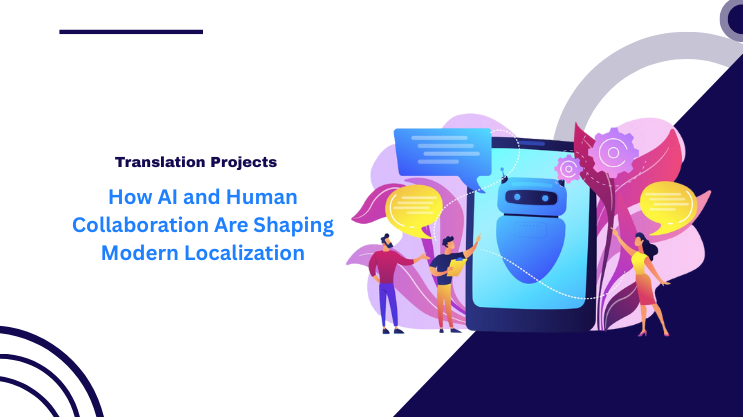
  • How AI and Human Collaboration Are Shaping Modern Localization

    How AI and Human Collaboration Are Shaping Modern Localization

    Modern localization is no longer solely dependent on human translators. The integration of Artificial Intelligence (AI) with human expertise is transforming how businesses adapt content for global markets. By combining speed, scalability, and accuracy from AI with the cultural understanding and creativity of humans, organizations can deliver high-quality, contextually relevant content across languages and regions.

    1. Leveraging AI for Speed and Efficiency

    AI-powered translation tools accelerate the localization process by handling large volumes of content quickly. Websites, marketing materials, product descriptions, and support documents can be translated at scale, enabling businesses to enter new markets faster.

    2. Maintaining Accuracy with Human Oversight

    While AI provides efficiency, human translators ensure accuracy, context, and cultural nuance. Humans review AI-generated content to refine tone, adapt idioms, and ensure messaging resonates with local audiences.

    3. Enhancing Consistency Across Multiple Languages

    Translation memory systems and AI-driven glossaries help maintain consistent terminology across regions. Human experts oversee these systems to ensure brand voice, style, and key messaging remain uniform in every language.

    4. Addressing Cultural and Contextual Nuances

    AI often struggles with cultural subtleties, humor, and regional expressions. Human collaboration ensures that localized content is culturally sensitive, contextually appropriate, and emotionally engaging for target audiences.

    5. Reducing Costs While Increasing Scalability

    AI reduces the need for repetitive translation tasks, lowering costs and allowing human translators to focus on high-value content. This hybrid approach makes scaling localization efforts across multiple languages more cost-effective and sustainable.

    6. Supporting Real-Time and Dynamic Content

    AI enables near real-time localization for user-generated content, chatbots, and digital campaigns. Human oversight ensures these dynamic translations are accurate and contextually suitable, maintaining brand credibility.

    7. Improving Multilingual SEO and Digital Presence

    AI tools assist with keyword research and SEO optimization in multiple languages, while human experts refine content to align with search intent and cultural expectations, maximizing visibility in international markets.

    8. Preparing for the Future of Global Communication

    The collaboration between AI and humans is continuously evolving, with machine learning improving accuracy and humans focusing on creativity and cultural insight. This synergy sets the standard for effective, high-quality, and scalable localization in the future.

    In conclusion, AI and human collaboration is redefining modern localization. By combining the speed and efficiency of AI with the cultural understanding and critical judgment of humans, businesses can deliver globally relevant content that engages audiences, strengthens brand identity, and drives international growth.

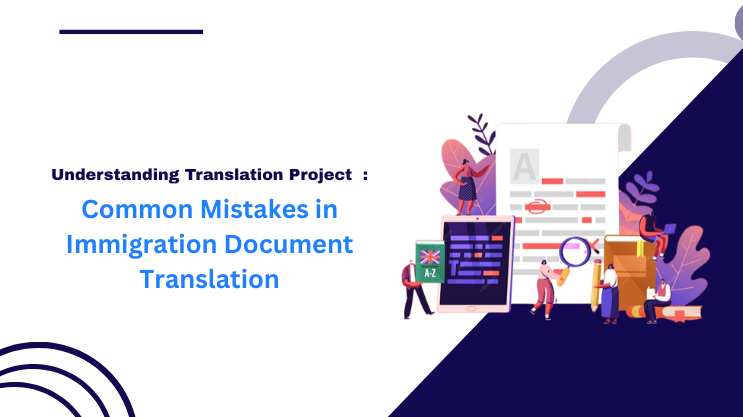
  • Common Mistakes in Immigration Document Translation

    Common Mistakes in Immigration Document Translation

    Immigration processes are often complex, and one small error can delay or even jeopardize your application. One of the most overlooked aspects is document translation. Whether you are submitting birth certificates, educational diplomas, or legal documents, accurate translation is crucial. Here’s a guide to the most common mistakes in immigration document translation and how to avoid them.

    1. Using Uncertified Translators

    A frequent error is relying on non-certified translators. Immigration authorities typically require translations to be certified, meaning the translator attests that the translation is complete and accurate. Using uncertified translators may lead to rejection of your documents. Always choose translators recognized by official boards or agencies.

    2. Incorrect or Inconsistent Terminology

    Legal and immigration documents contain specific terminology. Translating terms incorrectly or inconsistently can change the meaning of a document. For example, the words “residency” and “permanent residency” have very different implications. Ensure your translator has experience with immigration-related content.

    3. Literal Translation Without Context

    Literal translations can misrepresent the intent of a document. Context matters-

    names, addresses, dates, and official phrases must be accurately interpreted. A good translator ensures the translation conveys the exact meaning, not just the words.

    4. Formatting Errors

    Immigration authorities often require translations to match the original document format. Incorrect dates, page layouts, missing stamps, or altered spacing can result in your documents being invalidated. Always provide translators with clear instructions to replicate the original formatting.

    5. Ignoring Apostrophes, Accents, and Special Characters

    Small details, like accents in names or punctuation marks, matter in official documents. Ignoring them may cause identity verification issues or delays. Professional translators pay attention to every detail, including diacritics and special symbols.

    6. Delays and Last-Minute Submissions

    Submitting translations at the last minute increases the risk of errors. Rushed translations may contain mistakes that could have been avoided with proper time management. Plan ahead and allow your translator ample time for review and proofreading.

    7. Skipping Proofreading

    Even certified translations can have errors if not proofread. Always request a double-check or have a second professional review the translated document. Proofreading ensures accuracy, consistency, and adherence to immigration requirements.

    Conclusion

    Accurate immigration document translation is not just a formality-it is a critical part of a successful application. Avoiding these common mistakes can save you time, money, and stress. Always choose certified translators, prioritize accuracy, and double-check formatting and details. Your immigration journey deserves careful attention at every step.

    Immigration document translation services, certified translation, immigration application, legal translation, translation mistakes

  • From Silence to Story: The Global Impact of Accurate Subtitles

    From Silence to Story: The Global Impact of Accurate Subtitles

    In a world where video content dominates communication, stories are no longer told only through sound. From social media reels to global films, corporate videos to online courses, subtitles have become the bridge between silence and understanding. When done accurately, subtitles don’t just translate dialogue-they unlock stories for the world.

    The Rise of a Silent Audience

    A large portion of global video consumption happens without sound. Viewers scroll through content in public spaces, offices, or late at night. Others rely on subtitles due to hearing impairments or language barriers.

    Subtitles have evolved from a support feature into a primary storytelling tool. For many audiences, they are the story.

    Why Accuracy in Subtitles Matters

    Subtitles are often the first-and sometimes only-way viewers engage with a video’s message. Even minor inaccuracies can alter meaning, emotion, or intent.

    Accurate subtitles ensure:

    • Clarity of dialogue and context
    • Preservation of tone, humor, and emotion
    • Correct timing and readability
    • Cultural relevance across regions

    When subtitles fail, stories lose their power. When they succeed, stories travel without limits.

    Beyond Translation: Subtitling as Storytelling

    Effective subtitling goes far beyond word-for-word translation. It involves:

    • Adapting dialogue for reading speed
    • Maintaining character voice and emotion
    • Synchronizing text with visual cues
    • Respecting cultural sensitivities and idioms

    This balance transforms subtitles into a storytelling craft-one that respects both the original content and the viewer’s experience.

    Global Reach Through Subtitles

    Accurate subtitles turn local content into global narratives. They allow:

    • Films to reach international festivals
    • Brands to connect with global customers
    • Educational content to cross borders
    • Social messages to inspire worldwide audiences

    Subtitles break down language barriers while preserving the soul of the story.

    Accessibility: Inclusion Through Subtitles

    Subtitles play a vital role in accessibility. For millions of hearing-impaired viewers, they are not optional-they are essential.

    By providing accurate subtitles, content creators:

    • Promote inclusion and equal access
    • Comply with accessibility standards
    • Demonstrate social responsibility
    • Expand audience reach organically

    Inclusive content is not just ethical-it’s impactful.

    The Cost of Inaccurate Subtitles

    Poor subtitling can do more harm than good:

    • Misinterpretation of key messages
    • Loss of emotional depth
    • Damage to brand credibility
    • Viewer frustration and disengagement

    In global communication, even small errors can carry big consequences.

    Subtitles in the Age of Global Branding

    For brands, subtitles are an extension of voice and identity. Accurate subtitles help ensure:

    • Brand tone remains consistent across markets
    • Marketing messages resonate culturally
    • Trust is built with international audiences
    • Engagement increases across platforms

    Subtitles aren’t technical add-ons-they are strategic brand assets.

    Final Thoughts

    From silent screens to shared stories, accurate subtitles give content a global voice. They allow stories to travel, emotions to connect, and messages to be understood-regardless of language or sound.

    In a content-driven world, subtitles don’t just support storytelling-they complete it.

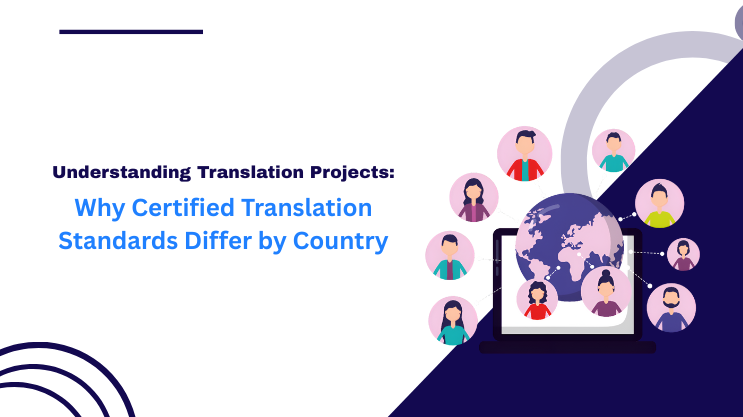
  • Why Certified Translation Standards Differ by Country

    Why Certified Translation Standards Differ by Country

    In our increasingly globalized world, certified translations play a vital role in legal, business, and personal documentation. However, you may have noticed that certified translation standards are not uniform worldwide. Understanding why these standards differ can help individuals and businesses navigate international documentation more confidently.

    What Is a Certified Translation?

    A certified translation is an officially recognized translation of a document, accompanied by a statement or certificate of accuracy from a qualified translator. This certification ensures that the translated content is faithful to the original, which is critical for legal, governmental, and official purposes.

    Factors Influencing Translation Standards

    1. Legal and Government Requirements

    Different countries have unique legal frameworks that govern document translation. For instance:

    • In the United States, certified translations are often accompanied by a notarized statement of accuracy from the translator.
    • In Germany, only sworn translators (“beeidigte Übersetzer”) can provide legally recognized translations.
    • In Japan, translations for official purposes may need verification by a public notary or government office.

    These legal requirements directly influence how translation services operate and what is considered a certified translation in each country.

    2. Professional Accreditation and Qualification

    Some countries have strict accreditation systems for translators:

    • Canada requires translators to be certified by CTTIC (Canadian Translators, Terminologists, and Interpreters Council).
    • France requires translators to be officially sworn in by a court of law.

    The qualifications, exams, and registration processes differ, which explains why a certified translator in one country may not be recognized in another.

    3. Cultural and Linguistic Norms

    Cultural differences also shape translation practices. In countries with multiple official languages, like Switzerland or India, certified translations may require knowledge of regional dialects, legal terminology, and local conventions, which affects the standards and procedures.

    4. Document Type and Purpose

    Standards vary depending on the type of document:

    • Legal documents, like birth certificates or contracts, usually require the strictest verification.
    • Academic transcripts may have different procedures depending on the receiving institution.
    • Business contracts may only need notarized translations, depending on local regulations.

    Why It Matters for Individuals and Businesses

    Understanding these differences is crucial for anyone dealing with international documentation. Submitting a translation that fails to meet a country’s certified standards can result in delays, rejections, or legal issues. Businesses expanding globally must also ensure that their contracts, compliance documents, and marketing materials are accurately and legally translated.

    Tips for Navigating Certified Translation Standards

    1. Check Local Requirements: Always verify the translation rules in the country where the document will be used.
    2. Use Accredited Translators: Work with translators recognized by the relevant legal or professional authority.
    3. Plan Ahead: International translations can take time, especially if notarization or legalization is required.
    4. Clarify the Purpose: Knowing whether the translation is for immigration, legal, or academic purposes can prevent mistakes.

    Conclusion

    Certified translation standards differ by country due to legal frameworks, professional accreditation, cultural norms, and the intended use of the documents. By understanding these differences and working with qualified professionals, individuals and businesses can ensure smooth, legally compliant international communication.

    Certified translation standards, legal translation, accredited translators, document translation by country, international certified translation services.


  • Interpretation vs AI Tools: Where Human Expertise Wins

    Interpretation vs AI Tools: Where Human Expertise Wins

    Artificial intelligence has transformed the language industry. From instant voice translation apps to AI-powered meeting tools, interpretation is now faster and more accessible than ever. But while AI has made impressive strides, human interpreters continue to outperform technology where it matters most-accuracy, context, and trust.

    In high-stakes communication, interpretation is not just about translating words. It’s about conveying meaning, intent, emotion, and cultural understanding-areas where human expertise still leads.

    Understanding the Difference

    AI Interpretation Tools
    AI tools rely on algorithms, datasets, and pattern recognition. They are designed for speed and convenience, making them useful for casual or low-risk communication.

    Human Interpretation
    Professional interpreters bring linguistic mastery, subject knowledge, emotional intelligence, and cultural awareness. They interpret messages, not just language.

    The difference lies not in technology-but in judgment.

    Where AI Tools Perform Well

    AI interpretation tools are effective in situations such as:

    • Informal conversations
    • Travel and basic assistance
    • Internal meetings with low risk
    • Simple, repetitive language scenarios

    They offer speed and cost efficiency-but with limitations.

    Where Human Expertise Clearly Wins

    1. Context and Meaning

    Human interpreters understand what is meant, not just what is said. They adjust for tone, intent, and underlying messages—something AI still struggles to interpret accurately.

    2. Cultural Sensitivity

    Culture shapes communication. Humor, politeness, hierarchy, and gestures vary across regions. Human interpreters instinctively adapt language to fit cultural expectations, avoiding misinterpretations and offense.

    3. Emotion and Tone

    In negotiations, healthcare, legal proceedings, or conferences, emotions matter. Human interpreters recognize stress, urgency, irony, or empathy—and convey them appropriately.

    4. Industry-Specific Expertise

    From legal terminology to medical jargon and technical discussions, professional interpreters are trained in specialized fields. AI tools often misinterpret complex or domain-specific language.

    5. Real-Time Problem Solving

    Human interpreters can:

    • Clarify ambiguous statements
    • Ask for repetition when needed
    • Adapt instantly to speakers with accents or unclear speech
    • Manage overlapping conversations

    AI systems lack this adaptability in live, dynamic environments.

    High-Risk Scenarios Where AI Falls Short

    AI interpretation can pose serious risks in:

    • Legal hearings and contracts
    • Medical consultations
    • Diplomatic and government meetings
    • Business negotiations
    • Crisis or emergency communication

    In these settings, one misinterpreted word can change outcomes.

    Trust, Accountability, and Ethics

    Human interpreters are bound by:

    • Confidentiality
    • Professional ethics
    • Accuracy standards
    • Accountability

    AI tools cannot guarantee discretion, responsibility, or ethical judgment-making them unsuitable for sensitive communications.

    The Future: Collaboration, Not Competition

    AI is not replacing human interpreters-it is supporting them. The future lies in hybrid models where:

    • AI handles speed and basic tasks
    • Humans ensure precision, nuance, and cultural relevance

    Technology enhances efficiency, but human expertise safeguards meaning.

    Final Thoughts

    AI tools may interpret words quickly, but humans interpret understanding.

    When communication carries consequences-legal, medical, financial, or reputational-there is no substitute for human expertise. In interpretation, trust is everything, and trust still belongs to humans.

  • How Hyper-Local Content Drives Global Conversions

    How Hyper-Local Content Drives Global Conversions

    Global reach alone doesn’t guarantee global success. In today’s crowded digital marketplace, brands win not by speaking to everyone, but by speaking directly to someone. That’s where hyper-local content becomes a powerful growth driver-turning global visibility into real conversions.

    What Is Hyper-Local Content?

    Hyper-local content goes beyond standard localization. It tailors messaging to specific regions, cities, or communities, reflecting their language variations, cultural norms, purchasing behavior, and emotional triggers.

    It’s not just “translated for a country.”
    It’s crafted for the people living there.

    Why Global Audiences Respond to Local Relevance

    Consumers today expect brands to understand them instantly. When content feels familiar and relevant, it lowers resistance and builds trust.

    Hyper-local content:

    • Feels authentic, not generic
    • Reflects local values and context
    • Speaks in the audience’s natural language and tone
    • Aligns with regional needs and preferences

    This familiarity creates comfort-and comfort leads to action.

    The Conversion Power of Hyper-Local Content

    Hyper-local strategies directly impact business performance:

    • Higher engagement rates
      Localized headlines, visuals, and calls-to-action attract more attention.
    • Improved trust and credibility
      Customers are more likely to buy from brands that feel “local.”
    • Reduced bounce rates
      Visitors stay longer when content feels personally relevant.
    • Stronger purchase intent
      Local context helps users move confidently toward decisions.

    In short, relevance accelerates conversions.

    Where Hyper-Localization Makes the Biggest Impact

    Hyper-local content performs especially well across:

    • Landing pages and websites
    • Paid ads and regional campaigns
    • Social media content
    • Email marketing
    • Product descriptions and offers
    • App UI and onboarding flows

    Each touchpoint becomes a tailored experience rather than a one-size-fits-all message.

    Hyper-Local Content vs. Standard Localization

    Standard LocalizationHyper-Local Content
    Country-level focusCity, region, or community-level focus
    Correct languageNatural, conversational language
    Generic messagingContext-driven messaging
    Cultural adaptationCultural + behavioral adaptation

    Hyper-localization adds depth—and that depth drives results.

    Real-World Example: Local Touch, Global Results

    A global e-commerce brand using region-specific festivals, local expressions, and payment preferences sees:

    • Higher click-through rates
    • Better campaign ROI
    • Increased repeat customers

    The brand remains global-but feels unmistakably local.

    Technology + Human Insight: The Winning Formula

    While AI and automation speed up localization, human cultural insight ensures accuracy and emotional resonance. The most effective hyper-local content is powered by:

    • Local linguists
    • Cultural experts
    • Market data
    • UX and design alignment

    Technology supports the process-but understanding drives performance.

    The Future Is Personal, Not Just Global

    As competition increases, customers will choose brands that recognize their identity, not just their location. Hyper-local content allows brands to:

    • Personalize at scale
    • Build long-term loyalty
    • Turn global presence into local trust

    Global reach without local relevance is noise.
    Hyper-local content turns that reach into revenue.

    Final Thoughts

    Hyper-local content isn’t about shrinking your brand-it’s about expanding it intelligently. By speaking the language of local audiences, brands unlock higher engagement, stronger trust, and measurable global conversions.

    In the global market, local relevance is the strongest conversion strategy.