Category: Guide

  • Localizing Brand Storytelling for Global Audiences

    Localizing Brand Storytelling for Global Audiences

    Brand storytelling is a powerful way to connect with audiences emotionally, but stories that resonate in one market may not translate effectively in another. Localizing brand storytelling ensures that narratives feel authentic, relatable, and meaningful to diverse audiences worldwide. By adapting stories to local languages and cultures, brands can build deeper connections and strengthen their global identity.

    1. Understanding Cultural Narratives and Values

    Every culture has its own values, symbols, and storytelling traditions. Understanding these cultural elements helps brands craft stories that align with local beliefs and emotional triggers, making messages more impactful.

    2. Preserving Core Brand Identity

    While stories are adapted for local markets, the brand’s core values and mission must remain consistent. Successful localization balances global brand identity with local relevance to maintain authenticity.

    3. Adapting Language and Tone

    Language carries emotion and nuance. Localizing tone, idioms, and expressions ensures that brand stories feel natural rather than translated, enhancing emotional connection with local audiences.

    4. Using Locally Relevant Characters and Scenarios

    Incorporating familiar characters, settings, and real-life scenarios makes stories more relatable. Local references help audiences see themselves in the brand narrative, increasing engagement and trust.

    5. Localizing Visual and Multimedia Elements

    Images, colors, symbols, and videos play a key role in storytelling. Adapting visuals to reflect cultural norms reinforces the message and avoids misinterpretation or cultural disconnect.

    6. Aligning Storytelling with Local Channels

    Different regions prefer different communication channels. Tailoring storytelling formats for local platforms, whether social media, video, or in-store experiences, ensures greater reach and relevance.

    7. Encouraging Community and Participation

    Localized storytelling can invite audiences to share their own experiences and perspectives. Community-driven narratives strengthen emotional bonds and create a sense of belonging around the brand.

    8. Measuring Emotional Impact and Engagement

    Tracking engagement, sentiment, and feedback across regions helps assess storytelling effectiveness. Insights allow brands to refine narratives and deepen emotional connections in each market.

    In conclusion, localizing brand storytelling is essential for building meaningful relationships with global audiences. By respecting cultural differences while preserving brand essence, businesses can create stories that resonate universally and drive lasting brand loyalty across international markets.
  • The Role of Translation in Global Crisis Preparedness Planning

    The Role of Translation in Global Crisis Preparedness Planning

    In an increasingly interconnected world, crises such as natural disasters, health emergencies, cyber incidents, and geopolitical disruptions can impact multiple regions simultaneously. Effective crisis preparedness planning depends on clear, timely, and accurate communication across languages. Translation plays a vital role in ensuring that preparedness plans, alerts, and response measures are understood and executed correctly by diverse global audiences.

    1. Ensuring Clarity in Preparedness Documentation

    Crisis preparedness plans often include detailed procedures, safety guidelines, and response protocols. Accurate translation ensures that all stakeholders clearly understand their roles and responsibilities, reducing confusion during emergencies.

    2. Supporting Multilingual Risk Communication

    Communicating risks effectively across borders requires messages to be delivered in local languages. Translation ensures that warnings, advisories, and preventive measures reach all communities, enabling informed decision-making.

    3. Enabling Rapid Response During Emergencies

    In crisis situations, speed is critical. Pre-translated templates and multilingual communication resources allow organizations to disseminate urgent updates quickly without delays caused by language barriers.

    4. Facilitating Cross-Border Coordination

    Global crisis response often involves governments, NGOs, suppliers, and partners from different regions. Translation enables smooth collaboration by ensuring shared understanding of strategies, timelines, and responsibilities.

    5. Enhancing Employee Safety and Preparedness

    For multinational organizations, employees may be spread across various countries. Translating training materials, emergency procedures, and internal communications helps protect employee safety and ensures preparedness at all levels.

    6. Addressing Cultural and Regional Sensitivities

    Effective crisis communication must consider cultural norms and expectations. Translators adapt messaging to local contexts, ensuring that guidance is not only understood but also trusted and followed.

    7. Supporting Digital and Media Communication Channels

    Crisis updates are often shared through websites, apps, social media, and press releases. Multilingual translation ensures consistent and accurate messaging across all digital and media platforms.

    8. Strengthening Public Trust and Organizational Credibility

    Organizations that communicate clearly and inclusively during crises build trust with the public and stakeholders. Accurate translation demonstrates responsibility, transparency, and commitment to global preparedness.

    In conclusion, translation is a foundational element of global crisis preparedness planning. By enabling clear communication, rapid response, and cross-border coordination, professional translation supports effective crisis management and helps organizations protect lives, assets, and reputation worldwide.

  • Why Courts Reject Poorly Translated Evidence

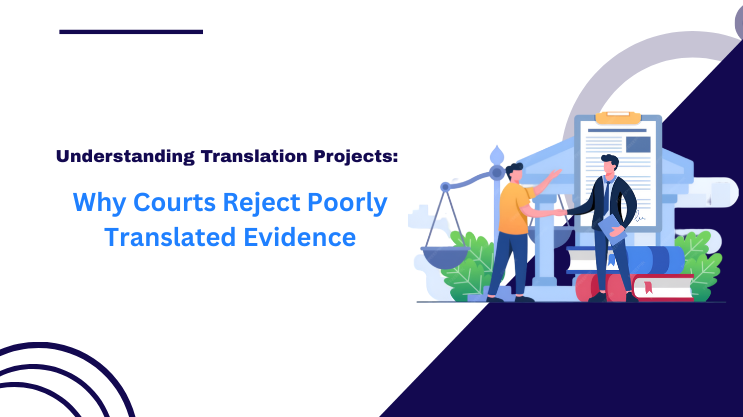
    Why Courts Reject Poorly Translated Evidence

    In legal proceedings, accuracy is paramount. Courts rely on precise documentation and evidence to make fair and just decisions. Poorly translated evidence can lead to misinterpretation, procedural errors, and even dismissal of critical documents. Understanding why courts reject inaccurately translated material highlights the importance of professional legal translation.


    The Importance of Accurate Legal Translation

    1. Maintaining the Integrity of Evidence: Legal documents contain exact terminology, dates, and references that must be preserved.
    2. Ensuring Fair Proceedings: Misinterpretation of translated evidence can unfairly influence judgments.
    3. Compliance with Legal Standards: Courts often require certified or sworn translations that meet strict legal guidelines.
    4. Protecting Stakeholders: Accurate translations safeguard the rights of all parties involved in a case.

    Common Reasons Courts Reject Translated Evidence

    • Inaccurate Terminology: Legal terms mistranslated or used incorrectly can distort meaning.
    • Omitted Information: Missing details, numbers, or context lead to incomplete evidence.
    • Poor Formatting: Misaligned sections, incorrect numbering, or unreadable text may violate submission standards.
    • Unverified Translators: Courts often require certified or sworn translators to validate authenticity.
    • Ambiguous Language: Vague or literal translations that fail to convey the intended legal meaning.

    Best Practices for Legal Document Translation

    1. Hire Certified Legal Translators: Professionals trained in legal terminology ensure accuracy and compliance.
    2. Use a Glossary of Legal Terms: Maintain consistency in terminology across documents.
    3. Proofread and Review: Multiple rounds of review help catch errors before submission.
    4. Follow Court Guidelines: Each jurisdiction has specific requirements for document submission and format.
    5. Provide Contextual Notes: Annotations or footnotes clarify nuances in complex legal phrases.

    Tools and Resources for Accurate Legal Translation

    • Translation Management Systems (TMS): Streamline multilingual legal documentation efficiently.
    • Legal Style Guides and Glossaries: Standardize terminology and phrasing across cases.
    • Certification Services: Validate translations with notarized or sworn translator credentials.
    • Cross-Reference Tools: Ensure consistency with original documents and prior case files.

    Conclusion

    Courts take the accuracy of translated evidence seriously because justice depends on clarity, precision, and fairness. Poorly translated documents can compromise case outcomes, delay proceedings, and even lead to rejection. Investing in certified legal translation services ensures that evidence is precise, reliable, and accepted in any jurisdiction-protecting the rights of clients and upholding the integrity of the legal process.

    Legal translation, certified translation services, court-approved translations, translating legal evidence, multilingual legal documents, Honey Translation Services


  • Translating Regulatory Filings for Cross-Border Compliance

    Translating Regulatory Filings for Cross-Border Compliance

    As companies expand internationally, regulatory filings become a critical component of cross-border operations. Accurate translation of these filings is not just about language – it is about legal precision, regulatory adherence, and risk management. Misinterpretation or errors in regulatory documents can lead to fines, delays, or reputational damage. Professional translation ensures businesses remain compliant and operate smoothly across borders.


    Why Translating Regulatory Filings Is Essential

    1. Ensure Legal Compliance: Accurate translations meet local regulatory standards and reduce the risk of penalties.
    2. Maintain Corporate Credibility: Consistent and precise filings uphold investor and stakeholder confidence.
    3. Facilitate International Expansion: Correct translations enable smoother entry into foreign markets.
    4. Mitigate Risk: Eliminates misunderstandings that could lead to non-compliance or contractual disputes.

    Types of Regulatory Filings That Require Translation

    • Financial statements and annual reports
    • Tax filings and compliance reports
    • Licensing and certification documents
    • Environmental and safety reports
    • Corporate governance disclosures
    • Import/export and customs documentation

    Challenges in Translating Regulatory Filings

    • Complex Legal Terminology: Requires precise understanding of both source and target legal systems.
    • Consistency Across Documents: Standardized terminology is essential to avoid ambiguity.
    • High Stakes: Errors can result in fines, operational delays, or legal disputes.
    • Frequent Updates: Regulations change regularly, requiring continuous translation and review.

    Best Practices for Translating Regulatory Filings

    1. Engage Specialized Legal Translators: Professionals with expertise in legal and financial terminology ensure accuracy.
    2. Use Glossaries and Style Guides: Maintain consistent terminology across filings and regions.
    3. Implement Quality Assurance Checks: Double reviews by linguists and legal experts reduce errors.
    4. Leverage Translation Technology: Translation memory and TMS tools enhance consistency and efficiency.
    5. Stay Updated on Local Regulations: Ensure translations reflect the latest legal and regulatory requirements.

    Tools to Support Regulatory Translation

    • Translation Management Systems (TMS): Centralize workflows and maintain version control.
    • Legal Glossaries and Style Guides: Ensure consistent terminology and tone.
    • In-context Review Platforms: Validate formatting and context in final document layouts.
    • Compliance Tracking Tools: Monitor updates in international regulatory standards.

    Conclusion

    Translating regulatory filings is a high-stakes task that requires precision, expertise, and continuous vigilance. Professional translation ensures legal compliance, protects corporate reputation, and supports seamless international operations. By combining specialized human expertise with smart translation technology, companies can confidently navigate cross-border regulations and minimize operational risks.

    Regulatory filing translation, cross-border compliance, legal document translation, multilingual regulatory compliance, international business translation, Honey Translation Services.


  • How Multilingual UX Design Improves Global Conversion Rates

    How Multilingual UX Design Improves Global Conversion Rates

    In a competitive global digital marketplace, user experience plays a crucial role in converting visitors into customers. Multilingual UX design ensures that users from different regions can interact with digital products comfortably and confidently. By aligning language, design, and cultural expectations, businesses can reduce friction, build trust, and significantly improve global conversion rates.

    1. Reducing Language Barriers in User Journeys

    When users can navigate a website or app in their native language, they experience fewer obstacles. Clear navigation, localized labels, and understandable calls-to-action make it easier for users to complete desired actions.

    2. Building Trust Through Familiar Interfaces

    Localized UX elements such as date formats, currencies, measurements, and address fields create a sense of familiarity. Trust increases when users feel that a platform is designed specifically for their region, leading to higher conversion rates.

    3. Improving Clarity of Value Propositions

    Multilingual UX design ensures that key messages, benefits, and offers are clearly communicated. When users fully understand a product’s value in their own language, they are more likely to engage and convert.

    4. Enhancing Mobile User Experience Globally

    Many international users access platforms via mobile devices. Multilingual UX optimized for mobile ensures readability, intuitive navigation, and seamless interactions, directly influencing conversions in mobile-first markets.

    5. Adapting Visual Design for Cultural Preferences

    Colors, icons, images, and layouts can carry different meanings across cultures. Adapting visual elements to local preferences enhances comfort and engagement, encouraging users to take action.

    6. Optimizing Checkout and Forms

    Localized forms, payment options, and error messages reduce friction during checkout. Clear instructions in the user’s language minimize drop-offs and increase successful conversions.

    7. Supporting Multilingual Customer Assistance

    Integrated multilingual help options such as chat, FAQs, and tooltips provide reassurance during decision-making. Accessible support reduces hesitation and boosts user confidence at critical conversion points.

    8. Using Data to Continuously Improve UX

    Analyzing user behavior across languages helps identify usability gaps and optimization opportunities. Data-driven refinements ensure that multilingual UX design evolves with user expectations and market needs.

    In conclusion, multilingual UX design is a powerful driver of global conversion rates. By creating intuitive, culturally relevant, and language-accessible experiences, businesses can engage international audiences more effectively and achieve sustained growth across global markets.

  • Certified Translation as Risk Mitigation for Enterprises

    Certified Translation as Risk Mitigation for Enterprises

    In today’s global business environment, enterprises face complex legal, regulatory, and operational challenges across multiple countries. One overlooked yet critical tool for risk mitigation is certified translation. Accurate, verified translations of legal contracts, compliance documents, patents, and corporate communications help organizations avoid misunderstandings, costly errors, and potential legal disputes.


    Why Certified Translation Is Critical for Enterprises

    1. Ensures Legal Compliance: Many jurisdictions require official translations for contracts, filings, or regulatory submissions.
    2. Reduces Operational Risk: Accurate translations prevent miscommunication in international operations and supply chains.
    3. Protects Intellectual Property: Certified translations safeguard patents, trademarks, and confidential documents.
    4. Enhances Stakeholder Trust: Accurate, verified translations convey professionalism and reliability to investors, partners, and clients.

    Key Documents That Require Certified Translation

    • Legal contracts and agreements
    • Regulatory filings and compliance reports
    • Financial statements and audit reports
    • Patents and intellectual property documents
    • HR and internal policy documents

    Challenges Without Certified Translation

    • Misinterpretation of critical legal or financial terms
    • Non-compliance with local regulations
    • Increased risk of disputes, penalties, or litigation
    • Damage to brand reputation and stakeholder trust

    Best Practices for Enterprises Using Certified Translation

    1. Engage Professional Certified Translators: Choose linguists accredited in relevant jurisdictions.
    2. Verify Translator Credentials: Ensure translators are certified and experienced in your industry.
    3. Use Standardized Formats: Maintain consistent document layout and terminology for official submissions.
    4. Integrate with Compliance Workflows: Align translation with legal, regulatory, and audit processes.
    5. Regularly Review and Update Translations: Keep documents current with policy, regulatory, or operational changes.

    Tools and Services That Support Certified Translation

    • Translation Management Systems (TMS): Track versions and maintain consistency.
    • Glossaries and Style Guides: Standardize legal and technical terminology.
    • Secure File Sharing Platforms: Protect confidential and sensitive information during translation.
    • Audit Trails and Certification Tools: Provide proof of accuracy and compliance for regulatory authorities.

    Conclusion

    Certified translation is more than a language service – it is a strategic risk mitigation tool for enterprises. By ensuring accuracy, compliance, and consistency, businesses can reduce legal and operational risks, protect their reputation, and foster trust with global stakeholders. Investing in certified translation is an investment in security, reliability, and long-term business resilience.

    Certified translation, enterprise risk mitigation, legal translation services, compliance translation, multilingual business documents, translation for enterprises, Honey Translation Services.


  • Global Accessibility Compliance Through Localization

    Global Accessibility Compliance Through Localization

    Accessibility is no longer just a legal requirement-it’s a business imperative. As companies expand globally, ensuring that websites, apps, and digital content are accessible to all users is crucial. Localization plays a key role in achieving accessibility compliance across languages and regions. By adapting content to local languages, cultural norms, and accessibility standards, businesses can create inclusive experiences that meet regulatory requirements and reach wider audiences.


    Why Accessibility and Localization Go Hand in Hand

    1. Inclusive User Experience: Localization ensures that accessibility features, labels, and instructions are understandable in all target languages.
    2. Regulatory Compliance: Many countries require digital content to meet local accessibility laws and guidelines.
    3. Brand Reputation: Demonstrating commitment to accessibility enhances trust and corporate responsibility globally.
    4. Market Expansion: Accessible, localized content allows companies to engage a broader, diverse audience.

    Key Areas to Localize for Accessibility Compliance

    • Alt Text and Image Descriptions: Ensure descriptive text is accurate and culturally relevant in each language.
    • Form Labels and Instructions: Localize field names, error messages, and help text for clarity.
    • Video and Audio Content: Provide translated captions, transcripts, and audio descriptions.
    • Navigation and UX Elements: Adapt menus, buttons, and interactive features for usability in different languages.
    • Color Contrast and Visual Indicators: Ensure design adjustments meet local accessibility standards and cultural preferences.

    Challenges in Global Accessibility Localization

    • Maintaining Accuracy Across Languages: Technical terms, instructions, and legal phrasing must remain precise.
    • Cultural Nuances: Certain visual or auditory cues may need adaptation to suit local conventions.
    • Dynamic Digital Content: Websites, apps, and platforms frequently update, requiring ongoing accessibility checks.
    • Multiple Regulatory Standards: Each country may have different accessibility laws and guidelines, such as WCAG, ADA, or EN 301 549.

    Best Practices for Achieving Accessibility Through Localization

    1. Work With Professional Translators and Localizers: Ensure that all accessibility features are correctly adapted for each language.
    2. Use Standardized Accessibility Guidelines: Follow international standards like WCAG while incorporating local regulations.
    3. Test With Real Users: Conduct usability testing with people from the target region, including users with disabilities.
    4. Maintain Glossaries and Style Guides: Ensure consistent terminology and clarity across languages.
    5. Continuous Monitoring and Updates: Regularly review content and features to maintain compliance as standards evolve.

    Tools to Support Accessible Localization

    • Translation Management Systems (TMS): Streamline updates and ensure consistent terminology across languages.
    • Accessibility Testing Tools: Check for compliance with visual, auditory, and interactive standards.
    • In-context Review Platforms: Allow translators to see content as end users would, including assistive technologies.
    • Analytics and Feedback Systems: Monitor accessibility performance and identify areas for improvement.

    Conclusion

    Global accessibility compliance is a strategic priority for businesses aiming to reach diverse audiences while meeting legal and ethical standards. Localization ensures that accessibility features, content, and digital experiences are culturally and linguistically appropriate, empowering users worldwide. By investing in professional localization services and accessibility best practices, companies can deliver inclusive, user-friendly experiences that foster trust, engagement, and global growth.

    Accessibility localization, global accessibility compliance, multilingual accessibility, WCAG localization, inclusive UX, localized accessibility, Honey Translation Services.


  • The Impact of Localization on Cross-Cultural Customer Trust

    The Impact of Localization on Cross-Cultural Customer Trust

    In an increasingly global marketplace, customer trust is built through clear, respectful, and culturally relevant communication. Localization plays a vital role in bridging cultural differences by adapting content, messaging, and experiences to meet local expectations. When brands localize effectively, they demonstrate understanding and respect, which directly strengthens cross-cultural customer trust.

    1. Communicating in the Customer’s Native Language

    Using the customer’s native language reduces barriers and creates comfort. Clear communication in familiar language helps customers feel understood, increasing confidence in the brand and its offerings.

    2. Reflecting Cultural Norms and Values

    Localization adapts tone, expressions, and messaging to align with cultural values. Respecting local customs and communication styles shows cultural sensitivity, which is essential for building trust across borders.

    3. Enhancing Clarity and Reducing Misunderstandings

    Accurate localization ensures that product details, policies, and instructions are clearly understood. Reducing ambiguity and errors minimizes frustration and reassures customers of the brand’s reliability.

    4. Creating Consistent and Familiar Experiences

    Localized user interfaces, formats, and design elements provide a sense of familiarity. Consistency across touchpoints reinforces trust and makes interactions feel natural and dependable.

    5. Demonstrating Commitment to Local Markets

    Investing in high-quality localization signals long-term commitment. Customers trust brands that show they are serious about serving their market, rather than offering generic, one-size-fits-all content.

    6. Supporting Transparent Customer Engagement

    Localized customer support, FAQs, and communication channels ensure transparency. When customers can ask questions and receive support in their own language, trust grows organically.

    7. Strengthening Emotional Connections

    Language carries emotion and cultural meaning. Localized messaging that resonates emotionally helps build deeper connections, turning transactional relationships into lasting trust.

    8. Encouraging Loyalty and Advocacy

    Trust built through localization leads to loyalty. Satisfied customers are more likely to return, recommend the brand, and advocate for it within their communities.

    In conclusion, localization is a powerful driver of cross-cultural customer trust. By delivering culturally aware, accurate, and accessible experiences, brands can foster meaningful relationships and establish lasting trust with customers across global markets.

  • Translating Product Micro interactions for Global UX

    Translating Product Micro interactions for Global UX

    Microi nteractions – small design elements like buttons, tooltips, notifications, and error messages-play a critical role in how users perceive and interact with digital products. When products are used globally, these tiny interactions must be carefully translated to maintain usability, clarity, and brand consistency. Translating microinteractions goes beyond literal translation-it involves cultural adaptation, tone alignment, and user-centered design to create a seamless global user experience.


    Why Translating Micro interactions Matters

    1. Enhances Usability: Clear, localized microinteractions guide users and reduce errors.
    2. Maintains Brand Voice: Consistent tone across languages reinforces brand identity.
    3. Improves User Engagement: Well-translated microinteractions increase satisfaction and retention.
    4. Supports Global Expansion: Localized interactions make products accessible to diverse audiences.

    Key Challenges in Translating Microinteractions

    • Space Constraints: Buttons, labels, and notifications often have character limits that vary by language.
    • Tone and Personality: Microcopy must maintain brand voice while adapting to local culture.
    • Dynamic Content: Frequently updated messages and tooltips require agile localization processes.
    • Cultural Nuances: Humor, idioms, or symbolic content may not translate directly across regions.

    Best Practices for Translating Product Microinteractions

    1. Use Professional Localization Services: Ensure translations are accurate, culturally sensitive, and user-friendly.
    2. Maintain a Glossary and Style Guide: Standardize terminology, tone, and brand personality across all microinteractions.
    3. Test In-Context: Review microinteractions within the product interface to verify clarity, length, and usability.
    4. Optimize for Character Limits: Adjust translations to fit buttons, labels, and other UI elements without truncation.
    5. Continuous Updates: Keep translations current with product updates, notifications, and user feedback.

    Tools to Support Microinteraction Translation

    • Translation Management Systems (TMS): Streamline translation updates and maintain consistency.
    • In-Context Review Platforms: Enable translators to see microinteractions within the actual product UI.
    • Glossaries and Style Guides: Ensure consistent terminology, tone, and brand alignment.
    • Analytics Tools: Monitor user engagement and identify areas for improvement in localized UX.

    Conclusion

    Translating product microinteractions is a small but impactful step toward delivering a global user experience that feels natural, intuitive, and culturally relevant. By investing in professional translation and contextual localization, companies can enhance usability, reinforce brand voice, and engage users worldwide. Even the smallest words matter when creating seamless, inclusive digital experiences.

    Microinteraction translation, UX localization, product localization, multilingual UX, UI text translation, global user experience, Honey Translation Services.


  • Why Language Strategy Is a Core Pillar of Global Digital Transformation

    Why Language Strategy Is a Core Pillar of Global Digital Transformation

    Global digital transformation is not only about adopting new technologies; it is about connecting people, markets, and data across borders. As organizations digitize operations and expand internationally, language strategy becomes a critical enabler of success. A well-defined language strategy ensures that digital transformation initiatives are inclusive, scalable, and effective across diverse linguistic and cultural environments.

    1. Enabling Seamless Global Communication

    Digital transformation relies on real-time communication across teams, customers, and partners worldwide. A strong language strategy removes communication barriers, ensuring that information flows clearly and consistently across regions.

    2. Improving User Experience Across Digital Platforms

    Websites, mobile apps, and digital tools must be accessible in multiple languages to meet global user expectations. Localized digital experiences improve usability, engagement, and satisfaction, supporting adoption and retention.

    3. Supporting Data-Driven Decision-Making

    Digital transformation generates vast amounts of multilingual data. A language strategy enables organizations to analyze and interpret data from different regions accurately, leading to smarter and more inclusive decisions.

    4. Accelerating Global Market Expansion

    Language strategy helps organizations scale digital products and services efficiently into new markets. Localized content, interfaces, and support reduce entry barriers and speed up market adoption.

    5. Strengthening Brand Consistency and Trust

    Consistent multilingual messaging across digital channels reinforces brand identity. A unified language approach ensures that values, tone, and messaging remain aligned globally, building trust with international audiences.

    6. Enhancing Collaboration in Global Workforces

    Digital transformation often involves distributed teams. Multilingual communication tools and localized internal platforms improve collaboration, productivity, and alignment among global employees.

    7. Integrating AI and Automation Effectively

    AI-driven tools such as chatbots, analytics, and automation systems depend on language data. A clear language strategy ensures these technologies function accurately across languages, improving efficiency and customer interaction.

    8. Ensuring Scalability and Future Readiness

    As digital ecosystems evolve, organizations must adapt quickly. A scalable language strategy allows businesses to add new languages, regions, and digital channels without disrupting operations.

    In conclusion, language strategy is a core pillar of global digital transformation. By embedding multilingual and localization planning into digital initiatives, organizations can enhance communication, drive adoption, and achieve sustainable growth in an increasingly connected world.