Author: admin

  • Emerging Localization Trends Every Global Business Should Know

    Emerging Localization Trends Every Global Business Should Know

    As global markets become increasingly interconnected, localization has evolved far beyond traditional translation. Today’s businesses must adapt content, technology, and customer experiences to meet the expectations of diverse audiences worldwide. Staying updated on emerging localization trends is essential for companies aiming to remain competitive, relevant, and customer-centric in international markets.


    Why Localization Is More Important Than Ever

    1. Global Customer Expectations: Users expect content that feels native, not translated.
    2. Digital-First Expansion: Apps, websites, SaaS platforms, and e-commerce demand seamless multilingual experiences.
    3. Brand Trust and Loyalty: Localized communication builds emotional connections and long-term customer trust.
    4. Market Differentiation: Businesses that localize effectively outperform competitors relying on one-language strategies.

    Key Emerging Localization Trends

    AI-Powered Localization with Human Expertise

    AI and machine translation are accelerating localization workflows, while human linguists ensure cultural accuracy, tone, and context.

    Hyper-Localization

    Brands are tailoring content not just by language, but by region, city, and cultural segment to increase relevance and engagement.

    Localization for Voice and Conversational AI

    Voice assistants, chatbots, and IVR systems require localized speech patterns, accents, and cultural nuances.

    UX and UI Localization

    Microcopy, layouts, date formats, currencies, and reading direction are being adapted to improve user experience across markets.

    Multimedia and Video Localization

    Subtitles, dubbing, voice-over, and localized visuals are becoming essential as video dominates digital communication.

    Continuous Localization

    Agile businesses are integrating localization into CI/CD pipelines to support frequent content updates and product releases.


    Challenges Businesses Face in Modern Localization

    • Maintaining brand voice across languages
    • Scaling localization efficiently without quality loss
    • Managing multilingual content across platforms
    • Ensuring cultural sensitivity and compliance
    • Balancing speed, cost, and accuracy

    Best Practices to Stay Ahead

    1. Invest in Professional Localization Services: Combine technology with expert linguists.
    2. Create Multilingual Style Guides and Glossaries: Ensure consistency across markets.
    3. Use Translation Management Systems (TMS): Centralize workflows and content.
    4. Test with Local Audiences: Validate usability and cultural fit.
    5. Measure Localization ROI: Track engagement, conversions, and regional performance.

    Tools Driving Modern Localization

    • Translation Management Systems (TMS)
    • AI & Machine Translation Engines
    • Glossaries and Terminology Management Tools
    • In-Context Review Platforms
    • Localization Analytics and QA Tools

    Conclusion

    Localization is no longer a support function-it’s a strategic growth driver. Businesses that embrace emerging localization trends can deliver meaningful customer experiences, accelerate global expansion, and build strong international brands. By combining technology, cultural insight, and strategic planning, global businesses can stay ahead in an increasingly multilingual world

    localization trends, global localization, translation and localization services, multilingual business strategy, international expansion, digital localization, Honey Translation Services.


  • How Multilingual SEO Is Changing in 2026

    How Multilingual SEO Is Changing in 2026

    As digital markets become increasingly global, multilingual SEO is no longer a secondary strategy-it’s a core growth driver. In 2026, search engines are prioritizing user intent, local relevance, and language authenticity more than ever. Businesses that adapt their multilingual SEO strategies to these changes will gain stronger visibility, higher engagement, and sustainable global growth.


    Why Multilingual SEO Matters More Than Ever

    1. Global Search Demand Is Rising: Users prefer searching and consuming content in their native language.
    2. Search Engines Reward Relevance: Localized content ranks higher than direct translations.
    3. User Experience Drives Rankings: Language clarity and cultural fit influence engagement metrics.
    4. Competitive Advantage: Brands investing in multilingual SEO outperform those relying on single-language strategies.

    Key Multilingual SEO Changes in 2026

    AI-Driven Search Understanding

    Search engines now better understand language variations, synonyms, and regional intent, making high-quality localization essential.

    From Translation to Localization

    Literal translations no longer rank well. Content must be adapted to local search behavior, keywords, and cultural context.

    Voice and Visual Search Growth

    Voice searches in native languages and regional dialects are reshaping keyword strategies across markets.

    Search Experience Optimization (SXO)

    SEO is merging with UX—page speed, localized UX, and language clarity directly affect rankings.


    Challenges in Multilingual SEO

    • Keyword Mismatch: Directly translating keywords often fails to match local search intent.
    • Duplicate Content Risks: Poor hreflang implementation can confuse search engines.
    • Content Scalability: Managing SEO content across multiple languages and regions.
    • Technical SEO Complexity: Language targeting, site structure, and indexing require expertise.

    Best Practices for Multilingual SEO in 2026

    1. Conduct Local Keyword Research: Identify how users actually search in each language.
    2. Use Professional Localization Services: Ensure content matches cultural and linguistic expectations.
    3. Implement hreflang Correctly: Guide search engines to the right language and regional pages.
    4. Optimize Local UX: Adapt navigation, CTAs, and microcopy for each market.
    5. Monitor Performance by Region: Track rankings, traffic, and conversions separately for each language.

    Tools Supporting Modern Multilingual SEO

    • Translation Management Systems (TMS): Manage multilingual content efficiently.
    • SEO Localization Tools: Identify region-specific keywords and trends.
    • Glossaries & Style Guides: Maintain consistent terminology across languages.
    • Analytics Platforms: Measure SEO performance by language and country.

    Conclusion

    In 2026, multilingual SEO is about more than ranking-it’s about relevance, trust, and experience. Brands that invest in localized content, cultural understanding, and advanced SEO practices will stand out in global search results. By aligning translation, localization, and SEO strategies, businesses can turn language diversity into a powerful growth engine.

    multilingual SEO 2026, global SEO strategy, SEO localization, international SEO trends, multilingual content optimization, search localization, Honey Translation Services.


  • Why Certified Translation Is Essential for Global Immigration in 2026

    Why Certified Translation Is Essential for Global Immigration in 2026

    Global immigration is becoming more structured, digitized, and regulation-driven in 2026. Governments worldwide are tightening documentation requirements to ensure transparency, security, and accuracy. In this environment, certified translation is no longer optional-it is a critical requirement for individuals applying for visas, residency, work permits, or citizenship across borders.


    What Is Certified Translation?

    Certified translation is an officially verified translation of documents accompanied by a signed statement from the translator or agency confirming accuracy and completeness. These translations are commonly required for immigration purposes and must meet strict legal and formatting standards set by immigration authorities.


    Why Certified Translation Matters for Immigration

    1. Legal Acceptance: Immigration authorities require certified translations to ensure documents are accurate and legally valid.
    2. Error Prevention: Even minor translation mistakes can lead to application delays or rejections.
    3. Compliance with Regulations: Many countries mandate certified translations for all non-native language documents.
    4. Faster Processing: Properly translated and certified documents reduce back-and-forth requests from authorities.

    Key Documents Requiring Certified Translation

    • Passports and identity documents
    • Birth, marriage, and death certificates
    • Educational transcripts and diplomas
    • Employment records and experience letters
    • Police clearance certificates
    • Medical and financial documents

    Immigration Trends Driving Demand in 2026

    • Digital Immigration Systems: Automated verification systems demand standardized, certified documents.
    • Stricter Documentation Reviews: Authorities increasingly cross-verify translated content for accuracy.
    • Global Mobility Growth: Rising international education, employment, and migration increase multilingual documentation needs.
    • Zero-Tolerance for Errors: Immigration agencies are rejecting applications with inconsistent or unofficial translations.

    Risks of Using Non-Certified Translations

    • Application rejection or delays
    • Requests for re-submission of documents
    • Legal complications or visa refusal
    • Increased costs and processing time

    Best Practices for Certified Immigration Translation

    1. Choose Authorized Translation Providers: Work with agencies experienced in immigration documentation.
    2. Verify Country-Specific Requirements: Certification formats vary by country and authority.
    3. Maintain Document Accuracy: Ensure names, dates, and official terminology match original records exactly.
    4. Plan Ahead: Allow sufficient time for translation, review, and certification before submission.
    5. Ensure Confidentiality: Immigration documents contain sensitive personal information.

    Role of Professional Translation Services

    Professional translation services combine certified linguists, quality assurance processes, and compliance expertise to deliver immigration-ready translations. They understand evolving immigration regulations and ensure documents meet both linguistic and legal standards.


    Conclusion

    In 2026, certified translation is a vital component of successful global immigration. As immigration systems become more stringent and digital, accurate and legally compliant translations are essential. Investing in certified translation services helps applicants avoid delays, meet regulatory requirements, and move confidently through the immigration process.

    certified translation for immigration, immigration document translation, certified language translation, global immigration 2026, visa document translation, legal translation services, Honey Translation Services.


  • Top Translation Technologies Revolutionizing the Industry

    Top Translation Technologies Revolutionizing the Industry

    The translation industry is undergoing rapid transformation driven by advanced technologies that enhance speed, accuracy, and scalability. From AI-powered tools to intelligent workflow platforms, modern translation technologies are redefining how businesses communicate across languages and markets. Understanding these innovations is essential for organizations seeking efficient, high-quality multilingual communication.


    Why Translation Technology Matters

    1. Faster Turnaround Times: Automation reduces manual effort and accelerates delivery.
    2. Improved Accuracy: AI and linguistic tools minimize errors and ensure consistency.
    3. Cost Efficiency: Smart technologies optimize resources without compromising quality.
    4. Scalability: Enables businesses to manage multilingual content across global markets.

    Top Translation Technologies Shaping the Industry

    1. Neural Machine Translation (NMT)

    NMT uses deep learning to produce more natural and context-aware translations, significantly improving quality over traditional machine translation.

    2. Translation Management Systems (TMS)

    TMS platforms streamline project workflows, version control, and collaboration across translators, reviewers, and clients.

    3. Computer-Assisted Translation (CAT) Tools

    CAT tools support translators with translation memory, terminology management, and automated suggestions for improved consistency.

    4. Translation Memory (TM) Technology

    TM stores previously translated content, enabling faster translations and consistent terminology reuse across projects.

    5. AI-Powered Quality Assurance Tools

    Automated QA tools detect linguistic errors, inconsistencies, and formatting issues before delivery.

    6. Speech-to-Text and Voice Translation

    Advancements in voice recognition enable real-time translation for meetings, customer support, and multimedia content.

    7. Localization Automation Tools

    These tools adapt content to cultural, linguistic, and regional standards across digital platforms efficiently.


    Challenges of Relying Solely on Technology

    • Lack of cultural nuance without human input
    • Risk of misinterpreting context or tone
    • Over-reliance on automation for sensitive content

    Technology works best when combined with professional human expertise.


    Best Practices for Using Translation Technology Effectively

    1. Combine AI with Human Review: Ensure accuracy, tone, and cultural relevance.
    2. Invest in the Right Tools: Choose technology aligned with content type and business goals.
    3. Maintain Glossaries and Style Guides: Support consistency across languages.
    4. Continuously Evaluate Performance: Monitor quality and efficiency metrics.

    Conclusion

    Translation technologies are revolutionizing the language services industry by improving speed, quality, and scalability. While AI and automation play a vital role, the most effective translation strategies blend technology with human linguistic expertise. Businesses that embrace these innovations can achieve seamless global communication and sustained growth.

    translation technology, AI translation tools, neural machine translation, translation management systems, CAT tools, localization technology, Honey Translation Services.


  • Voice AI vs Human Voice Artists What Works Best in 2026

    Voice AI vs Human Voice Artists What Works Best in 2026

    Voice technology has evolved rapidly, transforming how brands communicate through ads, audiobooks, IVR systems, e-learning, and digital assistants. As we move into 2026, businesses face a crucial decision: rely on Voice AI for speed and scalability, or invest in human voice artists for emotion and authenticity. Understanding the strengths and limitations of both helps brands choose the right voice strategy.


    Understanding Voice AI

    Voice AI uses artificial intelligence and neural text-to-speech models to generate synthetic voices that sound increasingly natural. In 2026, Voice AI supports multiple languages, accents, and tones, making it a powerful tool for global communication.

    Advantages of Voice AI

    • Scalability: Generate large volumes of voice content quickly.
    • Cost Efficiency: Lower long-term costs for frequent or repetitive use.
    • Speed: Instant updates without re-recording sessions.
    • Multilingual Support: Easily adapts content for multiple languages.

    Limitations of Voice AI

    • Limited emotional depth in complex storytelling
    • Risk of sounding generic or impersonal
    • Ethical and licensing concerns around voice cloning

    Understanding Human Voice Artists

    Human voice artists bring real emotion, personality, and cultural nuance to audio content. They remain essential where authenticity and emotional impact matter most.

    Advantages of Human Voice Artists

    • Emotional Connection: Natural tone, empathy, and expression
    • Cultural Authenticity: Native understanding of accents and context
    • Creative Interpretation: Adds depth and storytelling quality
    • Audience Trust: Perceived as more genuine and relatable

    Limitations of Human Voice Artists

    • Higher production costs
    • Longer turnaround times
    • Limited scalability for frequent updates

    Voice AI vs Human Voice Artists: Key Comparison

    • Marketing & Branding: Human voices perform better for emotional storytelling and brand trust.
    • IVR & Notifications: Voice AI excels in speed, consistency, and scalability.
    • E-Learning & Training: A hybrid approach works best – AI for updates, humans for narration.
    • Entertainment & Audiobooks: Human voice artists remain the preferred choice.

    The Rise of Hybrid Voice Strategies in 2026

    Many businesses now combine Voice AI and human voice artists. AI handles high-volume, functional content, while human voices are used for brand campaigns, emotional messaging, and premium content. This hybrid approach balances efficiency and authenticity.


    Choosing the Right Voice Strategy for Your Business

    1. Define your content purpose and audience
    2. Evaluate emotional and cultural requirements
    3. Consider budget, scalability, and timelines
    4. Test both options and measure engagement
    5. Partner with professional language and voice experts

    Conclusion

    In 2026, the debate is no longer Voice AI versus human voice artists-it’s about using the right voice for the right purpose. Voice AI delivers speed and scale, while human voice artists provide emotion and authenticity. Brands that strategically combine both will create powerful, engaging, and globally resonant voice experiences.

    Voice AI, human voice artists, AI voice vs human voice, text-to-speech technology, voice localization, multilingual voiceovers, Honey Translation Services.


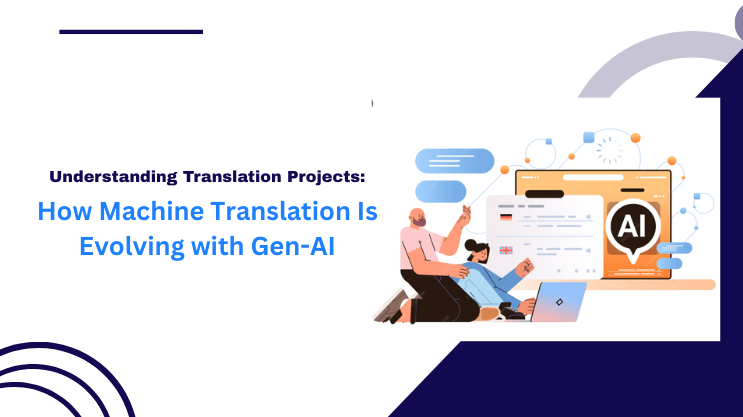
  • How Machine Translation Is Evolving with Gen-AI

    How Machine Translation Is Evolving with Gen-AI

    Machine Translation (MT) has come a long way from rule-based systems and basic statistical models. With the rise of Generative AI (Gen-AI), translation technology is evolving rapidly-delivering more fluent, context-aware, and scalable multilingual communication. Today, Gen-AI is reshaping how businesses approach global content, combining speed with improved linguistic quality.


    The Evolution of Machine Translation

    Early MT systems focused on word-for-word or phrase-based translation, often producing rigid and inaccurate results. Neural Machine Translation (NMT) marked a major leap forward by considering entire sentences and context. Now, Gen-AI builds on NMT by generating more natural language, understanding intent, tone, and even domain-specific nuances.


    How Gen-AI Is Transforming Machine Translation

    Contextual Understanding

    Gen-AI models analyze broader context rather than isolated sentences, improving coherence and meaning across paragraphs.

    Improved Fluency and Natural Tone

    Translations now sound more human-like, capturing style, emotion, and intent rather than literal wording.

    Domain Adaptability

    Gen-AI can be fine-tuned for industries such as legal, healthcare, e-commerce, and marketing, enhancing accuracy in specialized content.

    Multimodal Capabilities

    Advanced models can process text, voice, and images together, supporting real-time translation and multimedia localization.


    Benefits of Gen-AI-Powered Machine Translation

    • Speed and Scalability: Handle large volumes of content instantly.
    • Cost Efficiency: Reduce turnaround time and operational costs.
    • Consistency: Maintain terminology with integrated glossaries and translation memory.
    • Global Reach: Enable faster market entry and multilingual expansion.

    Challenges and Limitations

    • Cultural Nuances: Gen-AI still requires human oversight for cultural sensitivity and localization.
    • High-Stakes Content: Legal, medical, and regulatory translations demand expert human review.
    • Data Privacy: Secure handling of sensitive content remains essential.
    • Bias and Accuracy: Continuous monitoring is required to avoid hallucinations or biased outputs.

    The Role of Human Translators in the Gen-AI Era

    Rather than replacing human translators, Gen-AI enhances their role. Linguists now act as reviewers, editors, and cultural advisors-ensuring accuracy, tone, and compliance. Human-in-the-loop workflows combine AI efficiency with human expertise for optimal results.


    Best Practices for Using Gen-AI in Translation

    1. Combine Gen-AI with professional human review.
    2. Use glossaries and style guides for consistency.
    3. Apply domain-specific fine-tuning.
    4. Implement secure translation workflows.
    5. Continuously evaluate translation quality.

    Conclusion

    Gen-AI is redefining machine translation by making it smarter, faster, and more context-aware. Businesses that adopt Gen-AI-powered translation-while maintaining human oversight-can achieve high-quality multilingual communication at scale. The future of translation lies in collaboration between advanced AI and human linguistic expertise.

    machine translation, Gen-AI translation, AI language translation, neural machine translation, AI localization, translation technology, Honey Translation Services.


  • Website Localization Mistakes Businesses Still Make in 2026

    Website Localization Mistakes Businesses Still Make in 2026

    As businesses continue expanding into global markets, website localization remains a critical success factor. Yet, even in 2026, many companies repeat the same localization mistakes-costing them credibility, conversions, and customer trust. True website localization goes far beyond translation; it requires cultural awareness, technical accuracy, and user-focused design.


    Why Website Localization Still Matters in 2026

    1. Global Customers Expect Personalization: Users prefer browsing, buying, and engaging in their native language.
    2. Localization Impacts Conversions: Poorly localized websites increase bounce rates and reduce sales.
    3. Brand Trust Depends on Language Quality: Errors signal lack of professionalism and care.
    4. Search Visibility Is Local: Multilingual SEO ensures discoverability in regional markets.

    Common Website Localization Mistakes Businesses Make

    1. Relying on Literal Translation Only

    Direct word-for-word translation ignores cultural nuance, tone, and context-often resulting in awkward or misleading content.

    2. Ignoring Cultural Differences

    Colors, imagery, humor, symbols, and even layouts can carry different meanings across cultures.

    3. Poor Multilingual SEO Implementation

    Many websites fail to localize keywords, meta tags, URLs, and alt text, limiting visibility in local search engines.

    4. Inconsistent Terminology

    Without glossaries or style guides, terminology varies across pages, confusing users and weakening brand identity.

    5. Overlooking Microcopy Localization

    Buttons, error messages, forms, and notifications are often left untranslated or poorly localized—damaging user experience.

    6. Not Testing with Local Users

    Websites launched without regional testing often contain usability and cultural issues unnoticed by internal teams.

    7. Technical Localization Errors

    Hard-coded text, unsupported character sets, and incorrect date, currency, or measurement formats still persist.


    How to Avoid These Localization Pitfalls

    1. Invest in Professional Localization Services: Combine linguistic expertise with cultural and technical knowledge.
    2. Create Localization Style Guides: Maintain consistent tone, terminology, and brand voice across languages.
    3. Localize for SEO: Adapt keywords, metadata, and content structure for each target market.
    4. Use In-Context Reviews: Ensure translations fit UI layouts and design constraints.
    5. Test Regionally: Conduct usability testing with native users before launch.
    6. Plan for Continuous Updates: Localization should evolve alongside website changes.

    Tools That Support Effective Website Localization

    • Translation Management Systems (TMS): Manage multilingual content efficiently.
    • Glossaries & Translation Memory: Ensure consistency and speed.
    • Localization QA Tools: Identify linguistic and formatting errors.
    • Analytics Platforms: Measure regional performance and user behavior.

    Conclusion

    In 2026, successful website localization is no longer about translating content-it’s about delivering a native digital experience. Businesses that avoid common localization mistakes gain higher engagement, stronger trust, and improved global performance. Investing in expert localization ensures your website speaks not just the language, but the culture of your audience.

    website localization mistakes, localization errors, multilingual website optimization, website translation services, global website localization, localization best practices, Honey Translation Services.


  • The Rise of Video Localization Subtitles, Dubbing & Voiceover Trends

    The Rise of Video Localization Subtitles, Dubbing & Voiceover Trends

    Video has become the most powerful medium for global communication-from marketing and e-learning to entertainment and corporate training. As businesses expand internationally, video localization is no longer optional. Subtitles, dubbing, and voiceovers play a crucial role in making video content accessible, engaging, and culturally relevant for audiences worldwide.


    Why Video Localization Matters More Than Ever

    1. Global Content Consumption: Audiences prefer video content in their native language for better understanding and engagement.
    2. Improved Accessibility: Subtitles and voiceovers make content inclusive for multilingual and hearing-impaired audiences.
    3. Higher Engagement Rates: Localized videos perform better in watch time, retention, and conversions.
    4. Brand Trust: Professionally localized videos convey credibility and cultural awareness.

    Key Video Localization Methods Explained

    Subtitles

    Subtitles provide translated on-screen text, allowing viewers to follow content without altering the original audio. They are cost-effective and widely used for social media, educational videos, and global marketing campaigns.

    Dubbing

    Dubbing replaces the original audio with localized voice tracks. It offers a fully immersive experience and is popular in entertainment, training videos, and regional broadcasting.

    Voiceovers

    Voiceovers overlay translated audio while keeping the original sound in the background. They are commonly used in corporate videos, documentaries, and e-learning content.


    Emerging Trends in Video Localization

    • AI-Assisted Localization: AI tools speed up subtitle generation, while human experts ensure accuracy and cultural relevance.
    • Demand for Native Voice Talent: Brands prefer native speakers to enhance authenticity and emotional connection.
    • Short-Form Video Localization: Social media platforms drive the need for fast, multilingual video adaptation.
    • Personalized Regional Content: Localized storytelling tailored to cultural preferences boosts engagement.

    Challenges in Video Localization

    • Lip-Sync Accuracy: Especially critical for dubbing to maintain natural viewing experience.
    • Cultural Adaptation: Humor, tone, and references must resonate locally.
    • Technical Constraints: Timing, formatting, and audio quality require expert handling.
    • Consistency Across Languages: Maintaining brand voice across all video formats.

    Best Practices for Effective Video Localization

    1. Choose the Right Localization Method: Select subtitles, dubbing, or voiceovers based on audience and purpose.
    2. Use Professional Linguists and Voice Artists: Ensure linguistic accuracy and emotional impact.
    3. Provide Context and Scripts: Help translators understand tone, audience, and intent.
    4. Test with Local Audiences: Validate effectiveness before full release.
    5. Maintain Glossaries and Style Guides: Ensure consistency across video content.

    Tools Supporting Video Localization

    • Subtitle & Captioning Tools: Improve timing and readability.
    • Translation Management Systems (TMS): Streamline multilingual workflows.
    • Audio & Video Editing Software: Ensure high-quality dubbing and voiceovers.
    • Quality Assurance Tools: Check linguistic, technical, and cultural accuracy.

    Conclusion

    The rise of video localization reflects how audiences consume content today—visually, emotionally, and in their own language. Subtitles, dubbing, and voiceovers are no longer just technical additions; they are strategic tools for global growth. Brands that invest in professional video localization can expand reach, improve engagement, and build lasting connections with international audiences.

    video localization, subtitle translation, dubbing services, voiceover localization, multilingual video content, global video marketing, Honey Translation Services.


  • Preparing Corporate Communication for Multilingual Global Offices

    Preparing Corporate Communication for Multilingual Global Offices

    In today’s globalized business environment, organizations often operate across multiple countries with employees speaking different languages. Effective corporate communication in multilingual offices is essential for ensuring clarity, alignment, and engagement. By adapting messages for diverse audiences, companies can foster collaboration, maintain consistency, and strengthen their global culture.

    1. Understanding Language Needs Across Offices

    Identifying the languages spoken by employees in different locations is the first step in preparing corporate communication. Understanding language preferences helps prioritize translation efforts and ensures that messages are accessible to all team members.

    2. Establishing a Consistent Corporate Voice

    Maintaining a unified tone, style, and messaging is crucial for global alignment. Multilingual communication should reflect the company’s core values while being culturally appropriate and understandable in each language.

    3. Translating Internal Policies and Guidelines

    Key corporate documents, including HR policies, codes of conduct, and operational guidelines, should be translated accurately. This ensures all employees understand expectations, responsibilities, and procedures, reducing miscommunication and compliance risks.

    4. Localizing Leadership Messages

    Announcements, updates, and motivational communications from leadership should be adapted for regional audiences. Localization helps maintain engagement and ensures that messages resonate culturally and linguistically.

    5. Adapting Digital Communication Channels

    Intranet portals, emails, collaboration tools, and newsletters should support multiple languages. Multilingual platforms facilitate efficient communication, information sharing, and collaboration among global teams.

    6. Providing Training and Resources in Multiple Languages

    Offering training materials, e-learning modules, and onboarding content in local languages improves comprehension, learning outcomes, and employee productivity across offices.

    7. Encouraging Feedback and Two-Way Communication

    Multilingual surveys, suggestion platforms, and feedback mechanisms allow employees to express ideas or concerns in their preferred language, fostering inclusivity and engagement.

    8. Leveraging Technology for Translation and Localization

    AI-powered translation tools, translation memory systems, and content management platforms help streamline multilingual communication. Combining technology with human review ensures accuracy, consistency, and cultural relevance.

    In conclusion, preparing corporate communication for multilingual global offices requires strategic planning, cultural sensitivity, and careful execution. By delivering clear, consistent, and localized messages, organizations can enhance collaboration, employee engagement, and operational efficiency across international teams.

  • The Hidden Role of Graphic Design in Global Expansion

    The Hidden Role of Graphic Design in Global Expansion

    When businesses think about global expansion, they often focus on marketing strategies, product localization, or translation. However, graphic design plays a critical-and often hidden-role in connecting with international audiences. Visual communication transcends language barriers, conveys brand values, and ensures that messaging resonates across cultures, making it a powerful driver of global success.

    1. Visuals Speak Louder Than Words

    Graphics, colors, typography, and layouts are universal tools for communication. While words may need translation, visual design immediately conveys professionalism, tone, and brand identity to audiences worldwide.

    Impact:

    • Immediate audience engagement
    • Stronger brand recognition
    • Clear communication without language dependency

    2. Cultural Sensitivity in Design

    Colors, symbols, and imagery can carry different meanings across cultures. A design that works in one region may confuse or even offend audiences in another. Understanding cultural preferences is essential for global brand acceptance.

    Benefits include:

    • Avoiding cultural missteps
    • Enhancing emotional connection with audiences
    • Strengthening brand credibility

    3. Supporting Brand Consistency Across Borders

    Global brands need a cohesive visual identity across websites, packaging, social media, and advertising. Professional graphic design ensures that brand elements remain consistent, even when adapted for local markets.

    Key advantages:

    • Unified brand presence worldwide
    • Increased trust and recognition
    • Seamless customer experience

    4. Enhancing Marketing and User Experience

    Effective design improves readability, navigability, and overall user experience. When combined with localized content, it ensures that campaigns, product manuals, or websites resonate with diverse audiences, driving engagement and conversions.

    Results:

    • Higher engagement rates
    • Improved customer satisfaction
    • Better campaign performance

    5. Design as a Strategic Tool for Expansion

    Graphic design is not just decorative-it’s strategic. Thoughtful visuals support storytelling, marketing, and brand positioning, making them crucial for successful entry into international markets.

    Strategic outcomes:

    • Competitive differentiation
    • Stronger global brand identity
    • Accelerated market adoption

    Conclusion

    The role of graphic design in global expansion is often underestimated. Beyond aesthetics, it communicates meaning, builds trust, and connects brands with audiences across cultures. Businesses that prioritize culturally aware, professional design gain a hidden but powerful advantage in the global marketplace.