Author: admin

  • Why Language Is the Hidden Driver of Global CX

    Why Language Is the Hidden Driver of Global CX

    Customer experience (CX) has become a major differentiator for global brands. While companies invest heavily in design, technology, and personalization, one powerful factor often goes unnoticed—language. Language influences how customers perceive a brand, understand products, and build trust. In global markets, translation and localization are the hidden drivers that shape exceptional customer experiences.


    Why Language Matters in Global Customer Experience

    1. First Impressions Count: Customers form opinions quickly, and content in their native language creates instant comfort and trust.
    2. Clarity Builds Confidence: Clear communication reduces confusion and frustration throughout the customer journey.
    3. Emotional Connection: Language triggers emotions; localized messaging feels personal and respectful.
    4. Inclusive Experiences: Multilingual content ensures all customers feel valued and understood.

    How Language Impacts Every CX Touchpoint

    Websites and Apps

    Localized interfaces improve navigation, usability, and engagement for global users.

    Customer Support

    Multilingual support interactions resolve issues faster and improve satisfaction.

    Marketing and Sales

    Customers are more likely to engage and convert when offers speak their language and culture.

    Onboarding and Documentation

    Clear, localized instructions reduce friction and increase product adoption.


    The Risks of Ignoring Language in CX
    • Increased customer frustration and churn
    • Misunderstood policies, pricing, or product details
    • Inconsistent brand perception across regions
    • Missed growth opportunities in international markets

    Best Practices to Leverage Language for Better CX

    1. Invest in Professional Translation and Localization: Go beyond machine translation for accuracy and cultural relevance.
    2. Maintain Consistent Brand Voice: Use glossaries and style guides across all languages.
    3. Adopt an Omnichannel Approach: Ensure consistent language quality across websites, apps, emails, and support.
    4. Test with Local Users: Validate messaging with real audiences to uncover gaps.
    5. Continuously Improve: Monitor CX feedback and update localized content regularly.

    Tools That Support Multilingual CX

    • Translation Management Systems (TMS): Centralize multilingual content efficiently.
    • Glossaries and Style Guides: Ensure terminology and tone consistency.
    • In-context Review Platforms: Improve accuracy by reviewing content in real layouts.
    • CX Analytics Tools: Measure performance across languages and regions.

    Conclusion

    Global customer experience, language and CX, translation for customer experience, multilingual CX, localization services, customer experience strategy, Honey Translation Service.

    Language is more than a communication tool – it is a strategic driver of global customer experience. Brands that prioritize translation and localization create seamless, emotionally resonant interactions that build trust and loyalty worldwide. By investing in language – driven CX strategies, businesses can turn communication into a competitive advantage and unlock sustainable global growth.

  • Multilingual Demand Generation Strategies

    Multilingual Demand Generation Strategies

    As businesses expand globally, generating demand across different regions requires more than a one-size-fits-all marketing approach. Multilingual demand generation focuses on creating awareness, nurturing leads, and driving conversions through language- and culture-specific strategies. When done right, it helps brands connect authentically with global audiences and accelerate international growth.


    Why Multilingual Demand Generation Matters

    1. Reaches Global Audiences Effectively: Customers engage more with content presented in their native language.
    2. Builds Brand Trust: Localized messaging demonstrates cultural respect and credibility.
    3. Improves Conversion Rates: Language-specific campaigns reduce friction in the buyer journey.
    4. Supports Market Expansion: Multilingual strategies enable smoother entry into new regions.

    Key Components of Multilingual Demand Generation

    • Localized Content Marketing: Blogs, ebooks, case studies, and landing pages tailored to each market.
    • Multilingual SEO: Optimizing keywords based on local search behavior and language nuances.
    • Email Campaign Localization: Personalized, culturally relevant email messaging for better open and click rates.
    • Paid Media Localization: Ads adapted to local language, tone, and audience preferences.
    • Sales Enablement Materials: Translated brochures, presentations, and product sheets for regional teams.

    Challenges in Multilingual Demand Generation

    • Maintaining Brand Consistency: Aligning messaging across multiple languages and channels.
    • Cultural Differences: Buying behavior and communication styles vary by region.
    • Scalability: Managing content creation and updates across many languages.
    • Data Alignment: Measuring performance consistently across markets.

    Best Practices for Multilingual Demand Generation

    1. Invest in Professional Translation and Localization: Ensure accuracy and cultural relevance.
    2. Create Multilingual Brand Guidelines: Maintain consistent tone and terminology globally.
    3. Use Market-Specific Keyword Research: Adapt SEO strategies for each language.
    4. Leverage Technology: Use Translation Management Systems (TMS) to streamline workflows.
    5. Analyze and Optimize: Track performance by region and continuously refine strategies.

    Tools That Support Multilingual Demand Generation

    • Translation Management Systems (TMS): Manage multilingual content efficiently.
    • Marketing Automation Platforms: Deliver localized campaigns at scale.
    • SEO and Analytics Tools: Monitor performance across languages and markets.
    • Glossaries and Style Guides: Ensure messaging consistency across all content.

    Conclusion

    Multilingual demand generation is a powerful growth driver for global businesses. By localizing content, optimizing for regional search behavior, and delivering culturally relevant campaigns, companies can attract, engage, and convert international audiences more effectively. A strategic investment in professional translation and localization services ensures your demand generation efforts resonate worldwide and deliver measurable results.

    multilingual demand generation, global demand generation, multilingual marketing strategy, localization for marketing, international lead generation, Honey Translation Services.


  • Translating Customer Education for Market Expansion

    Translating Customer Education for Market Expansion

    Customer education plays a vital role in helping users understand products, services, and value propositions. As businesses expand into global markets, translating customer education materials becomes essential for driving adoption, reducing support costs, and building lasting customer relationships. Effective translation ensures that learning content is clear, culturally relevant, and accessible to international audiences.


    Why Customer Education Matters in Global Expansion

    1. Improves Product Adoption: Customers understand and use products better when instructions are in their native language.
    2. Reduces Support Queries: Clear educational content minimizes confusion and repetitive customer support requests.
    3. Builds Trust and Loyalty: Well-translated learning materials show commitment to customer success.
    4. Accelerates Market Entry: Localized education shortens onboarding time in new regions.

    Types of Customer Education Content That Need Translation

    • User manuals and guides
    • Tutorials and how-to articles
    • FAQs and knowledge base content
    • Training videos and e-learning modules
    • Webinars and onboarding materials

    Each format requires careful adaptation to ensure clarity and engagement across cultures.


    Challenges in Translating Customer Education Content

    • Complex Terminology: Technical or industry-specific terms must be translated accurately.
    • Consistency Across Materials: Learning content must align across documents, videos, and platforms.
    • Cultural Learning Preferences: Different regions prefer different instructional styles and formats.
    • Multimedia Localization: Voiceovers, subtitles, and visuals often require additional localization effort.

    Best Practices for Translating Customer Education

    1. Use Subject-Matter Experts: Professional translators with domain knowledge ensure clarity and accuracy.
    2. Create Glossaries and Style Guides: Maintain consistent terminology across all educational materials.
    3. Localize Examples and Scenarios: Adapt real-life examples to suit local markets.
    4. Test Content with Local Users: Validate comprehension and effectiveness before full rollout.
    5. Update Regularly: Keep translations aligned with product updates and feature changes.

    Tools That Support Educational Content Translation

    • Translation Management Systems (TMS): Manage large volumes of educational content efficiently.
    • Learning Management System (LMS) Integrations: Support multilingual training delivery.
    • Subtitling and Voiceover Tools: Enable effective multimedia localization.
    • Analytics Platforms: Measure learner engagement and content performance by region.

    Conclusion

    Translating customer education is a strategic investment for market expansion. When customers clearly understand how to use and benefit from a product, adoption increases and long-term loyalty follows. By prioritizing professional translation and localization of educational content, businesses can enter new markets with confidence, reduce friction, and create empowered global customers.

    customer education translation, multilingual training content, localized learning materials, market expansion translation, product education localization, Honey Translation Services.


  • Understanding Machine Translation Services in Today’s Global Business

    Understanding Machine Translation Services in Today’s Global Business

    In today’s interconnected global economy, businesses operate across borders, cultures, and languages. Communicating effectively with international customers, partners, and employees is no longer optional—it is essential. Machine Translation (MT) services have emerged as a powerful solution, helping organizations translate large volumes of content quickly and cost-effectively. Understanding how machine translation works and where it fits in a global business strategy is key to using it successfully.

    What Are Machine Translation Services?

    Machine Translation services use software and artificial intelligence to automatically convert text from one language to another without direct human involvement. Popular examples include AI-driven systems that translate websites, emails, product descriptions, technical manuals, and internal documents in seconds.

    Modern machine translation tools rely on advanced technologies such as neural networks and deep learning, allowing them to analyze context, sentence structure, and language patterns. This makes today’s machine translation far more accurate and natural-sounding than earlier rule-based systems.

    Why Global Businesses Rely on Machine Translation

    As businesses scale internationally, the volume of multilingual content increases rapidly. Machine translation helps organizations keep up with this demand by enabling fast turnaround times and consistent output.

    For global businesses, machine translation supports:

    • Faster communication with international teams and customers
    • Real-time translation for customer support and internal collaboration
    • Cost-efficient handling of high-volume content
    • Quick market entry with multilingual websites and digital assets

    By reducing time and resource constraints, machine translation allows companies to focus on growth rather than language barriers.

    Common Business Use Cases for Machine Translation

    Machine translation is widely used across industries and departments. Some of the most common applications include translating customer support tickets, internal communications, product catalogs, knowledge bases, and marketing drafts.

    In e-commerce and technology sectors, machine translation helps businesses manage frequently updated content such as product listings and user-generated reviews. In corporate environments, it supports multilingual documentation and internal reports, enabling smoother collaboration across regions.

    Benefits of Machine Translation for Enterprises

    One of the biggest advantages of machine translation is speed. Large volumes of text can be translated almost instantly, making it ideal for time-sensitive projects. It is also scalable, meaning businesses can handle increasing content demands without proportional cost increases.

    Another key benefit is consistency. Machine translation ensures uniform terminology across documents, especially when integrated with glossaries and translation memory tools. This is particularly valuable for technical, legal, or product-related content.

    Limitations of Machine Translation

    Despite its advantages, machine translation is not perfect. It can struggle with complex sentence structures, idiomatic expressions, cultural nuances, and industry-specific terminology. Sensitive content such as legal contracts, medical documents, or brand messaging may require a higher level of accuracy and contextual understanding.

    Without human review, machine-translated content may sound unnatural or lead to misunderstandings. This is why many businesses adopt a hybrid approach rather than relying solely on machine translation.

    Machine Translation with Human Post-Editing

    To achieve both speed and accuracy, many organizations combine machine translation with professional human post-editing. In this workflow, machine translation produces an initial draft, which is then reviewed and refined by experienced translators.

    This approach improves linguistic quality, ensures cultural appropriateness, and aligns content with brand tone-while still saving time and costs compared to full human translation. It is especially effective for business-critical and customer-facing content.

    Choosing the Right Machine Translation Strategy

    Selecting the right machine translation solution depends on the type of content, target audience, and business goals. For internal or high-volume content, raw machine translation may be sufficient. For external communication or regulated industries, machine translation with human oversight is strongly recommended.

    Working with a professional language service provider helps businesses integrate machine translation into their workflows securely and efficiently, ensuring data privacy and quality control.

    Conclusion

    Machine translation services have become an indispensable tool in today’s global business environment. They enable faster communication, support international expansion, and help organizations manage multilingual content at scale. While machine translation offers speed and efficiency, its true value lies in using it strategically—often in combination with human expertise.

    By understanding the strengths and limitations of machine translation, businesses can adopt a balanced approach that ensures accuracy, clarity, and cultural relevance. When implemented correctly, machine translation becomes not just a tool, but a competitive advantage in the global marketplace.

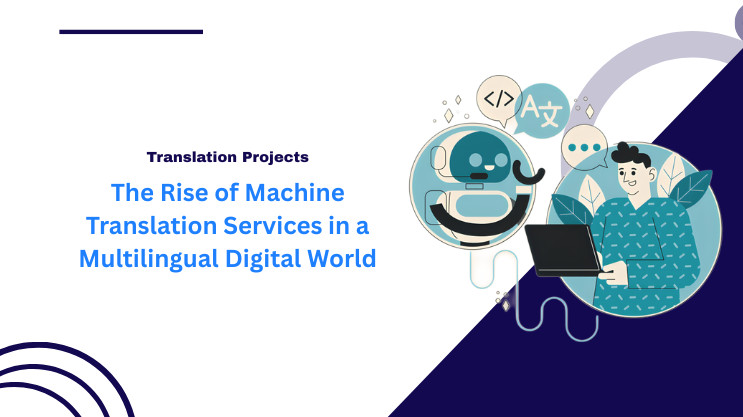
  • The Rise of Machine Translation Services in a Multilingual Digital World

    The Rise of Machine Translation Services in a Multilingual Digital World

    In today’s hyper-connected digital landscape, businesses are no longer confined by geographical boundaries. With audiences spanning continents and languages, the demand for fast, scalable, and cost-effective translation solutions has grown rapidly. This demand has led to the widespread adoption of machine translation (MT) services, transforming how organizations communicate in a multilingual digital world.

    Understanding Machine Translation

    Machine translation refers to the use of artificial intelligence (AI) and algorithms to automatically translate text or speech from one language to another. Unlike traditional human translation, machine translation delivers results in seconds, making it ideal for high-volume and time-sensitive content.

    Modern machine translation systems leverage neural networks and deep learning, allowing them to analyze context, sentence structure, and linguistic patterns more accurately than earlier rule-based systems.

    Why Machine Translation Is Growing Rapidly

    Several factors have contributed to the rise of machine translation services:

    Global Digital Expansion

    Websites, mobile apps, e-commerce platforms, and social media channels are increasingly multilingual. Businesses need instant translation to engage users worldwide, and machine translation offers the speed required to keep up with global demand.

    Cost and Time Efficiency

    Human translation can be expensive and time-consuming for large-scale projects. Machine translation significantly reduces costs and turnaround times, especially for internal documents, product catalogs, and user-generated content.

    Advancements in AI and Neural MT

    Neural Machine Translation (NMT) has dramatically improved output quality. These systems learn from vast datasets, enabling more natural phrasing, improved grammar, and better handling of complex language structures.

    Real-Time Communication Needs

    Customer support chats, live chats, emails, and chatbot interactions require immediate responses. Machine translation enables real-time multilingual communication, improving customer experience and satisfaction.

    Common Use Cases of Machine Translation Services

    Machine translation is widely used across industries for various purposes:

    • Website and app content localization
    • Multilingual customer support and chatbots
    • E-commerce product descriptions
    • Internal business communication
    • Social media monitoring and engagement
    • Technical documentation and knowledge bases

    In many cases, machine translation acts as a first step, followed by human review for accuracy and cultural relevance.

    Machine Translation vs Human Translation

    While machine translation excels in speed and scalability, it is not a complete replacement for human translators.

    Machine translation works best for:

    • High-volume, low-risk content
    • Informational or repetitive text
    • Internal and time-sensitive communication

    Human translation remains essential for:

    • Legal, medical, and financial documents
    • Marketing and creative content
    • Cultural nuance and brand voice
    • Certified and official translations

    A hybrid approach, known as Machine Translation Post-Editing (MTPE), combines the strengths of both, delivering faster results without compromising quality.

    Challenges of Machine Translation

    Despite its advantages, machine translation still faces limitations:

    • Difficulty handling idioms, humor, and cultural references
    • Inconsistent tone and terminology without customization
    • Potential errors in sensitive or technical content
    • Lack of emotional and cultural understanding

    These challenges highlight the importance of expert oversight, especially for customer-facing or high-impact materials.

    The Future of Machine Translation Services

    As AI continues to evolve, machine translation will become even more sophisticated. Custom-trained engines, industry-specific glossaries, and improved contextual understanding will further enhance accuracy. Businesses that integrate machine translation strategically-alongside human expertise-will gain a strong competitive advantage in global markets.

    Conclusion

    The rise of machine translation services reflects the growing need for fast, scalable communication in a multilingual digital world. While it cannot fully replace human translators, machine translation plays a critical role in enabling global reach, improving efficiency, and supporting real-time interactions. By adopting a balanced approach that combines technology with human linguistic expertise, businesses can communicate effectively across languages while maintaining quality, accuracy, and cultural sensitivity.

  • Machine Translation Services for Businesses: Accuracy, Speed, and Cost Benefits

    Machine Translation Services for Businesses: Accuracy, Speed, and Cost Benefits

    In today’s globalized economy, businesses need to communicate with clients, partners, and audiences across multiple languages. Traditional human translation, while accurate, can be time-consuming and costly. Machine Translation (MT) services have emerged as a fast, cost-effective alternative that can help businesses expand globally without breaking the budget. In this blog, we’ll explore the accuracy, speed, and cost benefits of machine translation for businesses.

    What is Machine Translation?

    Machine Translation refers to the automated process of translating text from one language to another using software powered by artificial intelligence (AI) and natural language processing (NLP). Popular examples include Google Translate, DeepL, and custom enterprise MT engines designed for businesses. Unlike traditional translation, MT can handle large volumes of content in seconds, making it ideal for businesses with global reach.

    Accuracy: Striking the Balance Between Speed and Quality

    One of the biggest concerns businesses have about MT is accuracy. While machine translation has improved significantly with AI advancements, the quality depends on:

    • Language pairs: Some languages, such as English to Spanish, have highly accurate MT, while less common languages may require post-editing.
    • Industry-specific terminology: Specialized content in law, healthcare, or technology may require custom MT engines or human review.
    • Contextual understanding: MT is best suited for straightforward content. Complex, nuanced, or creative text may need human editing for clarity.

    Many businesses adopt a hybrid approach called Machine Translation Post-Editing (MTPE), where MT provides the initial translation, and professional translators refine the output. This ensures both speed and accuracy.

    Speed: Meeting Global Communication Needs in Real-Time

    In fast-paced business environments, speed is crucial. Machine translation allows companies to:

    • Translate large volumes instantly: Websites, product descriptions, emails, and customer support content can be localized in real-time.
    • Respond quickly to global customers: Multilingual customer support becomes easier and faster, improving user experience.
    • Scale without delays: Businesses can expand to new markets without waiting for lengthy translation projects.

    With MT, companies no longer face bottlenecks when entering international markets, enabling them to stay competitive and responsive.

    Cost Benefits: Reducing Expenses Without Sacrificing Quality

    Cost is often a significant barrier for businesses seeking translation services. Machine translation provides financial advantages:

    • Lower translation costs: Automated translation reduces dependency on large teams of translators.
    • Time efficiency: Faster translations mean lower operational costs, freeing resources for other business priorities.
    • Flexible pricing: MT allows businesses to pay per word or volume, making budgeting predictable and scalable.

    By combining MT with strategic human oversight, companies can achieve high-quality translations at a fraction of traditional costs.

    Conclusion

    Machine translation services offer businesses a powerful combination of speed, cost-effectiveness, and reasonable accuracy. While human translators remain essential for nuanced, specialized, or creative content, MT enables businesses to scale globally, respond quickly to international customers, and manage translation budgets efficiently.

    For companies looking to expand into new markets, integrating machine translation into their content strategy is no longer optional-it’s a competitive advantage.

  • What Is Certified Translation Services?

    What Is Certified Translation Services?

    Certified translation services provide officially verified translations that are accepted by courts, government authorities, and institutions worldwide. These translations include a signed statement from the translator or agency confirming that the translation is accurate and complete. For legal, immigration, academic, and official purposes, certified translations are often mandatory.


    What Is a Certified Translation?

    A certified translation is a translated document accompanied by a certificate of accuracy. This certificate confirms that:

    • The translation is complete and accurate
    • The translator is qualified to translate the document
    • The translated content reflects the original document faithfully

    Certified translations are commonly required for official submissions and legal processes.


    When Are Certified Translation Services Required?

    Certified translations are typically needed for:

    • Immigration documents (passports, visas, birth certificates)
    • Legal records (court orders, contracts, affidavits)
    • Academic documents (transcripts, diplomas, certificates)
    • Government submissions (licenses, permits, official IDs)
    • Medical and insurance records

    Authorities may reject documents if translations are not properly certified.


    Why Certified Translation Services Matter

    1. Legal Acceptance: Certified translations meet official requirements and are recognized by authorities.
    2. Accuracy and Integrity: Precise translation prevents misinterpretation or rejection.
    3. Professional Accountability: Certification ensures translator responsibility and credibility.
    4. Global Recognition: Certified documents are accepted across international borders.

    Certified Translation vs Standard Translation

    • Standard Translation: Suitable for internal or informal use; no certification provided.
    • Certified Translation: Includes a signed declaration of accuracy and is legally valid for official use.

    Choosing the correct type ensures compliance and avoids delays.


    Who Can Provide Certified Translation Services?

    Certified translations must be completed by:

    • Qualified professional translators
    • Authorized translation agencies
    • Sworn or court-approved translators (in certain countries)

    Each country may have specific certification standards.


    Best Practices for Certified Translation

    1. Choose Experienced Providers: Ensure expertise in legal and official documentation.
    2. Verify Certification Requirements: Confirm country-specific rules before submission.
    3. Ensure Formatting Accuracy: Layout and structure should mirror the original document.
    4. Review Before Submission: Double-check names, dates, and official seals.

    Conclusion

    Certified translation services are essential when accuracy, legality, and acceptance matter most. Whether for immigration, legal proceedings, or academic purposes, certified translations ensure your documents meet official standards and are recognized globally. Partnering with professional certified translation providers helps avoid rejections, delays, and costly errors.

    Certified translation services, certified document translation, legal translation services, court-approved translation, immigration translation, Honey Translation Services.


  • What Is Document Translation Services?

    What Is Document Translation Services?

    Document translation services involve converting written content from one language into another while preserving the original meaning, context, and intent. These services are essential for businesses, individuals, and organizations that operate across borders and need accurate, culturally appropriate communication in multiple languages.

    From legal contracts and medical reports to marketing brochures and technical manuals, document translation ensures information is clearly understood by its intended audience – regardless of language.


    Why Document Translation Services Are Important

    1. Global Communication: Enable seamless communication with international clients, partners, and customers.
    2. Accuracy and Consistency: Professional translators ensure precise terminology and consistent messaging.
    3. Legal and Regulatory Compliance: Many official documents require certified or notarized translations.
    4. Business Expansion: Translated documents help companies enter and operate in new markets confidently.

    Types of Documents Commonly Translated

    • Legal Documents: Contracts, agreements, court documents, certificates
    • Business Documents: Reports, presentations, policies, financial statements
    • Marketing Materials: Brochures, websites, product descriptions
    • Technical Documents: User manuals, specifications, SOPs
    • Medical Documents: Reports, prescriptions, clinical studies
    • Personal Documents: Birth certificates, marriage certificates, academic records

    How Document Translation Services Work

    1. Document Review: Assess content type, language pair, and complexity.
    2. Professional Translation: Skilled translators convert content accurately.
    3. Editing and Proofreading: Quality checks ensure linguistic and factual accuracy.
    4. Formatting and Layout: Preserve the original document structure.
    5. Certification (if required): Provide certified translations for official use.

    Challenges in Document Translation

    • Complex terminology and industry-specific language
    • Maintaining formatting and design consistency
    • Cultural nuances affecting interpretation
    • Tight deadlines for large volumes of content

    Professional document translation services address these challenges through expertise, tools, and quality assurance processes.


    Best Practices for Choosing Document Translation Services

    1. Select Industry-Experienced Translators: Subject-matter expertise ensures accuracy.
    2. Check Certification Options: Required for legal and official documents.
    3. Use Secure Processes: Protect sensitive and confidential information.
    4. Ensure Quality Assurance: Editing and proofreading are essential.
    5. Scalable Solutions: Choose services that can grow with your business needs.

    Tools Used in Document Translation

    • Translation Management Systems (TMS): Streamline workflows and version control
    • Translation Memory Tools: Maintain consistency across documents
    • Glossaries and Style Guides: Standardize terminology and tone
    • Quality Assurance Tools: Detect errors before delivery

    Conclusion

    Document translation services are a critical component of global communication and business growth. By ensuring accuracy, consistency, and cultural relevance, professional translation helps organizations build trust, meet regulatory requirements, and expand internationally. Investing in expert document translation services ensures your message is understood clearly – anywhere in the world.

    Document translation services, professional document translation, certified translation services, business document translation, multilingual documents, Honey Translation Services.


  • Best translation services for business documents in India

    Best translation services for business documents in India

    In today’s globalized world, businesses in India are increasingly dealing with international clients, partners, and stakeholders. Accurate translation of business documents has become essential for clear communication, legal compliance, and maintaining a professional image. Choosing the right translation service can make all the difference in ensuring that your documents are precise, culturally appropriate, and legally valid.

    Why Professional Translation Matters for Business Documents

    Business documents, including contracts, agreements, proposals, reports, and marketing materials, often contain technical terms and legal jargon. Errors in translation can lead to misunderstandings, financial loss, or legal disputes. Professional translation services ensure:

    • Accuracy: Maintaining the original meaning without errors.
    • Confidentiality: Protecting sensitive business information.
    • Cultural Relevance: Ensuring content is culturally appropriate for the target audience.
    • Legal Compliance: Meeting international and local regulations.

    Top Translation Services in India

    Several Indian translation companies specialize in business document translation. Here are some of the best options:

    1. Honey Translation Services

    Honey Translation Services offers expert translations for contracts, legal papers, financial reports, and marketing content. Their team includes certified translators experienced in multiple industry domains, ensuring accuracy and confidentiality.

    2. TransLang Solutions

    TransLang Solutions provides translation for legal, technical, and financial documents. They focus on precise terminology and professional formatting to meet business standards.

    3. India Translation Bureau

    This service caters to SMEs and large corporations alike. They provide translations in multiple Indian and foreign languages, with emphasis on compliance and quality assurance.

    4. GlobalLingua India

    GlobalLingua India offers multilingual translation services for global businesses operating in India. They specialize in corporate communication, contracts, and marketing materials.

    5. Proficient Translation Services

    Proficient Translation Services is known for fast turnaround times and industry-specific translations, ensuring that your business documents are ready for international use without delays.

    How to Choose the Right Translation Service

    When selecting a translation service for business documents, consider the following:

    • Certification: Choose translators certified for legal and business translations.
    • Experience: Look for providers with experience in your industry.
    • Confidentiality: Ensure they have robust data protection policies.
    • Turnaround Time: Confirm they can meet your deadlines without compromising quality.
    • Customer Support: A reliable service should provide clear communication throughout the process.

    Conclusion

    Accurate translation of business documents is crucial for businesses looking to expand globally or communicate effectively with international partners. Choosing a professional and reliable translation service in India can safeguard your business from miscommunication, legal issues, and cultural misunderstandings. Companies like Honey Translation Services and other top providers offer the expertise, experience, and confidentiality needed to ensure your business documents are translated accurately and professionally.

  • What Is Legal Translation Services?

    What Is Legal Translation Services?

    Legal translation services involve translating legal documents from one language to another while preserving their original meaning, intent, and legal validity. Unlike general translation, legal translation requires deep knowledge of legal terminology, systems, and cultural nuances. Even a minor error can lead to serious legal consequences, making accuracy and expertise essential.


    Why Legal Translation Is Important

    1. Ensures Legal Accuracy: Legal documents contain precise language that must be translated without altering meaning.
    2. Supports Legal Compliance: Many courts and authorities require documents in the official local language.
    3. Protects Legal Rights: Accurate translations help prevent disputes, misunderstandings, or case rejections.
    4. Facilitates Cross-Border Matters: Legal translation enables international business, immigration, and litigation.

    Types of Documents Covered Under Legal Translation Services

    • Contracts and agreements
    • Court judgments and legal notices
    • Immigration and visa documents
    • Affidavits and declarations
    • Patents and intellectual property documents
    • Terms & conditions and privacy policies
    • Power of attorney documents

    Each document requires precise terminology and formatting to meet legal standards.


    Challenges in Legal Translation

    • Complex Legal Terminology: Legal language differs across jurisdictions and legal systems.
    • Strict Accuracy Requirements: Any mistranslation can change legal meaning.
    • Confidentiality Concerns: Sensitive legal information must be securely handled.
    • Formatting and Structure: Legal documents must match original layouts for official acceptance.

    Best Practices in Legal Translation Services

    1. Use Certified Legal Translators: Professionals trained in legal translation ensure accuracy and reliability.
    2. Maintain Legal Glossaries: Consistent terminology across documents avoids confusion.
    3. Follow Jurisdictional Guidelines: Courts and authorities often have specific translation requirements.
    4. Conduct Multiple Reviews: Proofreading and legal review reduce errors.
    5. Ensure Certification or Notarization: Many legal translations require certification for official use.

    Tools Supporting Legal Translation

    • Translation Management Systems (TMS): Maintain consistency and version control.
    • Legal Style Guides & Glossaries: Standardize terminology across cases.
    • Secure File Handling Systems: Protect confidential legal data.
    • Quality Assurance Tools: Verify accuracy, formatting, and completeness.

    Conclusion

    Legal translation services play a critical role in ensuring that legal documents are accurate, compliant, and accepted across borders. Whether for court proceedings, immigration, or international business, professional legal translation safeguards legal intent and protects stakeholders. Investing in expert legal translation services minimizes risk and ensures smooth legal processes worldwide.

    Legal translation services, certified legal translation, legal document translation, court-approved translation, multilingual legal services, Honey Translation Services.