Author: admin

  • How AR/VR Content Requires Specialized Localization

    How AR/VR Content Requires Specialized Localization

    Augmented Reality (AR) and Virtual Reality (VR) are transforming how brands educate, entertain, and engage users. From immersive training modules and virtual tours to interactive marketing experiences, AR/VR content breaks traditional boundaries. However, when these experiences are expanded to global markets, simple translation is not enough. AR/VR content demands specialized localization to ensure usability, immersion, and cultural relevance across regions.

    At Honey Translation Services, we understand that localizing AR/VR content means adapting not just words, but entire experiences.


    Understanding AR/VR Content Localization

    AR/VR localization involves adapting immersive digital experiences for different languages, cultures, and user expectations. This includes:

    • On-screen text and prompts
    • Voiceovers and audio cues
    • User interface (UI) elements
    • Cultural references and visuals
    • Interactive instructions and gestures

    Because users interact with AR/VR in real time, even small localization errors can break immersion or cause confusion.


    Why Standard Translation Is Not Enough

    Unlike websites or documents, AR/VR content is experiential. Users don’t just read content—they live inside it. This makes localization more complex and more critical.

    • Spatial Context Matters: Text placement, object labels, and directions must align with the virtual environment.
    • Real-Time Interaction: Instructions must be instantly clear to avoid disrupting the experience.
    • Emotional Engagement: Poorly localized content can feel artificial and reduce user trust.

    Specialized localization ensures the experience feels native, intuitive, and engaging in every market.


    Key Challenges in Localizing AR/VR Content

    1. Multimodal Content

    AR/VR combines text, audio, visuals, and motion. Each element must be localized in harmony to maintain consistency and immersion.

    2. Space and Design Constraints

    Languages expand and contract differently. A button label or floating text that fits in English may overflow in German or French.

    3. Cultural Sensitivity

    Symbols, gestures, colors, and environments may carry different meanings across cultures. What feels engaging in one region may feel confusing or inappropriate in another.

    4. Technical Complexity

    AR/VR platforms often require localization to be implemented directly into development pipelines, demanding close collaboration between linguists and developers.


    Why Specialized Localization Improves User Experience

    • Maintains Immersion: Localized audio, subtitles, and UI keep users fully engaged in the virtual environment.
    • Enhances Accessibility: Clear, localized instructions make AR/VR experiences usable for diverse audiences.
    • Builds Brand Credibility: High-quality localization reflects professionalism and global readiness.
    • Increases Adoption Rates: Users are more likely to engage with experiences that feel culturally familiar.

    Best Practices for AR/VR Localization

    Provide Full Context to Linguists

    Translators should experience the AR/VR environment or access video walkthroughs to understand how content functions within the space.

    Localize Early in Development

    Integrating localization during the design phase prevents costly rework later.

    Adapt, Don’t Just Translate

    Replace idioms, metaphors, or cultural references with locally relevant alternatives to preserve meaning.

    Test in Real Environments

    User testing in target markets helps identify usability issues, text visibility problems, or cultural mismatches.

    Partner with Localization Experts

    Professional localization services ensure accuracy, cultural relevance, and technical compatibility.


    Industries Benefiting from AR/VR Localization

    • Education & E-Learning – immersive training and simulations
    • Healthcare – virtual medical training and patient education
    • Real Estate – virtual property tours for global buyers
    • Retail & E-Commerce – AR product previews
    • Gaming & Entertainment – culturally adapted immersive experiences

    How Honey Translation Services Supports AR/VR Localization

    At Honey Translation Services, we combine linguistic expertise with technical understanding to deliver end-to-end AR/VR localization solutions. Our team ensures your immersive content speaks the user’s language—both linguistically and culturally-without breaking the experience.

    From multilingual voiceovers and UI localization to cultural adaptation and quality testing, we help brands confidently launch AR/VR content across global markets.


    Conclusion

    As AR and VR continue to redefine digital engagement, specialized localization becomes essential—not optional. Successful AR/VR localization preserves immersion, enhances usability, and connects deeply with global audiences. By investing in expert localization, businesses can unlock the full potential of immersive technologies worldwide.

    AR VR localization, immersive content localization, AR content translation, VR localization services, multilingual AR VR, UX localization

  • The Role of Graphic Design in International Branding: Elevating Your Global Presence

    The Role of Graphic Design in International Branding: Elevating Your Global Presence

    In today’s globalized market, establishing a strong brand identity across borders is more than just translating your message – it’s about creating a visually compelling experience that resonates with diverse audiences. Graphic design plays a crucial role in international branding, shaping perceptions, driving engagement, and ensuring your brand communicates effectively across cultures. At Honey Translation Service, we understand that combining professional translation with expert design can make your brand truly global.

    1. Why Graphic Design Matters in International Branding

    Your brand’s visual identity is often the first point of contact with international audiences. Logos, color palettes, typography, and imagery are not just aesthetic elements—they convey your brand values and cultural sensitivity. A well-designed visual identity can enhance credibility, foster trust, and leave a lasting impression.

    For example, a color that evokes positivity in one culture may convey negativity in another. By integrating graphic design with localization strategies, companies can avoid cultural faux pas and ensure their messaging aligns with local sensibilities.

    2. Aligning Design with Cultural Nuances

    International branding is more than replicating your domestic marketing materials. It requires a deep understanding of cultural nuances, symbols, and preferences. Graphic designers working in international branding need to consider:

    • Color symbolism: Colors carry different meanings across cultures; red may symbolize luck in China but danger in other regions.
    • Typography: Certain fonts may be perceived as formal or casual depending on local conventions.
    • Visual metaphors: Imagery should resonate universally or be adapted to local contexts.

    Honey Translation Service goes beyond word-for-word translation by collaborating with design experts to ensure your visual content communicates effectively in every market.

    3. Integrating Localization with Design

    Localization is the process of adapting your brand content to fit the cultural, linguistic, and aesthetic expectations of a target market. When combined with graphic design, localization ensures:

    • Text fits naturally within design layouts, avoiding awkward breaks or overlaps.
    • Symbols and icons are culturally appropriate.
    • Visual storytelling aligns with local consumer behavior.

    For instance, when creating marketing materials for multilingual audiences, Honey Translation Service ensures that translations are not only accurate but also visually harmonious with your design elements.

    4. Consistency Across Global Channels

    Maintaining a consistent brand image across multiple markets is challenging yet essential. Graphic design helps standardize visual identity while allowing flexibility for cultural adaptation. A consistent look and feel – across websites, social media, packaging, and advertisements – reinforces brand recognition and loyalty.

    By integrating translation and design services, Honey Translation Service ensures that your branding remains cohesive while still appealing to regional preferences.

    5. Enhancing User Experience Through Design

    Visual design directly impacts user experience (UX). Intuitive layouts, clear visuals, and culturally adapted graphics make your content more engaging and accessible. In global digital campaigns, poor design can overshadow even the best-translated content.

    Honey Translation Service helps brands craft designs that are not only visually appealing but also culturally considerate, ensuring your international audience enjoys a seamless and engaging experience.

    6. Boosting Brand Reputation and Market Reach

    Strong international branding increases visibility, trust, and perceived value. By combining expert translation, cultural adaptation, and compelling design, brands can:

    • Build credibility with local audiences.
    • Strengthen emotional connections across markets.
    • Expand reach and influence in competitive global markets.

    Partnering with Honey Translation Service ensures that your brand is not only linguistically accurate but visually impactful, giving you a competitive edge in the international marketplace.

    Conclusion

    Graphic design is a powerful tool in international branding, bridging language and culture to create a cohesive, appealing, and culturally sensitive brand identity. When combined with professional translation and localization services, it ensures your message resonates with audiences worldwide. At Honey Translation Service, we specialize in delivering integrated solutions – merging expert translation, cultural insights, and innovative design – to help your brand thrive globally.

  • The Impact of Accurate Translation in Education Abroad Services

    The Impact of Accurate Translation in Education Abroad Services

    Studying abroad is a life-changing decision that involves complex documentation, strict deadlines, and clear communication with international institutions. Accurate translation plays a vital role in ensuring students’ academic and personal information is correctly understood by universities, visa authorities, and other global stakeholders. In education abroad services, even a small translation error can lead to delays, rejections, or misunderstandings.

    1. Accurate Translation of Academic Documents

    Academic documents such as transcripts, certificates, mark sheets, and diplomas must be translated with complete accuracy. Universities evaluate these documents to assess eligibility, grades, and academic history. Precise translation ensures that course titles, grading systems, and institutional terms are clearly represented, helping admissions committees make fair and informed decisions.

    2. Supporting Smooth University Admissions Processes

    International universities receive applications from students across the world. Clear and professionally translated documents help admissions officers quickly understand a student’s qualifications and background. Accurate translation reduces confusion, avoids repeated requests for clarification, and improves the overall efficiency of the admissions process.

    3. Ensuring Visa and Immigration Compliance

    Visa applications often require officially translated documents such as birth certificates, financial statements, sponsorship letters, and academic records. Any inconsistency or error can result in visa delays or rejections. Accurate translation ensures compliance with embassy and immigration requirements, giving students greater confidence during the application process.

    4. Clear Communication with International Institutions

    Education abroad involves constant communication with foreign universities, accommodation providers, and education consultants. Accurate translation helps students clearly understand offer letters, admission terms, scholarship conditions, and institutional policies. This clarity allows students to make informed decisions and avoid misinterpretations that could affect their academic journey.

    5. Enhancing Trust and Credibility for Students

    Well-translated documents reflect professionalism and reliability. When universities and authorities receive clear, accurate translations, it builds trust in the authenticity of the student’s application. This credibility can positively influence evaluations and strengthens the student’s overall profile in a competitive global education environment.

    6. Reducing Stress and Delays for Students and Parents

    Applying to study abroad can be stressful for both students and parents. Errors in translation often lead to repeated submissions, missed deadlines, and additional costs. Accurate translation minimizes these risks, ensuring smoother processes, timely approvals, and a more confident experience throughout the education abroad journey.

    In conclusion, accurate translation is a crucial foundation of successful education abroad services. It supports admissions, ensures visa compliance, strengthens communication, and builds trust with international institutions. By relying on professional translation services, students can focus on their academic goals while navigating global education opportunities with clarity and confidence.

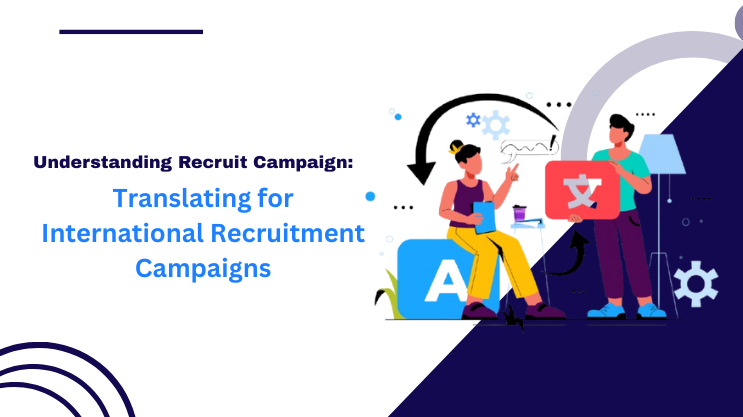
  • Translating for International Recruitment Campaigns

    Translating for International Recruitment Campaigns

    In an increasingly global job market, companies are no longer limited by borders when searching for the right talent. International recruitment campaigns help organizations attract skilled professionals from around the world-but language plays a critical role in their success. Translating recruitment content accurately and culturally is essential to building trust, improving candidate engagement, and strengthening your employer brand worldwide.


    What Is International Recruitment Translation?

    International recruitment translation involves adapting hiring-related content into multiple languages while preserving clarity, tone, and cultural relevance. This includes:

    • Job descriptions and role requirements
    • Career website content
    • Application forms and onboarding materials
    • Recruitment emails and advertisements
    • Employer branding content

    The goal is not just to translate words, but to communicate opportunity, values, and expectations clearly to global candidates.


    Why Translation Matters in Global Recruitment

    1. Wider Talent Reach: Multilingual recruitment campaigns attract candidates who may not be fluent in your company’s primary language.
    2. Enhanced Employer Brand: Professionally translated content reflects inclusivity, credibility, and global readiness.
    3. Clear Role Understanding: Accurate translations prevent misinterpretation of job responsibilities and qualifications.
    4. Higher Application Rates: Candidates are more likely to apply when job information is available in their native language.

    Key Challenges in Recruitment Translation

    • Cultural Differences: Hiring norms, job titles, and workplace expectations vary across regions.
    • Legal and Compliance Terms: Employment-related terminology must align with local labor laws and regulations.
    • Tone and Formality: Some cultures prefer formal language, while others respond better to a friendly, conversational tone.
    • Consistency Across Channels: Maintaining uniform messaging across job portals, websites, and social media can be challenging.

    Best Practices for Translating Recruitment Campaigns

    1. Localize, Don’t Just Translate: Adapt job titles, benefits, and messaging to match local market expectations.
    2. Use Industry-Specific Linguists: Recruiters and HR content require translators familiar with employment terminology.
    3. Maintain Employer Voice: Ensure your company culture and values are consistently reflected across languages.
    4. Optimize for Local Search: Translate keywords and phrases that candidates actually use when searching for jobs.
    5. Review and Update Regularly: Recruitment content changes frequently—keep translations accurate and current.

    How Professional Translation Supports Recruitment Success

    Professional translation services ensure your recruitment campaigns are clear, compliant, and culturally appropriate. At Honey Translation Services, expert linguists help organizations communicate effectively with international candidates, improving engagement and attracting the right talent across borders.


    Conclusion

    Translating for international recruitment campaigns is a strategic investment in global growth. When recruitment content speaks the candidate’s language-both linguistically and culturally-it builds trust, increases applications, and positions your brand as a truly global employer. With professional translation support, companies can unlock talent opportunities worldwide.

    international recruitment translation, recruitment localization, global hiring translation, multilingual recruitment campaigns, HR translation services, employer branding translation

  • How Professional Typing Services Ensure Document Accuracy

    How Professional Typing Services Ensure Document Accuracy

    In today’s fast-paced digital world, accuracy and precision in document preparation are more critical than ever. Businesses, students, and professionals alike rely heavily on typed documents for communication, record-keeping, and official submissions. This is where professional typing services come in. At Honey Translations, we go beyond mere typing – we ensure your documents are accurate, properly formatted, and ready for any professional use.

    The Importance of Accurate Typing Services

    Typing may seem straightforward, but errors in documents can lead to miscommunication, delays, and even financial or legal consequences. For instance, a typo in a business contract or legal document can result in misinterpretation and disputes. Accurate typing ensures clarity, professionalism, and credibility.

    Professional typing services, like those offered by Honey Translations, combine speed with precision. Our team of trained typists pays close attention to every detail, ensuring that your documents reflect your intended message perfectly.

    How Honey Translations Ensures Document Accuracy

    1. Expert Typists and Proofreading

    At Honey Translations, we employ skilled typists who are trained in handling a variety of document types, including legal, academic, and business documents. Accuracy is not just about typing fast; it’s about understanding the content and context of the text.

    After typing, our documents undergo a thorough proofreading process. This ensures that grammar, punctuation, formatting, and spelling are flawless. By combining typing expertise with professional proofreading, we minimize errors and enhance document quality.

    2. Advanced Tools and Technology

    Accuracy in typing is also supported by modern technology. Honey Translations leverages advanced typing software and spell-check tools to catch mistakes that human eyes might miss. These tools help us maintain consistency in formatting, numbering, and alignment, which is especially important for official documents.

    Additionally, our team is well-versed in typing in multiple languages, making us ideal for multilingual documents, international business communications, and translation projects.

    3. Handling Complex Documents

    Not all documents are simple text. Reports, research papers, legal contracts, and manuscripts often include tables, charts, footnotes, and special formatting requirements. Honey Translations specializes in complex document typing, ensuring that formatting is preserved while maintaining textual accuracy.

    Our experts pay close attention to details like headers, subheadings, bullet points, and numbering, so your documents look professional and are easy to read.

    4. Confidentiality and Security

    Accuracy also includes protecting sensitive information. Honey Translations ensures that all client documents are handled with strict confidentiality. We follow secure workflows to protect your data, ensuring that your documents are not only accurate but also safe from unauthorized access.

    5. Fast Turnaround Without Compromising Quality

    In business and academic settings, time is often of the essence. While speed can sometimes compromise accuracy, Honey Translations has perfected the balance. Our typing services are designed to deliver high-quality, error-free documents within your deadlines, making us a reliable partner for urgent projects.

    Why Choose Honey Translations for Typing Services

    Choosing the right typing service provider can make a significant difference in your document quality. Here’s why Honey Translations stands out:

    • Experienced Professionals: Our team is trained to handle documents of all types and complexity.
    • Multi-Language Expertise: We type and format documents in multiple languages, supporting global communication.
    • Quality Assurance: Every document undergoes rigorous proofreading and quality checks.
    • Advanced Technology: We utilize modern typing tools to ensure precision and consistency.
    • Confidentiality: We prioritize your privacy and secure document handling.

    Applications of Professional Typing Services

    Professional typing services are valuable across various industries:

    • Academic: Thesis, dissertations, assignments, and research papers.
    • Business: Contracts, reports, presentations, and official correspondence.
    • Legal: Court documents, affidavits, and agreements.
    • Personal: Letters, manuscripts, CVs, and application forms.

    By outsourcing typing tasks to experts like Honey Translations, clients save time, avoid errors, and ensure professional presentation of their documents.

    Conclusion

    Accurate document preparation is more than just typing words on a page; it’s about clarity, professionalism, and attention to detail. Honey Translations offers top-tier typing services that combine human expertise with modern technology, ensuring that every document you submit is flawless. Whether for business, legal, academic, or personal purposes, our typing services guarantee precision, speed, and confidentiality.

    Partner with Honey Translations today to experience typing services that prioritize accuracy and professionalism every step of the way.

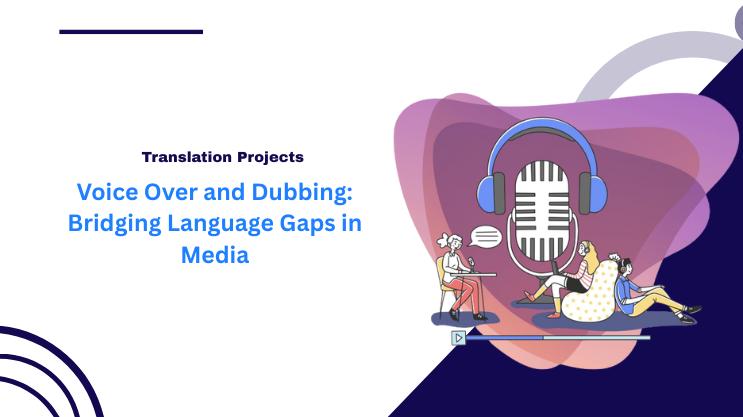
  • Voice Over and Dubbing: Bridging Language Gaps in Media

    Voice Over and Dubbing: Bridging Language Gaps in Media

    In today’s digital-first world, media content travels across borders instantly. Films, advertisements, e-learning modules, corporate videos, and online platforms all aim to reach global audiences. However, language remains a major barrier. Voice over and dubbing services play a vital role in overcoming this challenge by making content understandable, engaging, and culturally relevant for diverse viewers.

    1. Making Content Accessible to Global Audiences

    Voice over and dubbing allow media content to be understood by audiences who may not speak the original language. By delivering messages in a familiar language, businesses and creators can expand their reach, improve viewer engagement, and ensure their content resonates across regions and cultures.

    2. Enhancing Viewer Experience and Engagement

    Reading subtitles may distract viewers from visuals, especially in fast-paced or emotional content. Dubbing and voice over provide a seamless viewing experience, allowing audiences to focus fully on the message. A well-synchronized voice enhances storytelling, emotional connection, and overall content quality.

    3. Preserving Cultural Context and Tone

    Effective dubbing goes beyond translating words. It adapts tone, expressions, humor, and emotions to suit the cultural expectations of the target audience. Professional voice artists and language experts work together to ensure the message feels natural and culturally appropriate, rather than forced or literal.

    4. Supporting Business, Marketing, and Training Content

    Voice over services are widely used in corporate presentations, advertisements, product demos, and e-learning modules. Clear and professional narration in the target language helps businesses communicate their value, train employees effectively, and build trust with international clients.

    5. Ensuring Technical Accuracy and Lip Synchronization

    High-quality dubbing requires precise timing, pronunciation, and synchronization with on-screen visuals. Industry professionals carefully match speech patterns, pauses, and lip movements to maintain realism. This technical accuracy ensures the final output looks and sounds polished and professional.

    6. Strengthening Brand Identity Across Markets

    Consistent voice quality and language adaptation help maintain a strong brand identity across different regions. By using professional voice over and dubbing services, brands can convey reliability, professionalism, and cultural sensitivity, making their message impactful in every market they enter.

    In conclusion, voice over and dubbing are powerful tools that help bridge language gaps in media. They enable content to travel globally while retaining clarity, emotion, and cultural relevance. For businesses and content creators aiming to connect with international audiences, professional voice over and dubbing services are essential for meaningful and effective communication.

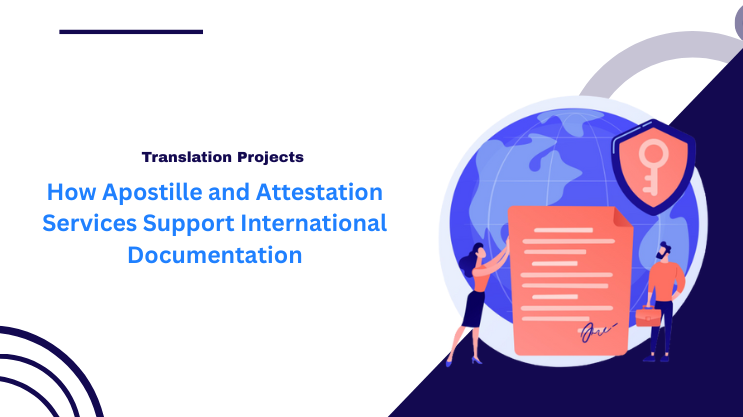
  • How Apostille and Attestation Services Support International Documentation

    How Apostille and Attestation Services Support International Documentation

    In an increasingly globalized world, international documentation plays a vital role in education, business, immigration, and legal matters. Ensuring that documents are recognized and accepted across borders requires more than translation—it requires official verification through apostille and attestation services. These services authenticate documents, making them legally valid and credible in foreign countries.

    1. Understanding Apostille and Attestation

    Apostille is a form of authentication for documents to be used in countries that are part of the Hague Convention, while attestation is the verification process for countries not part of the convention. Both ensure that a document issued in one country is recognized as valid in another. Choosing the right service depends on the target country and type of document.

    2. Types of Documents That Require Verification

    Common documents requiring apostille or attestation include educational certificates, birth and marriage certificates, commercial contracts, power of attorney, and legal agreements. Businesses, students, and individuals often rely on these services to meet foreign compliance standards and avoid rejection of important paperwork.

    3. The Role in Education Abroad Services

    Students applying to universities overseas must often submit attested or apostilled academic documents. This ensures that their certificates, transcripts, and diplomas are recognized by foreign institutions, preventing delays or complications in admission processes.

    4. Supporting Business and Trade Operations

    Companies conducting international trade or opening branches abroad need verified business documents such as MOUs, agreements, and licenses. Apostille and attestation services help validate these documents, ensuring smooth legal and financial operations in foreign jurisdictions.

    5. Legal and Immigration Compliance

    For visa applications, work permits, and immigration purposes, many countries require attested or apostilled documents. These services confirm the authenticity of personal and legal records, reducing the risk of fraud and enhancing trust in the verification process.

    6. Ensuring Efficiency and Reliability

    Professional apostille and attestation service providers streamline the complex process of verification. They handle legal procedures, coordinate with government authorities, and ensure that documents are processed correctly and efficiently. This saves clients time, reduces errors, and ensures acceptance of documents internationally.

    In conclusion, apostille and attestation services are crucial for anyone dealing with international documentation. By verifying the authenticity of legal, educational, and business documents, these services enable smooth global interactions, compliance with foreign regulations, and confidence in cross-border transactions.

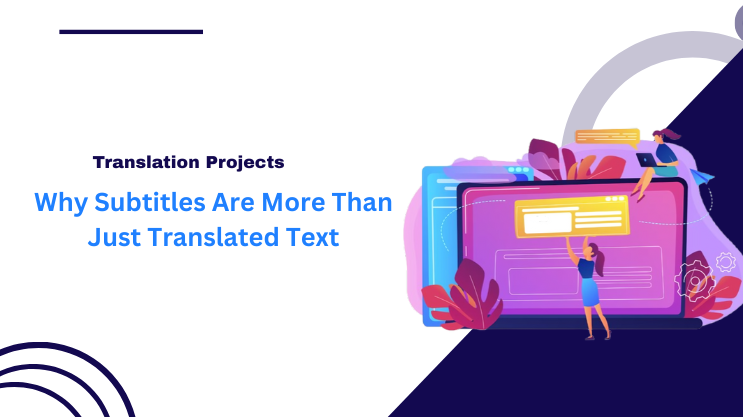
  • Why Subtitles Are More Than Just Translated Text

    Why Subtitles Are More Than Just Translated Text

    In today’s digital-first world, video content dominates global communication – from corporate training videos and marketing campaigns to OTT platforms, e-learning modules, and social media reels. But reaching a truly global audience requires more than simply adding translated words at the bottom of the screen. Subtitling is a specialized language service that blends translation, localization, timing, and cultural understanding.

    At Honey Translation Service, we believe subtitles are not just text – they are a bridge between cultures, emotions, and audiences.

    Understanding the True Role of Subtitles

    Many assume subtitles are a word-for-word translation of spoken dialogue. In reality, effective subtitling requires condensing speech, maintaining meaning, syncing with visuals, and adapting content for cultural relevance – all within strict character and timing limits.

    Subtitles must convey tone, intent, humor, and context while remaining easy to read and perfectly timed. Poor subtitles can confuse viewers, distort brand messaging, or even offend cultural sensitivities. That’s why professional subtitling plays a critical role in global communication.

    Subtitling vs. Translation: What’s the Difference?

    While translation focuses on converting text from one language to another, subtitling adds several layers of complexity.

    Subtitles must fit within limited screen space, usually no more than two lines, and remain visible for a short duration. This means translators often need to rephrase content without losing its original meaning. Additionally, subtitles must align with on-screen action, speaker changes, and background sounds.

    At Honey Translation Service, our linguists are trained specifically in subtitling techniques, ensuring accuracy, readability, and smooth viewing experiences across languages.

    Cultural Localization Matters More Than You Think

    Literal translations rarely work in subtitles. Idioms, humor, slang, and cultural references often need adaptation rather than direct translation. A joke that works in one culture may not resonate – or may even confuse – audiences in another.

    Professional subtitling involves localization, where content is culturally adapted while preserving the creator’s original intent. Our subtitle experts ensure that your message feels natural and relatable to the target audience, not foreign or forced.

    This is especially important for marketing videos, brand stories, films, and training content where emotional connection matters.

    Accessibility and Inclusivity Through Subtitles

    Subtitles are essential not only for multilingual audiences but also for accessibility. Millions of people worldwide rely on subtitles due to hearing impairments or sound-off viewing habits on mobile devices.

    Well-crafted subtitles improve comprehension, increase engagement, and ensure inclusivity. At Honey Translation Service, we follow accessibility best practices, including proper punctuation, speaker identification, and sound cues when required.

    By investing in professional subtitling, businesses demonstrate their commitment to inclusive communication.

    SEO and Discoverability Benefits of Subtitling

    Subtitles also play a powerful role in digital visibility. Search engines cannot “watch” videos, but they can read subtitle files. Optimized subtitles help search engines understand video content, improving rankings and discoverability.

    Multilingual subtitles further enhance global SEO by allowing your content to appear in search results across different languages and regions. For businesses aiming to expand internationally, subtitles are a smart SEO investment.

    Our team at Honey Translation Service ensures subtitle content aligns with your brand keywords and digital strategy without compromising linguistic quality.

    Industry-Specific Subtitling Expertise

    Different industries require different subtitling approaches. Legal videos demand precision, medical content requires technical accuracy, and entertainment content needs creative flair. A one-size-fits-all approach simply doesn’t work.

    Honey Translation Service offers industry-specific subtitling solutions for:

    • Corporate and training videos
    • Educational and e-learning content
    • Films, documentaries, and OTT platforms
    • Marketing and promotional videos
    • Legal and compliance recordings

    Each project is handled by subject-matter linguists to ensure clarity, compliance, and impact.

    Human Expertise Meets Smart Technology

    While AI tools can assist with transcription, human expertise remains irreplaceable in professional subtitling. Automated tools often miss context, emotion, and cultural nuances.

    At Honey Translation Service, we combine advanced subtitling tools with skilled human linguists for quality checks, timing accuracy, and linguistic refinement. This hybrid approach ensures subtitles that are precise, natural, and audience-ready.

    Why Choose Honey Translation Service for Subtitling?

    With years of experience in language services, Honey Translation Service delivers subtitles that go beyond basic translation. Our commitment to quality, confidentiality, and cultural accuracy sets us apart.

    When you work with us, you get:

    • Native-language subtitle experts
    • Accurate timing and formatting
    • Cultural localization for target markets
    • Industry-specific knowledge
    • SEO-friendly subtitle solutions
    • End-to-end quality assurance

    Final Thoughts

    Subtitles are more than text on a screen – they are a powerful communication tool that shapes how your message is perceived globally. Whether you’re expanding into new markets, improving accessibility, or strengthening your brand presence, professional subtitling makes all the difference.

    At Honey Translation Service, we help your videos speak every language – clearly, culturally, and confidently.

  • The Impact of Translation on Global Investor Relations

    The Impact of Translation on Global Investor Relations

    In an increasingly globalized economy, investor relations are no longer limited by geography. Companies today engage with shareholders, analysts, and stakeholders across multiple countries and languages. Clear and accurate communication is critical in maintaining investor confidence, and this is where professional translation plays a vital role. Translation is not just about converting words-it is about conveying financial clarity, credibility, and compliance on a global scale.


    Understanding Global Investor Relations

    Investor relations (IR) involve communication between a company and its investors, including financial reports, earnings calls, press releases, regulatory filings, and corporate presentations. For multinational companies, these communications must be accessible to global investors who may not speak the company’s primary language.

    Accurate translation ensures that all investors receive the same information, reducing misunderstandings and promoting transparency.


    Why Translation Is Critical in Investor Communication

    Financial communication leaves no room for ambiguity. Even a minor translation error can lead to misinterpretation, loss of trust, or regulatory complications. Professional translation ensures:

    • Accuracy: Financial terminology and figures are translated precisely.
    • Consistency: Messaging remains uniform across all languages.
    • Clarity: Complex financial concepts are easy to understand for international audiences.
    • Credibility: Investors feel confident when information is professionally localized.

    Regulatory Compliance Across Markets

    Different countries have strict disclosure and reporting regulations. Translating investor materials accurately helps companies comply with local legal requirements while maintaining alignment with global standards.

    Localized financial documents demonstrate a company’s commitment to transparency and ethical communication, which is essential for long-term investor relationships.


    Enhancing Investor Trust and Confidence

    Trust is the foundation of investor relations. When investors receive information in their native language, they are more likely to feel valued and informed. High-quality translation:

    • Reduces the risk of miscommunication
    • Strengthens brand reputation
    • Builds long-term investor loyalty
    • Supports smoother cross-border investments

    The Role of Financial Translation Experts

    Investor relations content requires specialized expertise. Financial translators understand industry-specific terminology, accounting standards, and cultural nuances. Their expertise ensures that translated content maintains both linguistic and financial accuracy.

    Professional translation partners also follow strict confidentiality standards, which is crucial when handling sensitive investor information.


    Best Practices for Translating Investor Relations Content

    • Work with experienced financial translators
    • Maintain consistent financial terminology through glossaries
    • Review translations for regulatory accuracy
    • Update translated materials promptly with every financial disclosure
    • Use localization, not just literal translation

    Conclusion

    Translation plays a strategic role in global investor relations by enabling transparent, compliant, and trustworthy communication across borders. Companies that invest in professional translation services gain a competitive advantage by strengthening investor confidence and expanding their global reach.

    In a world where investors come from diverse linguistic and cultural backgrounds, accurate translation is not optional-it is essential for sustainable growth and global credibility

    global investor relations, financial translation, investor communication, multilingual investor relations, financial document translation, corporate translation services


  • How Translation Technology Enhances Human Expertise

    How Translation Technology Enhances Human Expertise

    Translation is no longer a purely manual task. With globalization accelerating and businesses reaching international audiences, translation technology has become an essential partner for professional translators. While technology streamlines processes, human expertise ensures accuracy, cultural sensitivity, and contextual relevance. The combination of both creates high-quality, efficient, and reliable translations for businesses worldwide.

    1. Computer-Assisted Translation (CAT) Tools

    CAT tools are software applications that help translators work faster and more consistently. They allow the use of translation memories, glossaries, and terminology databases, reducing repetitive work and ensuring uniformity across large projects. While the technology handles consistency, human translators provide judgment, nuance, and context that machines alone cannot replicate.

    2. Translation Memory for Efficiency

    Translation memory stores previously translated phrases, sentences, and paragraphs for future use. This feature helps translators maintain consistency across multiple documents and projects. By leveraging translation memory, human experts can focus on refining meaning, tone, and style rather than re-translating repetitive content, improving both speed and quality.

    3. Machine Translation with Human Post-Editing

    Machine translation, powered by AI, offers instant translations but often lacks accuracy in complex or culturally nuanced content. Human post-editors review and correct machine-generated translations, ensuring that the final output is both accurate and natural. This collaboration allows businesses to benefit from speed without compromising quality.

    4. Terminology Management Systems

    Industry-specific terminology can be challenging to maintain across different languages and projects. Terminology management systems store approved translations of specialized terms, ensuring consistency. Human translators use these systems to guarantee that technical, legal, or medical content is precise and aligns with industry standards.

    5. Quality Assurance Tools

    Translation technology includes quality assurance (QA) tools that detect errors such as missing numbers, formatting inconsistencies, or untranslated segments. Human translators then review these flagged areas to ensure contextual accuracy, making the translation both flawless and culturally appropriate.

    6. Enhancing Collaboration Across Global Teams

    Modern translation platforms enable real-time collaboration among translators, editors, and project managers around the world. Technology facilitates communication, file sharing, and workflow management, while human expertise ensures that translations retain clarity, tone, and cultural relevance.

    In conclusion, translation technology does not replace human expertise-it enhances it. By combining the efficiency and consistency of tools with the insight, judgment, and cultural understanding of professional translators, businesses can achieve translations that are accurate, contextually appropriate, and impactful in any market.