Author: admin

  • Real-Time Language Solutions for Modern Businesses

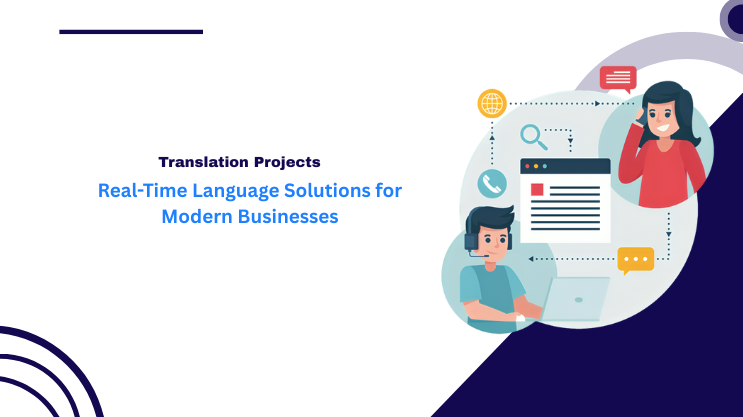
    Real-Time Language Solutions for Modern Businesses

    In today’s global marketplace, communication is no longer bound by borders. Real-time language solutions are revolutionizing how businesses interact with clients, partners, and employees worldwide. Let’s explore how these solutions enhance efficiency, engagement, and growth.

    1. Instant Communication Across Languages

    Modern businesses need to connect with diverse audiences instantly. Real-time language solutions, such as live interpretation and AI-powered translation tools, break language barriers, enabling seamless conversations without delays.

    2. Enhancing Customer Experience

    Customers expect fast, accurate, and personalized support. Real-time translation services allow businesses to respond immediately in the customer’s preferred language, improving satisfaction and loyalty.

    3. Boosting Global Collaboration

    Teams spread across continents face communication challenges. Real-time language solutions facilitate virtual meetings, document sharing, and project collaboration in multiple languages, ensuring clarity and efficiency.

    4. Supporting Sales and Marketing Efforts

    Reaching international markets requires content and campaigns that resonate locally. Real-time translation ensures marketing materials, pitches, and presentations are culturally relevant and immediately understandable, increasing engagement and conversion rates.

    5. Cost-Effective Multilingual Operations

    Traditional translation and interpretation services can be slow and expensive. Real-time language solutions streamline operations, reduce the need for multiple intermediaries, and optimize workflow, saving both time and money.

    6. Leveraging AI and Automation

    Artificial intelligence powers real-time language solutions, enabling instant transcription, translation, and even voice recognition. Businesses can scale multilingual operations without compromising accuracy or speed.

    Conclusion

    Real-time language solutions are no longer optional-they are essential for modern businesses looking to expand globally. By embracing these tools, companies can foster better communication, enhance customer experience, and drive international growth efficiently.

  • Simultaneous Interpretation Services Explained: Real – Time Language Solutions

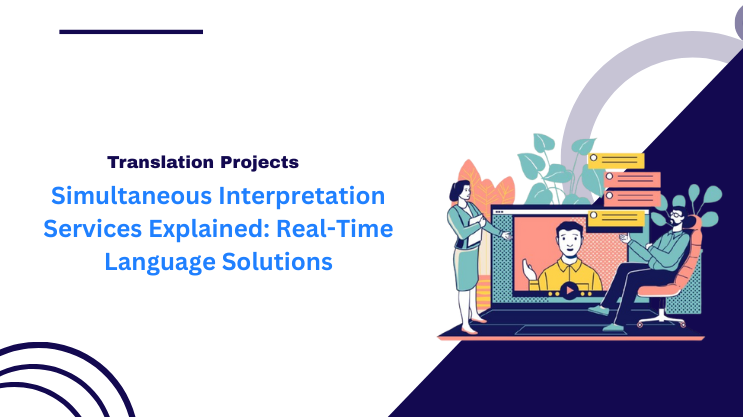
    Simultaneous Interpretation Services Explained: Real – Time Language Solutions

    In today’s fast – moving global environment, communication cannot afford delays. Whether it’s an international conference, diplomatic meeting, medical symposium, or virtual business event, messages must be understood instantly across languages. This is where simultaneous interpretation services play a critical role – bridging language gaps in real time without interrupting the natural flow of conversation.

    What Are Simultaneous Interpretation Services?

    Simultaneous interpretation is a language service where an interpreter translates spoken content in real time while the speaker continues talking. Unlike consecutive interpretation, there are no pauses. Listeners receive the interpreted message almost instantly through headsets or virtual audio channels.

    This service is commonly used in:

    • International conferences and summits
    • Live webinars and virtual events
    • Government and diplomatic meetings
    • Medical and scientific conventions
    • Corporate global meetings

    How Simultaneous Interpretation Works

    The process relies on both highly skilled interpreters and advanced audio technology.

    1. The speaker talks in the source language
    2. The interpreter listens through headphones
    3. The interpreter translates instantly into the target language
    4. The audience hears the interpretation through headsets or digital platforms

    Because of the mental intensity involved, interpreters usually work in teams, switching every 20 – 30 minutes to maintain accuracy and clarity.

    Key Features of Professional Simultaneous Interpretation

    Real – Time Communication

    There is no delay between speech and interpretation, making it ideal for fast – paced discussions and large audiences.

    High Accuracy Under Pressure

    Professional interpreters are trained to process complex ideas, terminology, and tone instantly – without losing meaning.

    Multilingual Reach

    Multiple language channels can run simultaneously, allowing one event to serve a global audience.

    Seamless Audience Experience

    Listeners receive information smoothly, without interruptions or awkward pauses.

    Where Simultaneous Interpretation Is Most Effective

    Conferences and Global Events

    International conferences depend on simultaneous interpretation to ensure equal participation for attendees from different countries.

    Healthcare and Medical Forums

    Accurate real – time interpretation is essential when discussing research, treatments, or public health topics.

    Corporate Meetings and Product Launches

    Global companies use simultaneous interpretation services to communicate strategies, results, and innovations across regions.

    Virtual and Hybrid Events

    With the rise of online events, virtual simultaneous interpretation services have become essential for webinars and live – streamed meetings.

    On – Site vs Virtual Simultaneous Interpretation

    Used in physical venues with soundproof booths, microphones, and headsets. Ideal for large conferences and formal gatherings.

    Remote / Virtual Interpretation

    Delivered through digital platforms, allowing interpreters and audiences to connect from anywhere in the world – cost – effective and highly scalable.

    Why Professional Simultaneous Interpretation Matters

    Using untrained interpreters or automated tools in real – time scenarios can lead to misunderstandings, errors, and reputational risks. Professional simultaneous interpretation ensures:

    • Cultural sensitivity and context accuracy
    • Industry – specific terminology handling
    • Confidentiality and professionalism
    • Clear, confident communication

    Choosing the Right Simultaneous Interpretation Service Provider

    When selecting a provider, look for:

    • Certified and experienced interpreters
    • Industry – specific expertise
    • Support for both on – site and virtual events
    • Advanced interpretation technology
    • Strong quality assurance processes

    The Future of Simultaneous Interpretation Services

    With global collaboration increasing and virtual events becoming standard, demand for real – time interpretation services continues to grow. While AI tools assist in logistics, human interpreters remain essential for nuance, emotion, and accuracy – especially in high – stakes communication.

    Final Thoughts

    Simultaneous interpretation services are more than just language support – they are a strategic communication tool. By enabling real – time understanding across languages, they empower organizations to connect, collaborate, and succeed on a global stage without barriers.

  • The Strategic Role of Translation in Global Innovation

    The Strategic Role of Translation in Global Innovation

    Innovation thrives on collaboration, diversity of ideas, and the free flow of knowledge. In a globally connected world, translation plays a strategic role in enabling innovation by breaking language barriers and allowing organizations, researchers, and businesses to collaborate across borders. Without effective translation, many groundbreaking ideas would remain isolated within linguistic boundaries.

    Why Translation Is Essential for Global Innovation

    1. Enables Knowledge Sharing: Research, patents, and technical documentation become accessible worldwide.
    2. Supports International Collaboration: Multinational teams can exchange ideas seamlessly.
    3. Accelerates Market Expansion: Innovative products can reach global markets faster.
    4. Encourages Cross-Cultural Creativity: Diverse perspectives fuel better problem-solving and innovation.

    How Translation Drives Innovation Across Industries

    Technology & Software

    Translation enables global development teams to collaborate on code, documentation, and user experiences.

    Healthcare & Life Sciences

    Medical research and clinical data shared across languages contribute to faster discoveries and better patient outcomes.

    Education & Research

    Academic collaboration and international learning rely heavily on multilingual content.

    Manufacturing & Engineering

    Technical manuals and process documentation ensure consistent global operations.

    Challenges in Translating for Innovation

    • Complex Technical Terminology: Specialized fields require subject-matter expertise.
    • Speed vs Accuracy: Innovation moves fast, demanding quick yet reliable translations.
    • Consistency Across Teams: Maintaining uniform terminology in large global projects.
    • Cultural Interpretation: Innovation messaging must resonate with different markets.

    Best Practices for Strategic Translation

    1. Use Specialized Translators: Choose linguists with industry-specific expertise.
    2. Leverage Technology: Combine AI translation tools with human review for efficiency.
    3. Create Multilingual Glossaries: Maintain consistency in technical and brand terminology.
    4. Integrate Translation Early: Include localization in product development cycles.
    5. Ensure Data Security: Protect intellectual property in multilingual workflows.

    Tools Supporting Translation for Innovation

    • Translation Management Systems (TMS): Streamline global collaboration.
    • AI Translation Platforms: Enable rapid multilingual communication.
    • Glossaries & Style Guides: Standardize innovation-related terminology.
    • Collaboration Tools: Integrate translation into research and development platforms.

    Conclusion

    Translation is not just a support function it is a strategic driver of global innovation. By enabling knowledge exchange, collaboration, and market access, translation empowers organizations to innovate beyond borders. Companies that invest in professional translation and localization gain a competitive advantage in a world where ideas travel faster than ever.

    Translation and innovation, global innovation strategy, multilingual collaboration, business translation services, technology translation, Honey Translation Services.

  • Medical Interpretation Services: Bridging the Gap in Healthcare Communication

    Medical Interpretation Services: Bridging the Gap in Healthcare Communication

    Clear communication is the foundation of quality healthcare. When patients and healthcare providers do not share a common language, even simple interactions can become risky. Medical interpretation services play a vital role in ensuring accurate, compassionate, and effective communication across language barriers, ultimately improving patient safety and health outcomes.

    The Growing Need for Medical Interpretation Services

    Healthcare systems today serve increasingly diverse populations. Patients may speak different languages, use regional dialects, or have limited proficiency in the dominant language of a country. In such environments, relying on family members or untrained staff for interpretation can lead to misunderstandings, misdiagnoses, and legal complications.

    Professional medical interpretation services ensure that patients fully understand their diagnoses, treatment options, consent forms, and follow – up care – while allowing healthcare providers to deliver care with confidence and clarity.

    What Are Medical Interpretation Services?

    Medical interpretation services involve the real – time conversion of spoken language between patients and healthcare professionals. Unlike translation, which deals with written content, interpretation focuses on live communication in clinical settings such as hospitals, clinics, emergency rooms, and telehealth platforms.

    These services are delivered by trained medical interpreters who understand both medical terminology and cultural nuances, ensuring messages are conveyed accurately and ethically.

    Types of Medical Interpretation Services

    On – Site Medical Interpretation

    On – site interpreters work directly within healthcare facilities, making them ideal for complex consultations, emergency situations, or sensitive discussions. Their physical presence allows them to observe body language and respond quickly to communication challenges.

    Telephone Interpretation Services

    Telephone interpretation offers immediate access to qualified interpreters, especially useful in urgent situations or locations where on – site interpreters are unavailable. It provides flexibility and supports a wide range of languages.

    Video Remote Interpretation (VRI)

    Video interpretation combines the benefits of visual cues with remote access. This method is increasingly popular in telemedicine and outpatient settings, helping improve understanding through facial expressions and gestures.

    Simultaneous and Consecutive Interpretation

    Simultaneous interpretation allows the interpreter to translate in real time, while consecutive interpretation involves pauses between speakers. Both methods are used depending on the clinical scenario and complexity of the conversation.

    Why Professional Medical Interpreters Matter

    Medical interpretation requires more than bilingual ability. Professional interpreters are trained to handle medical terminology, maintain confidentiality, and remain impartial. Their expertise helps prevent errors, supports informed consent, and ensures compliance with healthcare regulations and language access standards.

    Most importantly, professional interpreters help build trust between patients and providers, making patients feel heard, respected, and understood.

    Benefits of Medical Interpretation Services in Healthcare

    Improved Patient Safety

    Accurate interpretation reduces the risk of medication errors, incorrect treatments, and misunderstandings during diagnosis or discharge.

    Better Patient Experience

    Patients who understand their care are more likely to follow treatment plans and feel satisfied with their healthcare experience.

    Legal and Ethical Compliance

    Many healthcare systems are legally required to provide language access. Professional interpretation helps institutions meet regulatory standards and avoid liability.

    Enhanced Clinical Efficiency

    Clear communication saves time, reduces repeat visits, and allows healthcare professionals to focus on delivering quality care.

    Medical Interpretation in Telehealth and Digital Healthcare

    With the rise of telemedicine, virtual medical interpretation services have become essential. Video and phone interpretation ensure that language barriers do not limit access to remote consultations, mental health services, or follow – up care. This integration supports equitable healthcare delivery, regardless of location.

    Choosing the Right Medical Interpretation Service Provider

    When selecting a medical interpretation service, healthcare organizations should consider interpreter qualifications, language coverage, availability, data security, and experience in medical settings. A reliable provider ensures consistency, accuracy, and cultural sensitivity across all patient interactions.

    Bridging Language Gaps for Better Healthcare Outcomes

    Medical interpretation services are no longer optional – they are a critical component of modern healthcare. By bridging language gaps, they empower patients, support healthcare professionals, and promote safer, more inclusive care for everyone.

    Investing in professional medical interpretation services is an investment in better communication, better outcomes, and better healthcare experiences.
  • Exploring Different Types of Data Interpretation: A Comprehensive Guide

    Exploring Different Types of Data Interpretation: A Comprehensive Guide

    In an increasingly data – driven environment, the ability to accurately interpret data is essential for informed decision – making. While data collection provides the foundation, it is data interpretation that transforms raw information into meaningful insights. Organizations across industries rely on effective interpretation methods to evaluate performance, identify trends, and develop strategic initiatives.

    This guide provides a comprehensive overview of the different types of data interpretation, their applications, and their relevance in modern business and research contexts.

    What Is Data Interpretation?

    Data interpretation refers to the systematic process of analyzing, evaluating, and presenting data to extract meaning and actionable insights. It involves applying analytical techniques, contextual understanding, and logical reasoning to identify patterns, relationships, and implications within datasets.

    Effective data interpretation ensures that data – driven conclusions are accurate, relevant, and aligned with organizational objectives.

    Importance of Data Interpretation

    Accurate data interpretation enables organizations to:

    • Support evidence – based decision – making
    • Minimize risk and uncertainty
    • Enhance operational efficiency
    • Identify opportunities for growth and innovation
    • Improve strategic planning and forecasting

    Conversely, poor interpretation may result in inaccurate conclusions and ineffective strategies.

    Types of Data Interpretation

    Different forms of data require different interpretation approaches. The most commonly used types are outlined below.

    1. Qualitative Data Interpretation

    Qualitative data interpretation focuses on non – numerical information, such as opinions, experiences, and behavioral insights.

    Common Data Sources

    • Interviews and focus groups
    • Open – ended survey responses
    • Observational and ethnographic studies

    Interpretation Methods

    • Thematic analysis
    • Content analysis
    • Narrative analysis

    Applications

    • Market and consumer research
    • Social science and behavioral studies
    • User experience analysis

    Objective: To understand underlying motivations, perceptions, and contextual factors.

    2. Quantitative Data Interpretation

    Quantitative data interpretation involves the analysis of numerical and measurable data to identify trends and relationships.

    Common Data Sources

    • Structured surveys
    • Financial and operational data
    • Performance and usage metrics

    Interpretation Methods

    • Statistical analysis
    • Data modeling
    • Graphical representation

    Applications

    • Business intelligence and reporting
    • Financial analysis
    • Scientific and technical research

    Objective: To measure outcomes and validate assumptions using numerical evidence.

    3. Statistical Data Interpretation

    Statistical interpretation applies formal mathematical and statistical techniques to analyze datasets and test hypotheses.

    Key Techniques

    • Descriptive statistics (mean, median, standard deviation)
    • Inferential statistics
    • Probability analysis
    • Hypothesis testing

    Applications

    • Academic and clinical research
    • Policy evaluation
    • Quality assurance studies

    Objective: To draw reliable conclusions with a defined level of statistical confidence.

    4. Visual Data Interpretation

    Visual data interpretation presents information through charts, graphs, dashboards, and visual summaries to enhance comprehension.

    Common Tools

    • Bar and line charts
    • Pie charts and heat maps
    • Interactive dashboards

    Applications

    • Executive reporting
    • Performance monitoring
    • Data – driven storytelling

    Objective: To simplify complex data and support quick, informed decision – making.

    5. Comparative Data Interpretation

    Comparative interpretation examines multiple datasets or time periods to identify similarities, differences, or performance variations.

    Examples

    • Year – over – year performance analysis
    • Market share comparison
    • A/B testing outcomes

    Applications

    • Competitive benchmarking
    • Trend analysis
    • Program and campaign evaluation

    Objective: To assess relative performance and measure change over time.

    6. Diagnostic Data Interpretation

    Diagnostic interpretation focuses on understanding the causes behind observed outcomes.

    Common Techniques

    • Root cause analysis
    • Drill – down analysis
    • Correlation analysis

    Applications

    • Operational issue resolution
    • Process improvement initiatives
    • Marketing and sales performance analysis

    Objective: To identify factors contributing to success or failure.

    7. Predictive Data Interpretation

    Predictive interpretation uses historical data and analytical models to forecast future trends and outcomes.

    Methods Used

    • Trend analysis
    • Predictive modeling
    • Machine learning algorithms

    Applications

    • Demand and sales forecasting
    • Risk management
    • Customer behavior analysis

    Objective: To anticipate future scenarios and support proactive planning.

    8. Prescriptive Data Interpretation

    Prescriptive interpretation provides recommended actions based on data – driven insights.

    Key Features

    • Scenario simulation
    • Optimization models
    • Decision – support systems

    Applications

    • Strategic planning
    • Supply chain and resource optimization
    • Pricing and investment decisions

    Objective: To guide optimal decision – making through data – backed recommendations.

    Selecting the Appropriate Interpretation Method

    The choice of data interpretation approach depends on:

    • The nature and structure of the data
    • Business or research objectives
    • Required accuracy and depth of analysis
    • Available tools and analytical expertise

    In many cases, combining multiple interpretation methods delivers more comprehensive insights.

    Challenges in Data Interpretation

    Organizations often face challenges such as:

    • Data quality and completeness issues
    • Bias and misrepresentation
    • Overreliance on visualizations without context
    • Misinterpretation of statistical results

    Addressing these challenges requires robust data governance, analytical rigor, and domain expertise.

    Future Trends in Data Interpretation

    Advancements in artificial intelligence, automation, and real – time analytics are transforming data interpretation practices. While technology enhances speed and scale, human oversight remains critical to ensure contextual understanding, ethical considerations, and accurate conclusions.

    Conclusion

    Data interpretation plays a central role in transforming raw data into strategic insights. By understanding and applying the appropriate interpretation methods, organizations can improve decision quality, enhance performance, and maintain a competitive advantage in an increasingly data – centric environment.

  • Localization in Autonomous & Robotics Industries

    Localization in Autonomous & Robotics Industries

    Autonomous systems and robotics are transforming industries-from self-driving vehicles and drones to industrial automation and service robots. As these technologies expand globally, localization becomes a critical success factor. Beyond simple translation, localization ensures that robotic systems communicate clearly, operate safely, and comply with cultural, linguistic, and regulatory requirements in every market.

    Why Localization Matters in Robotics and Autonomous Systems

    1. Human – Machine Interaction: Users interact with robots through voice, text, and interfaces – these must feel natural in local languages.
    2. Safety and Compliance: Instructions, warnings, and error messages must be accurately localized to prevent accidents.
    3. Regulatory Requirements: Different countries mandate localized documentation and interfaces.
    4. User Adoption: Systems that speak the user’s language are more trusted and widely accepted.

    Key Areas to Localize in Robotics

    • User Interfaces (UI): Screens, dashboards, and control panels
    • Voice Assistants & NLP: Speech recognition and response generation
    • System Documentation: Manuals, training materials, safety guides
    • Firmware Messages: Alerts, logs, and diagnostic outputs
    • Mobile & Cloud Apps: Companion applications for control and monitoring

    Challenges in Robotics Localization

    • Technical Terminology: Robotics involves complex engineering language.
    • Real-Time Processing: Voice and command localization must be fast and accurate.
    • Space Constraints: Embedded systems have limited UI space.
    • Cultural Differences: Gestures, tones, and symbols may differ across regions.
    • Continuous Updates: Software-driven robots require constant localization updates.

    Best Practices for Robotics Localization

    1. Start Localization Early: Design systems with internationalization (i18n) from day one.
    2. Use Subject-Matter Translators: Robotics experts ensure technical accuracy.
    3. Test with Local Users: Validate commands, interfaces, and voice outputs.
    4. Maintain Terminology Databases: Keep engineering and safety terms consistent.
    5. Combine AI with Human Review: Use automation for scale, human experts for safety.

    Tools Supporting Robotics Localization

    • Translation Management Systems (TMS)
    • Speech-to-Text & Text-to-Speech Localization Engines
    • Terminology Management Tools
    • In-context UI Review Platforms
    • Multilingual QA & Safety Testing Frameworks

    Conclusion

    Localization is a strategic pillar in the autonomous and robotics industries. As intelligent machines become part of everyday life, they must communicate naturally, safely, and culturally appropriately. Investing in professional localization ensures global usability, regulatory compliance, and stronger user trust—turning advanced technology into truly global solutions.

    robotics localization, autonomous systems translation, AI localization, robotics UX, voice localization, technical translation, Honey Translation Services.

  • What Makes Legal Translation Different from Regular Translation?

    What Makes Legal Translation Different from Regular Translation?

    Legal translation is a highly specialized field that goes far beyond converting words from one language to another. Unlike general translation, legal translation requires a deep understanding of legal systems, terminology, and the nuances of language. At Honey Translation Service, we provide professional legal translation services that ensure accuracy, confidentiality, and compliance with international standards.

    Understanding Legal Translation

    Legal translation involves translating documents such as contracts, court documents, patents, licenses, and laws. These documents often contain complex terminology and phrases that are unique to the legal system of a particular country. Even a minor error in translation can lead to misinterpretation, disputes, or legal consequences.

    Unlike regular translation, which may focus primarily on conveying meaning, legal translation demands:

    • Precision: Every term must be accurately translated to maintain the original legal meaning.
    • Consistency: Legal terms must remain consistent throughout the document.
    • Cultural and Legal Awareness: Knowledge of the target country’s legal system is essential to interpret concepts correctly.

    Key Differences Between Legal and Regular Translation

    1. Terminology Accuracy

    Legal translation relies on precise terminology. Words like “liability,” “indemnity,” or “arbitration” carry specific legal meanings. Translating them incorrectly can alter the legal outcome. Regular translation may allow for more flexibility with synonyms, but legal translation requires exact correspondence.

    2. Formality and Structure

    Legal documents follow strict formats and structures. Translators must preserve the original format, including numbering, headings, clauses, and annexures. In contrast, regular translation can afford some creative freedom in sentence structure and tone.

    3. Confidentiality and Security

    Legal documents often contain sensitive information. Professional legal translators adhere to strict confidentiality protocols, ensuring documents are handled securely. While confidentiality is important in general translation, the stakes are higher for legal content due to potential legal implications.

    4. Understanding Legal Systems

    Legal translators must understand both the source and target legal systems. A legal concept in one country may not exist in another, requiring careful adaptation to convey the intended meaning. Regular translators typically do not need this level of expertise in specialized fields.

    5. Certification and Compliance

    Many legal documents require certified translation, especially for immigration, court, or government purposes. This certification guarantees that the translation is accurate and legally recognized. Regular translations rarely require such formal validation.

    Types of Legal Documents We Translate

    At Honey Translation Service, we specialize in translating a wide range of legal documents, including:

    • Contracts and Agreements: Employment contracts, service agreements, partnership deals.
    • Court and Litigation Documents: Pleadings, judgments, affidavits.
    • Corporate and Business Documents: Company registrations, licenses, shareholder agreements.
    • Patents and Intellectual Property Documents: Technical patents, trademarks, copyrights.
    • Government and Immigration Papers: Birth certificates, marriage certificates, visa documents.

    Why Choose Honey Translation Service for Legal Translation?

    Choosing the right legal translation service is crucial. At Honey Translation Service, we combine linguistic expertise with legal knowledge to deliver translations that are:

    • Accurate: Our translators are certified professionals with experience in legal translation.
    • Reliable: We meet strict deadlines without compromising quality.
    • Confidential: Your sensitive legal information is handled with utmost security.
    • Compliant: Our translations are certified and accepted by courts, government agencies, and corporations worldwide.

    Conclusion

    Legal translation is more than just translating words  –  it’s about preserving the meaning, intent, and legal validity of documents across languages and jurisdictions. While regular translation focuses on general communication, legal translation demands precision, expertise, and an understanding of legal systems.

    With Honey Translation Service, you can trust that your legal documents are in expert hands. We ensure every translation is accurate, secure, and fully compliant, giving you peace of mind in all your international legal matters.

  • Language Strategy for International Research Collaboration

    Language Strategy for International Research Collaboration

    International research collaboration is transforming how knowledge is created, shared, and applied across borders. From academic institutions to global R&D teams, multilingual collaboration is now the norm. However, without a clear language strategy, communication gaps can slow progress, cause misunderstandings, and limit the impact of research outcomes.

    A well-defined language strategy ensures that all stakeholders – researchers, institutions, and partners – can collaborate effectively regardless of linguistic or cultural differences.

    Why Language Strategy Matters in Global Research

    1. Improves Knowledge Sharing: Research findings become accessible to a wider global audience.
    2. Enhances Collaboration Efficiency: Clear communication reduces delays and misinterpretations.
    3. Supports Inclusive Participation: Non-native speakers can contribute equally and confidently.
    4. Boosts Research Impact: Multilingual dissemination increases citations and global recognition.

    Key Components of an Effective Language Strategy

    • Working Language Selection: Defining primary and secondary languages for communication.
    • Translation and Localization: Adapting research materials, reports, and publications for global audiences.
    • Terminology Management: Using standardized glossaries for technical and academic consistency.
    • Cultural Awareness: Recognizing communication styles and academic norms across cultures.
    • Multilingual Publication Planning: Strategizing how and where research is published in multiple languages.

    Challenges in International Research Communication

    • Complex scientific terminology across languages
    • Variations in academic writing styles
    • Delays caused by language barriers
    • Risk of misinterpreting research findings
    • Limited access to multilingual publishing platforms

    Best Practices for Language Strategy in Research

    1. Invest in Professional Academic Translation: Use subject-matter expert translators.
    2. Create Multilingual Style Guides: Ensure consistent tone and terminology.
    3. Leverage Technology: Use Translation Management Systems (TMS) for efficiency.
    4. Encourage Multilingual Dissemination: Publish abstracts, summaries, and key findings in multiple languages.
    5. Train Researchers in Cross-Cultural Communication: Improve collaboration skills beyond language.

    Tools Supporting Global Research Collaboration

    • Translation Management Systems (TMS): Centralize multilingual content workflows.
    • Terminology Databases: Maintain consistency in scientific language.
    • Collaboration Platforms: Integrate translation into research communication tools.
    • AI Translation Tools with Human Review: Speed up workflows while maintaining accuracy.

    Conclusion

    A strong language strategy is essential for the future of international research collaboration. By combining professional translation, cultural awareness, and smart technology, research teams can overcome language barriers, accelerate innovation, and maximize the global impact of their work. Language is not just a medium – it’s a strategic asset in global research success.

    International research collaboration, language strategy, academic translation services, multilingual research, global research communication, scientific translation, Honey Translation Services.

  • Certified Translation Services in Qatar

    Certified Translation Services in Qatar

    In Qatar’s rapidly expanding global and multicultural environment, certified translation services are essential for individuals and businesses dealing with official documentation. From legal and immigration papers to corporate and academic records, certified translations ensure that your documents are accurate, legally valid, and accepted by government authorities and institutions.

    What Are Certified Translation Services?

    Certified translation services involve translating documents and providing a signed declaration from a professional translator or agency confirming the accuracy and completeness of the translation. In Qatar, certified translations are commonly required for:

    • Legal contracts and court documents
    • Immigration and visa paperwork
    • Academic certificates and transcripts
    • Medical records and reports
    • Business registration documents

    Why You Need Certified Translation in Qatar

    1. Legal Recognition: Many Qatari authorities require certified translations for official submissions.
    2. Accuracy and Professionalism: Certified translators ensure precise terminology and proper formatting.
    3. Compliance with Local Regulations: Professional agencies understand Qatar’s documentation standards.
    4. Avoiding Delays: Proper certification prevents rejections and processing delays.

    Industries That Rely on Certified Translation Services

    • Legal Sector: Court filings, agreements, affidavits
    • Government Services: Residency permits, licenses
    • Education: Degree certificates, transcripts
    • Healthcare: Medical reports, prescriptions
    • Corporate: MOUs, financial statements, tenders

    Key Features of Professional Certified Translation Services

    • Native-speaking expert translators
    • Quality assurance and proofreading
    • Official certification stamp and declaration
    • Strict confidentiality and data protection
    • Fast turnaround times

    How to Choose the Right Translation Service in Qatar

    1. Verify Certification: Ensure the agency provides legally recognized certified translations.
    2. Check Language Expertise: Arabic-English translation is critical in Qatar.
    3. Industry Knowledge: Choose translators experienced in legal, medical, and technical fields.
    4. Turnaround Time: Balance speed with accuracy.
    5. Customer Support: Look for responsive service and clear communication.

    Conclusion

    Certified translation services in Qatar are essential for ensuring your documents are legally valid, professionally translated, and accepted by official authorities. Whether for personal, academic, or business purposes, investing in certified translation helps avoid errors, ensures compliance, and saves valuable time.

    certified translation services in Qatar, legal translation Qatar, Arabic English translation Qatar, document translation Qatar, sworn translation Qatar, Honey Translation Services.

  • Why Legal Translation Requires Expertise  –  Not Just Language Skills

    Why Legal Translation Requires Expertise  –  Not Just Language Skills

    In today’s globalized world, legal matters often cross borders, involving contracts, court documents, patents, and regulatory filings in multiple languages. While it may seem that knowing two languages is enough to translate legal documents, the reality is far more complex. Legal translation demands expertise, precision, and a deep understanding of both legal systems and language nuances.

    Honey Translation Service specializes in providing accurate, professional, and reliable legal translations for clients worldwide. Here’s why legal translation is more than just language skills and why professional services matter.

    Understanding the Complexity of Legal Language

    Legal language is inherently complex. Legal documents often include:

    • Specialized terminology  –  Words like “indemnity,” “subrogation,” or “fiduciary” have specific meanings that cannot be interpreted loosely.
    • Formal structures  –  Contracts and agreements follow strict formats where even a minor alteration can change the legal interpretation.
    • Jurisdiction – specific language  –  Laws vary across countries, meaning a term valid in one legal system may have no equivalent in another.

    Without deep legal knowledge, even fluent translators risk misinterpreting crucial terms. Honey Translation Service ensures that every legal translation aligns with the intended meaning and complies with the legal framework of the target jurisdiction.

    Why Literal Translation Isn’t Enough

    A common mistake in legal translation is literal translation  –  directly converting words from one language to another. Legal documents require contextual and conceptual translation because:

    • Ambiguity can lead to disputes  –  Misinterpretation of even a single clause can result in contract disputes or litigation.
    • Legal enforceability matters  –  Translated documents must retain their legal validity and integrity in the target language.
    • Consistency is crucial  –  Legal terminology must be consistently translated across all documents to avoid confusion.

    Honey Translation Service employs expert translators with a legal background to ensure that translations are not just linguistically accurate but also legally sound.

    Expertise Beyond Language

    Legal translators must combine language skills with:

    • Understanding of legal systems  –  Familiarity with both the source and target legal frameworks is critical.
    • Attention to detail  –  Accuracy in dates, numbers, names, and clauses is non – negotiable.
    • Confidentiality and ethics  –  Legal documents often contain sensitive information requiring secure handling.

    Our team at Honey Translation Service is trained in legal terminology, procedures, and ethical handling of documents, making us a trusted partner for law firms, corporations, and individuals.

    Common Legal Documents Requiring Expert Translation

    Some of the key legal documents that demand professional translation include:

    • Contracts and agreements  –  Employment contracts, business partnerships, NDAs, and more.
    • Court documents  –  Judgments, summons, affidavits, and filings.
    • Intellectual property documents  –  Patents, trademarks, and licensing agreements.
    • Corporate compliance documents  –  Articles of incorporation, regulatory filings, and annual reports.

    Each type of document has unique requirements that only a trained legal translator can handle efficiently. Honey Translation Service tailors our approach to each document type, ensuring accuracy and compliance.

    Benefits of Choosing a Professional Legal Translation Service

    Working with a professional service like Honey Translation Service offers several advantages:

    • Accuracy and reliability  –  Avoid costly mistakes due to misinterpretation.
    • Time efficiency  –  Experienced translators deliver high – quality translations promptly.
    • Legal compliance  –  Documents meet the legal standards of the target jurisdiction.
    • Confidentiality  –  Secure handling of sensitive and confidential information.

    Investing in professional legal translation protects your business and legal interests while saving you from potential disputes and financial losses.

    Conclusion

    Legal translation is a high – stakes task that goes far beyond language fluency. It requires legal expertise, attention to detail, and professional ethics. Choosing an expert service ensures that your documents are accurately translated, legally valid, and contextually appropriate.

    At Honey Translation Service, we combine linguistic skill with legal knowledge to deliver precise, reliable, and compliant translations for clients around the globe. When it comes to legal documents, trust expertise  –  not just language skills.