Author: admin

  • The Importance of Translating User Manuals for International Customers

    The Importance of Translating User Manuals for International Customers

    As products reach global markets, clear communication becomes essential for customer satisfaction and safety. User manuals play a critical role in helping customers understand how to use a product correctly and efficiently. Translating user manuals for international customers ensures that instructions are accessible, accurate, and culturally appropriate, enhancing the overall user experience.

    1. Improving Product Usability

    When user manuals are available in the customer’s native language, products become easier to understand and use. Clear instructions reduce confusion, enable users to access all features, and help them get the best value from the product.

    2. Enhancing Customer Safety

    Many user manuals include important safety guidelines and warnings. Accurate translation ensures that users clearly understand potential risks, proper usage, and safety precautions, reducing the likelihood of accidents or misuse.

    3. Reducing Support and Service Costs

    Well-translated manuals minimize the need for customer support by answering common questions upfront. When customers can easily understand instructions, businesses receive fewer service calls, saving time and operational costs.

    4. Meeting Legal and Regulatory Requirements

    In many countries, providing product instructions in the local language is a legal requirement. Translating user manuals helps businesses comply with international regulations and avoid penalties, recalls, or legal disputes.

    5. Strengthening Brand Trust and Reputation

    Providing manuals in multiple languages demonstrates professionalism and customer care. Customers are more likely to trust brands that invest in clear communication, enhancing brand reputation and long-term loyalty.

    6. Supporting Global Market Expansion

    Translated user manuals enable businesses to enter new markets confidently. Clear documentation helps products gain acceptance among international users and supports smoother market expansion.

    7. Maintaining Accuracy Through Technical Expertise

    User manuals often include technical terminology and precise instructions. Professional translators with industry-specific knowledge ensure accuracy, consistency, and clarity, preventing errors that could affect product performance.

    8. Enhancing Overall Customer Experience

    A well-translated user manual contributes to a positive customer journey. Easy-to-understand instructions improve satisfaction, reduce frustration, and encourage repeat purchases and positive reviews.

    In conclusion, translating user manuals is essential for serving international customers effectively. By ensuring clarity, safety, and compliance, businesses can improve usability, build trust, and support successful global expansion through accurate and professional documentation.
  • How Multilingual Voice Assistants Are Changing Global Communication

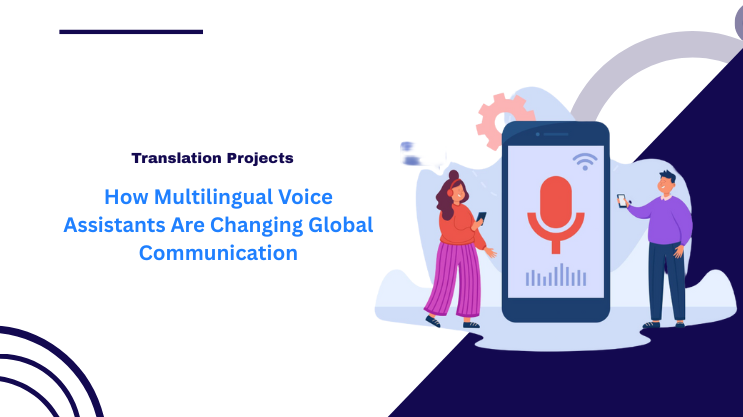
    How Multilingual Voice Assistants Are Changing Global Communication

    Multilingual voice assistants are rapidly transforming the way people and businesses communicate across borders. Powered by artificial intelligence, natural language processing, and speech recognition, these technologies enable users to interact with devices in their native languages. As voice-based communication becomes more common, multilingual voice assistants are breaking down language barriers and making global communication more accessible and efficient.

    1. Enabling Natural Communication Across Languages

    Multilingual voice assistants allow users to speak naturally in their preferred language without switching settings or interfaces. This creates a more intuitive and human-like interaction, making technology easier to use for people from different linguistic backgrounds.

    2. Supporting Real-Time Translation and Interpretation

    Advanced voice assistants can translate spoken language in real time, enabling seamless conversations between speakers of different languages. This capability is particularly useful in international meetings, travel, customer support, and cross-border collaboration.

    3. Enhancing Customer Experience for Global Businesses

    Businesses use multilingual voice assistants to provide customer support, product information, and services in multiple languages. This ensures faster responses, improved accessibility, and higher customer satisfaction across global markets.

    4. Improving Accessibility and Inclusion

    Voice assistants make digital services more accessible to users with limited literacy, visual impairments, or physical disabilities. Multilingual support ensures inclusivity, allowing more people to access information and services regardless of language barriers.

    5. Transforming Smart Devices and Everyday Technology

    From smartphones and smart speakers to home automation systems, multilingual voice assistants are becoming integral to daily life. Users can control devices, search for information, and manage tasks using voice commands in their own language.

    6. Supporting Education and Learning

    In education, multilingual voice assistants help learners access information, practice pronunciation, and understand content in different languages. They support language learning and enable students to engage with global educational resources more easily.

    7. Challenges in Accuracy and Cultural Understanding

    Despite advancements, voice assistants still face challenges with accents, dialects, idioms, and cultural context. Continuous improvement and human oversight are essential to ensure accurate and culturally appropriate communication.

    8. The Future of Voice-Driven Global Communication

    As AI technology evolves, multilingual voice assistants will become more accurate, context-aware, and widely adopted. They will play a key role in global communication, helping individuals and businesses connect effortlessly across languages and cultures.

    In conclusion, multilingual voice assistants are reshaping global communication by enabling real-time, natural, and inclusive interactions. By bridging language gaps and enhancing accessibility, these technologies are paving the way for a more connected and multilingual world.

  • How AI Detects Tone and Emotion in Multilingual Content

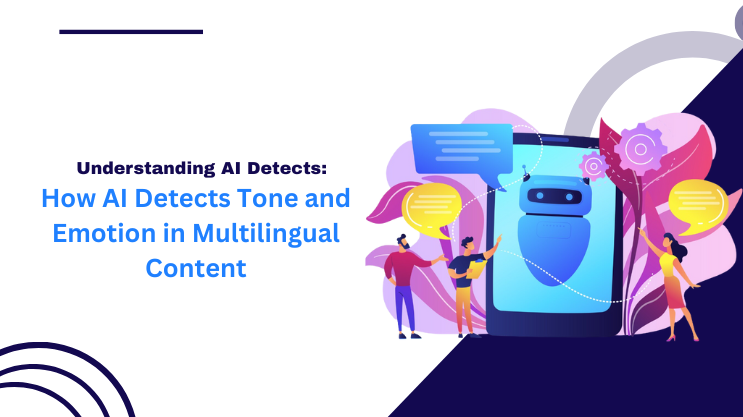
    How AI Detects Tone and Emotion in Multilingual Content

    As businesses communicate with global audiences, understanding not just what is said but how it is expressed becomes crucial. Tone and emotion play a vital role in shaping user perception, trust, and engagement. Artificial Intelligence (AI) is now transforming how tone and emotion are detected across languages, helping brands deliver more human-like and culturally aware multilingual content.


    Understanding Tone and Emotion in Language

    Tone refers to the attitude or style of communication-formal, friendly, urgent, or empathetic-while emotion reflects feelings such as happiness, frustration, or concern. In multilingual content, detecting these elements is challenging because emotions and tone vary across cultures, languages, and contexts.


    How AI Detects Tone and Emotion

    AI uses Natural Language Processing (NLP) and Machine Learning (ML) models to analyze text patterns and emotional cues. Key techniques include:

    1. Sentiment Analysis: Identifies positive, negative, or neutral emotions in text.
    2. Contextual Language Models: Advanced AI models understand meaning based on context rather than word-by-word translation.
    3. Semantic Analysis: Examines sentence structure, word choice, and phrasing to detect emotional intent.
    4. Multilingual Training Data: AI systems are trained on vast datasets across languages to recognize emotional patterns globally.

    Challenges in Multilingual Emotion Detection

    • Cultural Differences: The same phrase can convey different emotions in different cultures.
    • Idioms and Expressions: Figurative language often carries emotional meaning that is difficult to detect literally.
    • Tone Variations: Formality and politeness levels differ significantly across languages.
    • Data Limitations: Some languages have less training data, impacting accuracy.

    Benefits of AI-Driven Tone Detection

    1. Improved Translation Quality: Preserves emotional intent across languages.
    2. Enhanced Customer Experience: Enables empathetic responses in customer support and marketing.
    3. Brand Voice Consistency: Maintains tone across global content.
    4. Faster Content Analysis: Processes large volumes of multilingual text efficiently.

    AI and Human Collaboration in Emotion Detection

    While AI excels at speed and pattern recognition, human linguists provide cultural understanding and contextual judgment. The best results come from combining AI tools with professional translators, ensuring emotional accuracy and cultural relevance.


    Use Cases Across Industries

    • Customer Support: Identifying frustrated or satisfied customers in multilingual feedback.
    • Marketing & Branding: Adapting emotional tone in global campaigns.
    • Social Media Monitoring: Tracking sentiment across languages in real time.
    • Localization & Translation: Ensuring emotionally aligned translations.

    Conclusion

    AI is reshaping how tone and emotion are detected in multilingual content, making global communication more effective and emotionally intelligent. However, true accuracy lies in blending AI technology with human expertise. Businesses that embrace this balance can deliver culturally sensitive, emotionally resonant content across international markets.

    AI tone detection, multilingual sentiment analysis, AI in translation, emotion detection AI, multilingual NLP, AI localization, Honey Translation Services.


  • Translating Social Media Trends Across Languages

    Translating Social Media Trends Across Languages

    Social media trends move fast-and for global brands, keeping up means more than just translating captions. A trend that goes viral in one country may fall flat or even offend in another if not adapted correctly. Translating social media trends across languages requires cultural awareness, creativity, and real-time localization to connect with diverse audiences worldwide.


    Why Social Media Trend Translation Matters

    1. Global Engagement: Localized trends help brands connect authentically with international audiences.
    2. Cultural Relevance: Trends often rely on humor, slang, or pop culture that need cultural adaptation.
    3. Brand Consistency: Proper translation ensures your brand voice stays consistent across regions.
    4. Higher Reach & Shares: Content that feels local is more likely to be shared and interacted with.

    Challenges in Translating Social Media Trends

    • Slang & Hashtags: Trending phrases or hashtags may not have direct equivalents in other languages.
    • Speed & Timing: Trends evolve quickly, leaving little time for traditional translation workflows.
    • Character Limits: Platforms like X and Instagram require concise yet impactful messaging.
    • Visual + Text Context: Memes, emojis, and visuals must align with the translated message.

    Best Practices for Translating Social Media Trends

    1. Transcreate, Don’t Translate: Adapt the message creatively while keeping the original intent.
    2. Use Native Linguists: Native speakers understand current slang, humor, and cultural references.
    3. Monitor Local Trends: What’s trending globally may differ from what’s trending locally.
    4. Test Before Posting: Quick reviews ensure messages are culturally appropriate and on-brand.
    5. Stay Flexible: Be ready to tweak content based on audience response and engagement.

    Tools That Support Social Media Localization

    • Social Media Monitoring Tools: Track trends across different regions and languages.
    • Translation Management Systems (TMS): Speed up translations while maintaining consistency.
    • Glossaries & Style Guides: Ensure brand terminology stays uniform across posts.
    • AI + Human Review: AI speeds up translation, while human review ensures cultural accuracy.

    Impact on Global Brand Presence

    Brands that successfully translate and localize social media trends appear more relatable and trustworthy. They show respect for local cultures while staying connected to global conversations-resulting in stronger engagement, brand loyalty, and international growth.


    Conclusion

    Translating social media trends across languages is a strategic blend of speed, creativity, and cultural understanding. By moving beyond literal translation and embracing localization, brands can stay relevant worldwide and make every trend count-no matter the language.


    social media translation, multilingual social media, trend localization, social media localization, global digital marketing, content translation, Honey Translation Services.

  • How AI Is Transforming Multilingual Marketing Campaigns

    How AI Is Transforming Multilingual Marketing Campaigns

    Artificial Intelligence (AI) is reshaping the way brands communicate with global audiences. In multilingual marketing, AI enables faster content creation, smarter localization, and more personalized customer experiences. By combining data-driven insights with language technology, businesses can run effective marketing campaigns across multiple regions while maintaining consistency and cultural relevance.

    1. Faster Content Translation and Localization

    AI-powered translation tools allow marketers to translate large volumes of content quickly. Campaign materials such as ads, emails, landing pages, and social media posts can be localized in multiple languages within shorter timelines, helping brands launch campaigns simultaneously across global markets.

    2. Data-Driven Personalization Across Languages

    AI analyzes customer behavior, preferences, and demographics to personalize marketing messages for different regions. This enables brands to tailor content not only by language but also by local interests, increasing engagement and conversion rates.

    3. Improving Consistency in Brand Messaging

    Maintaining a consistent brand voice across languages is a major challenge in multilingual campaigns. AI tools integrated with translation memory and brand glossaries ensure uniform terminology, tone, and messaging across all regions, strengthening global brand identity.

    4. Enhancing Multilingual SEO and Visibility

    AI helps identify region-specific keywords, search trends, and user intent. By optimizing multilingual content for local search engines, businesses can improve visibility, attract targeted traffic, and increase organic reach in international markets.

    5. Automating Multilingual Content Creation

    From ad copy to product descriptions, AI can generate and adapt content in multiple languages. This automation supports marketers in scaling campaigns efficiently while allowing human experts to refine messaging for creativity and cultural sensitivity.

    6. Real-Time Customer Engagement

    AI-powered chatbots and virtual assistants can communicate with customers in multiple languages instantly. This enables real-time engagement, improves customer support, and ensures a seamless experience throughout the marketing journey.

    7. Performance Tracking and Optimization

    AI-driven analytics provide insights into how multilingual campaigns perform across regions. Marketers can track engagement, conversions, and customer responses, allowing them to optimize campaigns continuously for better results.

    8. Balancing AI with Human Expertise

    While AI improves speed and efficiency, human input remains essential for creativity, cultural understanding, and emotional connection. The most successful multilingual marketing campaigns combine AI technology with professional linguistic and marketing expertise.

    In conclusion, AI is transforming multilingual marketing campaigns by enabling faster localization, smarter personalization, and data-driven optimization. Businesses that embrace AI while maintaining human oversight can effectively connect with global audiences, strengthen brand presence, and achieve sustainable international growth.

  • Trends in Subtitling and Dubbing for International Media

    Trends in Subtitling and Dubbing for International Media

    The global demand for digital content has grown rapidly with the rise of streaming platforms, online education, and international entertainment. Subtitling and dubbing have become essential tools for reaching diverse audiences across languages and cultures. As media consumption habits evolve, new trends in subtitling and dubbing are shaping how international content is created, localized, and experienced.

    1. Growing Demand from Streaming Platforms

    Streaming services are expanding their content libraries globally, increasing the need for high-quality subtitles and dubbing in multiple languages. Audiences now expect content to be available in their native language at the time of release, making fast and accurate localization a priority.

    2. Preference for High-Quality, Natural Localization

    Viewers today expect subtitles and dubbed voices to sound natural and culturally appropriate. This trend has increased the demand for professional linguists and voice artists who can adapt tone, emotion, and cultural references while maintaining the original intent of the content.

    3. Use of AI and Automation Tools

    AI-powered tools are increasingly used to support subtitling and dubbing workflows. Automated speech recognition, machine translation, and timing tools help speed up processes, though human review remains essential to ensure accuracy, clarity, and emotional consistency.

    4. Rise of Multilingual Subtitles

    Many viewers prefer subtitles even when content is in their own language. Multilingual subtitle options allow audiences to choose how they consume content, improving accessibility for language learners and hearing-impaired viewers while expanding reach.

    5. Increased Focus on Accessibility

    Accessibility has become a major focus in international media. Closed captions, subtitles for the deaf and hard of hearing (SDH), and audio descriptions are increasingly required to ensure inclusive viewing experiences for all audiences.

    6. Localization for Regional Markets

    Subtitling and dubbing are now adapted specifically for regional audiences rather than generic language versions. This includes adjusting idioms, slang, humor, and cultural references to better resonate with local viewers and improve engagement.

    7. Demand for Faster Turnaround Times

    With global releases and binge-watching culture, media companies require faster subtitling and dubbing without compromising quality. Streamlined workflows and collaborative tools are helping localization teams meet tight deadlines efficiently.

    8. Expansion Beyond Entertainment

    Subtitling and dubbing are no longer limited to films and TV shows. Corporate videos, e-learning modules, marketing campaigns, and social media content increasingly rely on localized audiovisual content to engage global audiences.

    In conclusion, trends in subtitling and dubbing reflect the growing importance of global accessibility and cultural relevance in media. By combining technology, human expertise, and audience-focused strategies, international media can reach wider audiences, enhance viewer engagement, and succeed in an increasingly connected world.

  • The Growing Need for Certified Translation Services

    The Growing Need for Certified Translation Services

    In an increasingly globalized world, the demand for certified translation services is rising rapidly. Certified translations are essential when documents must be legally accurate, officially recognized, and accepted by government bodies, educational institutions, and international organizations. Unlike standard translation, certified translation carries a declaration of accuracy, making it a critical requirement in many formal processes.

    1. Understanding What Certified Translation Means

    Certified translation is a translated document accompanied by a signed statement from the translator or translation agency confirming that the translation is complete and accurate to the best of their knowledge. This certification ensures the document’s authenticity and reliability for official use.

    2. Importance in Immigration and Visa Processes

    Immigration authorities often require certified translations for passports, birth certificates, marriage certificates, police records, and other official documents. Accurate certified translations help avoid delays, rejections, and legal complications during visa and residency applications.

    3. Role in Education and Academic Admissions

    Students applying to foreign universities must submit certified translations of transcripts, diplomas, and academic records. Educational institutions rely on certified translations to evaluate credentials correctly and ensure fairness in admissions and assessments.

    4. Legal and Judicial Requirements

    Courts, law firms, and legal authorities require certified translations for contracts, affidavits, court orders, and agreements. Precision is crucial in legal contexts, as even minor errors can alter meaning and lead to serious legal consequences.

    5. Business and Corporate Documentation

    Global businesses often need certified translations for incorporation documents, licenses, compliance records, and agreements. Certified translations provide credibility and ensure documents are legally valid in international transactions.

    6. Ensuring Accuracy and Compliance

    Certified translation services follow strict quality standards and often involve professional translators with subject-matter expertise. This ensures compliance with legal and regulatory requirements while maintaining accuracy and consistency.

    7. Reducing Risks and Delays

    Submitting uncertified or inaccurate translations can result in document rejection, process delays, or legal issues. Certified translations minimize these risks by meeting official acceptance criteria and ensuring smooth processing.

    8. Growing Global Mobility and Cross-Border Interactions

    With increased international travel, education, employment, and business expansion, the need for certified translation services continues to grow. Individuals and organizations alike depend on certified translations to navigate global systems confidently.

    In conclusion, certified translation services play a vital role in today’s interconnected world. By ensuring accuracy, authenticity, and official recognition, they support smooth international communication, legal compliance, and global mobility across various sectors.

  • How Localization Enhances Learning in Online Education Platforms

    How Localization Enhances Learning in Online Education Platforms

    The rapid growth of online education has opened learning opportunities to students across the globe. However, language and cultural differences can significantly affect how learners understand and engage with digital content. Localization plays a crucial role in making online education platforms more accessible, effective, and inclusive by adapting content to meet the linguistic and cultural needs of diverse learners.

    1. Improving Comprehension Through Native Language Content

    Learning in one’s native language improves understanding and retention. Localization ensures that course materials, instructions, and assessments are translated accurately and presented in familiar language, allowing learners to focus on concepts rather than struggling with comprehension.

    2. Adapting Cultural Context for Better Engagement

    Examples, case studies, visuals, and references that resonate in one culture may not be relevant in another. Localization adapts these elements to match local contexts, making lessons more relatable and engaging for learners from different regions.

    3. Enhancing User Experience on Learning Platforms

    Localization goes beyond content to include user interface elements such as menus, buttons, navigation, and notifications. A localized interface makes platforms easier to use, reduces confusion, and improves overall learner satisfaction.

    4. Supporting Multilingual Assessments and Feedback

    Assessments play a key role in learning outcomes. Localization ensures that quizzes, exams, and feedback are accurately translated, helping learners demonstrate their knowledge fairly and confidently in their preferred language.

    5. Increasing Accessibility and Inclusivity

    Localized content supports learners with different language abilities and educational backgrounds. By offering courses in multiple languages, online education platforms promote inclusivity and provide equal learning opportunities to a wider audience.

    6. Improving Learner Retention and Completion Rates

    When learners feel comfortable and understood, they are more likely to stay engaged and complete courses. Localization reduces language barriers and frustration, leading to higher retention rates and better learning outcomes.

    7. Enabling Global Reach for Education Providers

    Localization allows education platforms to expand into new markets and reach international learners effectively. By addressing local language and cultural needs, institutions can attract a broader audience and strengthen their global presence.

    8. Supporting Long-Term Learning Success

    Localized learning experiences foster confidence, motivation, and deeper understanding. By delivering culturally relevant and language-appropriate content, online education platforms can ensure long-term success for learners across diverse regions.

    In conclusion, localization is a vital component of effective online education. By adapting language, culture, and user experience, education platforms can enhance engagement, improve learning outcomes, and create inclusive environments that empower learners worldwide.

  • How Translators Use Glossaries to Improve Accuracy

    How Translators Use Glossaries to Improve Accuracy

    In professional translation, accuracy is everything. A single mistranslated term can change meaning, affect credibility, or even cause legal or financial risks. This is where glossaries play a vital role. Translators rely on well-maintained glossaries to ensure consistency, clarity, and precision across projects, especially when working with specialized industries or large volumes of content.


    What Is a Translation Glossary?

    A translation glossary is a curated list of approved terms and their correct translations in one or more target languages. These glossaries often include:

    • Industry-specific terminology
    • Brand-approved phrases
    • Product names and technical terms
    • Preferred spellings and usage notes

    Glossaries act as a reference guide, helping translators maintain uniform language throughout a project.


    Why Glossaries Are Essential for Translation Accuracy

    1. Terminology Consistency: Glossaries ensure the same term is translated uniformly across documents, platforms, and languages.
    2. Reduced Errors: Clear term definitions minimize ambiguity and prevent incorrect interpretations.
    3. Brand Integrity: Using approved terminology preserves brand voice and messaging across markets.
    4. Faster Turnaround: Translators spend less time researching terms, improving efficiency without compromising quality.

    How Translators Use Glossaries in Real Projects

    • Before Translation Begins: Translators review glossaries to understand preferred terminology and client-specific language.
    • During Translation: Glossaries are actively referenced to ensure consistent usage of key terms.
    • With Translation Tools: Many translators integrate glossaries into Translation Management Systems (TMS) or CAT tools for automated term suggestions.
    • During Review: Editors cross-check translations against glossaries to maintain accuracy and compliance.

    Challenges Without Proper Glossaries

    • Inconsistent terminology across documents
    • Increased revision cycles
    • Confusion for end users
    • Reduced trust in translated content

    Without glossaries, even skilled translators may interpret terms differently, leading to inconsistencies.


    Best Practices for Creating Effective Translation Glossaries

    1. Collaborate with Experts: Include input from subject-matter experts and linguists.
    2. Keep Glossaries Updated: Regular updates ensure relevance as products or services evolve.
    3. Add Context Notes: Definitions and usage examples help translators choose the right terms.
    4. Standardize Across Teams: Use the same glossary for all translation partners and projects.
    5. Review Regularly: Validate glossary terms through quality checks and feedback loops.

    Glossaries and the Future of Translation

    As translation technology advances, glossaries remain essential for maintaining human-level accuracy. Combined with AI tools and translation memory systems, glossaries help bridge automation and human expertise-ensuring translations are not only fast, but also precise and culturally appropriate.


    Conclusion

    Glossaries are a cornerstone of high-quality translation. They empower translators to deliver accurate, consistent, and brand-aligned content across languages. By investing in well-structured glossaries, businesses can significantly enhance translation quality, reduce errors, and build trust with global audiences.

    Translation glossaries, translation accuracy, terminology management, professional translation, multilingual consistency, localization tools, Honey Translation Services.


  • The Rise of Voice Technology in Global Communication

    The Rise of Voice Technology in Global Communication

    Voice technology is rapidly transforming the way people and businesses communicate across languages and borders. From voice assistants to real-time speech translation, these innovations are making communication faster, more natural, and more accessible. As global interactions increase, voice technology is playing a key role in breaking language barriers and enhancing cross-cultural connectivity.

    1. Evolution of Voice Technology

    Voice technology has evolved from basic speech recognition to advanced AI-driven systems capable of understanding context, tone, and intent. Improvements in natural language processing and machine learning have significantly increased accuracy, making voice-based communication more reliable for global use.

    2. Voice Assistants in Everyday Communication

    Voice assistants such as smart speakers and mobile assistants are now used worldwide for tasks like searching information, scheduling, and customer support. Their ability to operate in multiple languages allows users from different regions to interact with technology comfortably in their native language.

    3. Real-Time Speech Translation

    One of the most impactful developments in voice technology is real-time speech translation. These tools enable instant multilingual conversations in meetings, travel, and customer service, allowing people to communicate without delays or language barriers.

    4. Voice Technology in Business Communication

    Businesses are increasingly using voice technology for virtual meetings, customer support, and internal collaboration. Multilingual voice tools help global teams work efficiently, improve customer experience, and expand services to international markets.

    5. Enhancing Accessibility Through Voice

    Voice technology improves accessibility for individuals with visual impairments, reading difficulties, or limited literacy. By enabling voice-based interaction, organizations can make their services more inclusive and accessible to a wider global audience.

    6. Integration with Smart Devices and Platforms

    Voice-enabled features are now integrated into smartphones, vehicles, home devices, and enterprise platforms. This seamless integration allows users to communicate, access information, and perform tasks across different environments and languages effortlessly.

    7. Challenges in Voice-Based Global Communication

    Despite advancements, voice technology still faces challenges such as handling diverse accents, dialects, and cultural expressions. Ensuring accuracy and cultural sensitivity remains essential, especially for professional and high-stakes communication.

    8. The Future of Voice Technology Worldwide

    As AI continues to advance, voice technology will become more natural, intelligent, and widely adopted. The combination of voice recognition, translation, and human expertise will further enhance global communication, enabling seamless interactions across languages and cultures.

    In conclusion, the rise of voice technology is reshaping global communication by making interactions more immediate and inclusive. By embracing these innovations, businesses and individuals can connect more effectively, overcome language barriers, and participate confidently in a truly global conversation.