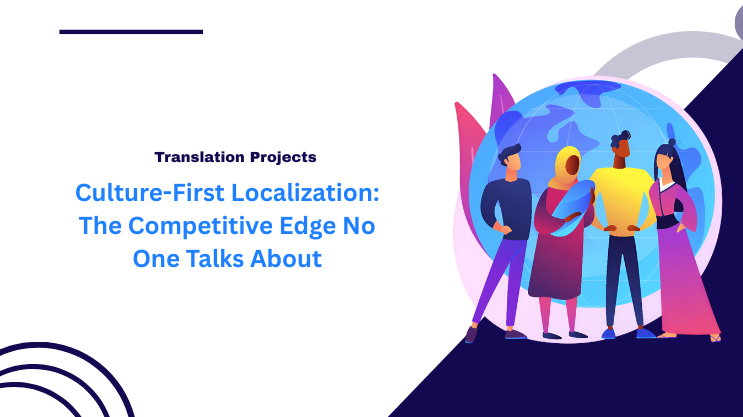
In global markets, most brands focus on what to say. Very few think deeply about how it will be felt. That difference is where culture-first localization becomes a powerful-and often overlooked-competitive edge.
Language may open the door, but culture decides whether a brand is welcomed inside.
What Is Culture-First Localization?
Culture-first localization goes beyond translating content accurately. It starts with understanding the values, behaviors, emotions, and expectations of a local audience before adapting the message.
Instead of asking, “Is this linguistically correct?” culture-first localization asks:
- Does this message align with local beliefs?
- Does the tone feel natural and respectful?
- Do visuals, colors, and symbols make sense culturally?
- Will this content build trust-or create distance?
This approach ensures brands communicate with audiences, not at them.
Why Language-Only Localization Falls Short
A message can be grammatically perfect and still fail to connect. That’s because culture shapes meaning in ways language alone cannot.
Common pitfalls of language-only localization include:
- Humor that doesn’t translate
- Symbols or colors with unintended meanings
- Messaging that clashes with local values
- Content that feels foreign or generic
In competitive markets, these small disconnects can quietly push customers away.
Culture as a Business Advantage
Culture-first localization isn’t just a creative choice-it’s a strategic one. Brands that invest in cultural understanding gain advantages that are difficult to replicate.
They benefit from:
- Stronger emotional connections
- Higher customer trust and loyalty
- Improved engagement and conversion rates
- Reduced risk of cultural missteps
- Clear differentiation from competitors
While others translate faster, culture-first brands connect deeper.
Where Culture-First Localization Makes the Biggest Impact
This approach influences every customer touchpoint, including:
- Marketing campaigns and brand storytelling
- Website and app experiences
- Product naming and packaging
- Visual design and imagery
- Subtitles, voice-over, and dubbing
- Customer support and onboarding content
Consistency across these touchpoints strengthens brand authenticity.
Culture-First in Action
A culture-first strategy adapts tone for formality, rethinks visuals for local relevance, and reshapes messaging to reflect local priorities. It respects how people communicate, decide, and trust.
This doesn’t mean changing the brand-it means expressing the same brand values in ways that feel familiar locally.
The Long-Term Payoff
In a world where products are easily copied and prices quickly matched, cultural relevance becomes a lasting advantage. It creates relationships instead of transactions.
Brands that lead with culture:
- Enter markets with confidence
- Build long-term local presence
- Grow through trust, not just reach
- Remain resilient in global expansion
Culture-first localization turns global growth into sustainable growth.
Final Thoughts
The most successful global brands aren’t just multilingual-they’re multicultural.
Culture-first localization is the edge few talk about, but the one customers feel immediately. In crowded global markets, understanding culture isn’t optional.
It’s how brands stand out-and stay relevant.