
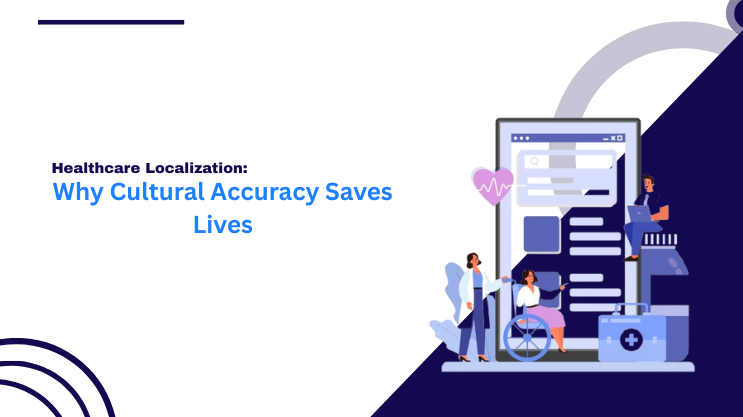
In today’s globalized world, healthcare services are reaching patients across borders more than ever. From telemedicine consultations to multilingual patient information leaflets, accurate communication can literally be a matter of life and death. This is where healthcare localization comes into play.
What Is Healthcare Localization?
Healthcare localization goes beyond mere translation. It involves adapting medical content, documents, software, and communication to fit the cultural, linguistic, and regulatory context of a target region. This ensures that medical instructions, patient forms, marketing materials, and digital health apps are not only understood but also culturally appropriate.
Why Cultural Accuracy Matters in Healthcare
- Patient Safety and Compliance
A mistranslated dosage instruction or misunderstood medical guideline can have severe consequences. Cultural awareness ensures that medical content aligns with local practices, measurement systems, and patient expectations. - Building Trust
Patients are more likely to follow treatment plans when information is presented in their language and culturally familiar context. This strengthens trust between healthcare providers and patients. - Regulatory Compliance
Different countries have strict healthcare regulations regarding labeling, consent forms, and patient communications. Proper localization ensures compliance and avoids legal repercussions. - Effective Health Education
Culturally accurate health campaigns improve public awareness about diseases, preventive care, and vaccination programs. Localization helps reach diverse populations effectively.
Common Challenges in Healthcare Localization
- Medical Terminology Complexity: Healthcare content is often technical, requiring specialized translators.
- Cultural Sensitivities: Health topics can be taboo or sensitive in some cultures.
- Legal and Regulatory Barriers: Patient information must comply with local laws.
- Multimedia Adaptation: Videos, apps, and software interfaces must be culturally relevant and understandable.
How Professional Translators Make a Difference
Professional healthcare translators are trained to handle:
- Medical reports, prescriptions, and clinical trial documents
- Patient consent forms and educational brochures
- Health apps, telemedicine platforms, and software interfaces
They combine linguistic expertise, cultural knowledge, and medical understanding to ensure accuracy, readability, and safety.
Conclusion
In healthcare, every word matters. Miscommunication can lead to medication errors, misdiagnosis, and patient non-compliance. Investing in professional healthcare localization ensures that your medical content is accurate, culturally sensitive, and patient-friendly.
At Honey Translations, we help healthcare providers communicate effectively across languages and cultures, ensuring safety, compliance, and trust.
