
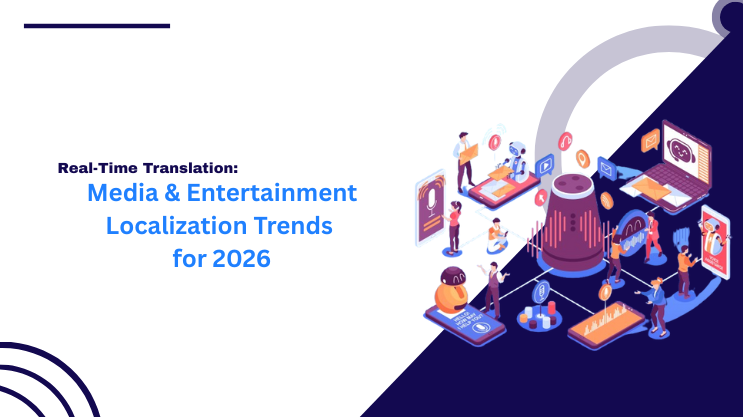
The media and entertainment industry is evolving rapidly. With streaming platforms, global gaming, and immersive experiences growing in popularity, reaching international audiences requires more than just translation—it demands localization. In 2026, media companies must understand the latest trends in entertainment localization to remain competitive and connect meaningfully with audiences worldwide.
Why Localization Matters in Media & Entertainment
Global audiences expect content in their language, tailored to cultural nuances. Poorly localized media can lead to confusion, misinterpretation, and lost engagement. Effective localization ensures:
- Accurate translation of dialogues, lyrics, and scripts
- Culturally relevant visuals, symbols, and references
- Seamless subtitling, dubbing, and voice-over integration
- Enhanced audience engagement and brand loyalty
Top Media & Entertainment Localization Trends for 2026
1. AI-Assisted Localization
Artificial intelligence continues to transform the way media is localized. AI tools now handle subtitles, captions, and even voice-over synchronization, speeding up production without compromising quality. Human expertise, however, remains essential for cultural adaptation and context accuracy.
2. Interactive & Immersive Experiences
With VR, AR, and interactive storytelling gaining traction, immersive experiences require precise localization. Translators must ensure every dialogue, menu, and interface aligns with cultural expectations while maintaining narrative flow.
3. Transcreation of Content
Entertainment brands are moving beyond literal translation. Transcreation allows creative adaptation of humor, idioms, and marketing campaigns so that they resonate emotionally with local audiences.
4. Multi-Platform Localization
Content is no longer limited to TV or cinema. Streaming platforms, social media, mobile games, and podcasts require consistent localization across multiple platforms to maintain brand voice and audience trust.
5. Gaming Localization Growth
Gaming continues to be one of the fastest-growing entertainment sectors. Localizing games involves text, audio, visuals, and in-game cultural references, ensuring an authentic gaming experience across regions.
6. Subtitles & Dubbing Quality Standards
Audience expectations are rising. High-quality subtitles and dubbing are crucial, particularly for global releases on streaming platforms. Automated tools assist, but professional review ensures natural flow and correct timing.
7. Cultural Sensitivity & Compliance
Entertainment content may touch on sensitive topics. Localization teams now incorporate cultural sensitivity checks and legal compliance, avoiding potential controversies or censorship issues.
How Media Companies Can Prepare for 2026
- Invest in AI-powered translation tools while retaining human oversight
- Develop a cross-platform localization strategy for all media channels
- Partner with specialized localization agencies for gaming, film, and streaming
- Focus on quality and cultural relevance over speed or cost
- Keep an eye on emerging trends like AI dubbing, VR/AR localization, and transcreation
Conclusion
Localization in media and entertainment is no longer optional-it’s critical for global success. Companies that embrace AI-assisted workflows, transcreation, and multi-platform strategies will capture audiences worldwide while maintaining cultural relevance. As we step into 2026, staying ahead in media localization is the key to global engagement, audience satisfaction, and sustainable growth.
