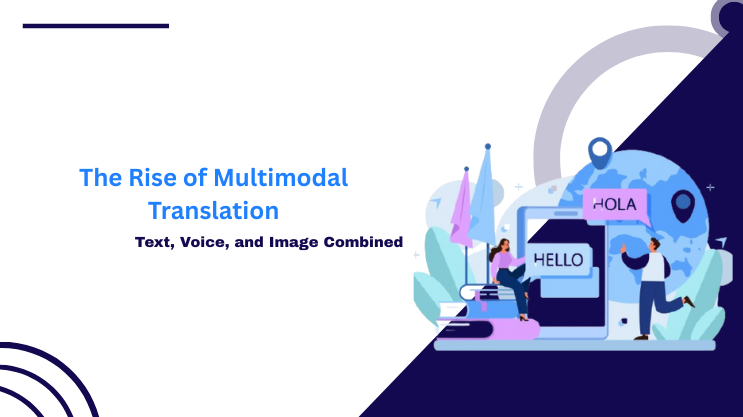
In today’s fast-paced digital world, communication extends beyond text. Businesses, content creators, and global organizations are increasingly leveraging multiple media forms-text, voice, and images-to reach diverse audiences. This evolution has given rise to multimodal translation, a revolutionary approach that combines different types of content to ensure accurate and effective communication across languages and cultures.
What Is Multimodal Translation?
Multimodal translation goes beyond traditional text translation. It integrates:
- Text Translation – The foundation of multilingual communication, covering documents, websites, subtitles, and social media content.
- Voice Translation – Audio content, including podcasts, voiceovers, and real-time interpretation.
- Image and Video Translation – Localization of visual content, including graphics, infographics, and videos with embedded text or speech.
By combining these elements, multimodal translation ensures that your message is not only linguistically accurate but also contextually and culturally relevant.
Why Multimodal Translation Matters in 2025–2026
The rise of global digital communication has highlighted the limitations of text-only translation:
- Enhanced User Engagement – Multimedia content resonates more with audiences, boosting comprehension and retention.
- Brand Consistency Across Platforms – Ensures that your brand voice and visuals remain coherent in every language.
- Increased Accessibility – Audio and visual translations make content accessible to those with reading difficulties or disabilities.
- Global Market Expansion – Companies can reach new markets more effectively when all content modalities are localized.
Key Challenges and Solutions
While multimodal translation offers numerous benefits, it comes with unique challenges:
- Synchronization Issues – Aligning subtitles, audio, and visuals can be complex.
Solution: Advanced translation software and professional project management ensure seamless integration. - Cultural Sensitivity – Images, gestures, and idioms may carry different meanings across cultures.
Solution: Expert translators and cultural consultants can adapt content appropriately. - Technical Limitations – Not all multimedia platforms support multilingual content effectively.
Solution: Using scalable platforms and media-specific tools ensures smooth deployment.
The Role of AI and Human Expertise
AI-driven translation tools have made multimodal translation faster and more efficient, especially for large-scale projects. However, human expertise remains indispensable. Cultural nuance, brand tone, and context-sensitive interpretation cannot yet be fully replicated by AI. The best results come from a hybrid approach, combining machine efficiency with human judgment.
Conclusion
As businesses and content creators increasingly embrace diverse media formats, multimodal translation is no longer optional-it’s essential. By integrating text, voice, and visual content, organizations can deliver clear, culturally appropriate messages to audiences worldwide, enhancing engagement, accessibility, and market reach.